Critical Bitcoin Price Debate: Bull Trap Warnings Clash With Bullish On-Chain Data

NEW YORK, March 15, 2026 — A critical Bitcoin price debate has ignited across trading desks and crypto research firms this week. The debate centers on a stark divergence between bearish technical chart patterns signaling a potential bull trap and persistently strong on-chain data from blockchain analytics platforms. Bitcoin’s price, which rallied to test the $85,000 resistance level earlier this month, now faces conflicting signals that have left investors and analysts divided on the next major move for the flagship cryptocurrency.
Bull Trap Warnings From Technical Analysts
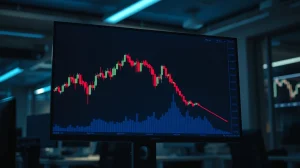
Several prominent technical analysts have issued warnings over the past 72 hours. They point to a classic bull trap formation on Bitcoin’s daily chart. This pattern typically occurs when a price breaks above a resistance level, luring in bullish traders, only to reverse sharply and trap those buyers at a loss. The warning gained traction after Bitcoin failed to sustain a weekly close above the $84,500 mark, a key level identified by analysts at TradingView and Bloomberg Intelligence.
Also read: NIGHT Price Stays Under Pressure Despite Midnight’s Token Terminal Partnership
“The market structure shows concerning similarities to previous mid-cycle corrections,” noted Markus Thielen, head of research at Matrixport, in a client note on March 14. Thielen referenced the 2021 cycle, where a similar rejection at a prior all-time high preceded a 25% drawdown. His analysis highlights weakening momentum on higher timeframes, a factor that often precedes significant pullbacks. The Relative Strength Index (RSI) on the weekly chart has also shown bearish divergence, declining even as price made marginal new highs.
On-Chain Data Presents A Bullish Counter-Narrative
In direct contrast to the chart warnings, fundamental blockchain data tells a different story. Metrics from Glassnode and CoinMetrics reveal underlying network strength. The Bitcoin Hash Rate, a measure of total computational power securing the network, reached a new all-time high of 750 exahashes per second (EH/s) this week. Historically, rising hash rate has correlated strongly with long-term price appreciation, as it signals increased security and miner commitment.
Also read: Telegram-Linked TAC Token Crashes 90% in 15 Minutes: What Happened?
Furthermore, the number of Bitcoin addresses holding 1 BTC or more, often called ‘wholecoiners,’ continues to climb, reaching 1.15 million addresses. This metric, which reflects accumulation by smaller investors, has never declined during a bull market peak. “On-chain accumulation by long-term holders remains sturdy,” stated James Check, lead analyst at Glassnode, in the firm’s weekly ‘The Week On-Chain’ report. “The supply held by entities with a lifespan of over 155 days is near cycle highs, which is not typical of a market top.”
Expert Analysis: Deciphering The Divergence
The clash between these datasets has forced market participants to weigh short-term technical risk against long-term fundamental health. Lyn Alden, founder of Lyn Alden Investment Strategy, contextualized the divergence in a recent interview. “Technical analysis operates on different time horizons than on-chain fundamentals,” Alden explained. “A bull trap is a short-to-medium-term risk event. Strong on-chain data like rising hash rate and holder accumulation speaks to a multi-year thesis. They can coexist, but they demand different portfolio strategies.”
This expert perspective underscores a key point for investors: time frame matters. A retail trader using utilize on a weekly chart faces immediate danger from a bull trap. A pension fund allocating for a three-year horizon may view any resulting price dip as a buying opportunity, given the strong network fundamentals.
Historical Precedents And Market Context
This is not the first time such a divergence has occurred. Similar conflicts between price action and on-chain metrics were observed in late 2020 and mid-2023. In both instances, the resolution favored the on-chain narrative after a period of consolidation or correction. The current macroeconomic backdrop adds another layer. With the Federal Reserve’s policy stance in a holding pattern and spot Bitcoin ETF flows showing consistent weekly inflows, the environment differs from previous cycles.
| Metric | Bull Trap Signal | Bullish On-Chain Signal |
|---|---|---|
| Price Action | Rejection at key resistance | Higher lows maintained |
| Investor Sentiment | Futures funding rates elevated | Long-term holder supply rising |
| Network Health | N/A | Hash Rate at ATH |
| Market Structure | Potential double-top pattern | Strong ETF inflow support |
What Traders And Investors Are Watching Next
The immediate catalyst for resolution will likely be Bitcoin’s ability to reclaim and hold the $84,500 level. A decisive break above could invalidate the bull trap thesis and see price target the $90,000 zone. Conversely, a break below the recent swing low near $78,200 would confirm the bearish technical pattern and likely trigger a deeper liquidation event. Options market data from Deribit shows increased demand for puts (bearish bets) at the $75,000 strike for April expiration, indicating hedging activity.
Institutional And Retail Reactions
The debate has spurred distinct reactions across market segments. Institutional desks, according to sources at CME Group, are increasing delta-neutral strategies to hedge directional risk while maintaining exposure. Retail sentiment on social platforms like X (formerly Twitter) is more polarized. Meanwhile, the net flow into U.S. spot Bitcoin ETFs remained positive for the 15th consecutive day on March 14, with BlackRock’s IBIT and Fidelity’s FBTC leading inflows. This suggests a portion of the market is using the uncertainty to dollar-cost average into positions.
Conclusion
The current Bitcoin price debate highlights the complex, multi-faceted nature of crypto market analysis. While technical charts flash warning signs of a potential bull trap, fundamental on-chain data paints a picture of a healthy network undergoing steady accumulation. For investors, the divergence necessitates clarity on investment horizon and risk tolerance. The coming weeks will test whether short-term market structure or long-term network fundamentals exert greater influence. Ultimately, the resolution will provide a critical case study on the relative weight of these analytical frameworks in Bitcoin’s evolving market maturity.
Frequently Asked Questions
Q1: What exactly is a bull trap in cryptocurrency trading?
A bull trap is a false signal that occurs when a declining asset appears to reverse and break out above a resistance level, prompting traders to buy, before the price reverses back down, trapping the bullish traders in losing positions. It is a common chart pattern in technical analysis.
Q2: Which on-chain metrics are currently most bullish for Bitcoin?
Key bullish metrics include the Bitcoin hash rate reaching 750 EH/s (a new all-time high signaling network security), a rising number of ‘wholecoiner’ addresses (over 1.15 million), and the supply held by long-term entities remaining near cycle highs, indicating strong holder conviction.
Q3: How have similar divergences between price and on-chain data resolved in the past?
In previous instances, like late 2020 and mid-2023, periods of consolidation or correction were followed by resolutions that favored the bullish on-chain narrative, with prices eventually advancing to new highs as fundamentals prevailed over short-term technical weakness.
Q4: What should a typical investor do when faced with these conflicting signals?
Investors should assess their time horizon. Short-term traders may need to respect technical warnings and implement strict risk management. Long-term investors might view any price weakness stemming from a bull trap as a potential accumulation opportunity, given strong underlying network fundamentals.
Q5: How are large institutions like Bitcoin ETF providers reacting to this debate?
Data shows U.S. spot Bitcoin ETFs have seen 15 consecutive days of net inflows during this period of debate. This suggests many institutional players are either hedging their bets or using the uncertainty to build positions, viewing strong on-chain data as a compelling long-term reason to hold.
Q6: What is the single most important price level to watch in the near term?
Analysts are closely watching the $84,500 level. A sustained break above it would invalidate the bull trap warning. Conversely, a break below the recent swing low of approximately $78,200 would confirm the bearish pattern and likely trigger a deeper market correction.