Bitcoin’s Path to $90,000: The Critical Catalysts Investors Are Watching in 2026

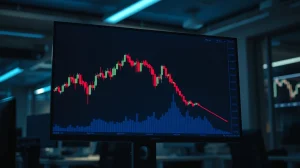
Bitcoin’s price action in early 2026 has entered what some analysts call a ‘bottom discovery’ phase. This period of consolidation follows significant volatility. The question now is what could propel the world’s largest cryptocurrency toward the $90,000 mark. Several concrete factors are in play.
Bitcoin Price Enters a Defining Phase
Data from CoinGecko shows Bitcoin trading around $65,000 as of early April 2026. This represents a pullback from its all-time high near $74,000 set in March 2024. The recent decline has pushed the asset into a critical technical zone. According to market analysis firm Glassnode, on-chain metrics suggest long-term holders are accumulating, not selling. This behavior often precedes major price moves.
Also read: Zcash Co-Founder Eli Ben-Sasson Questions Bitcoin's 21M Cap, Proposes 4% Annual Growth
“We are seeing a classic consolidation pattern,” said Marcus Thielen, head of research at 10x Research. “The market is digesting the massive gains from the last cycle and searching for a new base.” Thielen’s firm noted that Bitcoin’s 200-day moving average, a key long-term trend indicator, continues to slope upward. This suggests the primary bull trend remains intact despite short-term weakness.
The Halving’s Delayed Impact
The fourth Bitcoin halving occurred on April 19, 2024. This event cut the block reward for miners from 6.25 BTC to 3.125 BTC. Historically, the most powerful price effects of a halving are not felt immediately. Analysis by cryptocurrency exchange Coinbase shows that in previous cycles, the most significant price appreciation began 12 to 18 months after the halving event.
Also read: Binance DOJ Report Raises New Questions About Crypto Enforcement
If that pattern holds, the tailwinds from the 2024 halving should be fully materializing in 2026. The supply shock is real. Data from blockchain analytics firm CryptoQuant indicates the daily new supply of Bitcoin entering the market from miners has been cut in half. Against steady or growing demand, this creates a fundamental scarcity pressure.
Historical Post-Halving Performance:
- 2012 Halving: Price rose from ~$12 to over $1,100 within a year.
- 2016 Halving: Price climbed from ~$650 to nearly $20,000 by late 2017.
- 2020 Halving: Price increased from ~$9,000 to an all-time high near $69,000 in November 2021.
The implication is clear. The 2024 halving’s full effect on price is a major catalyst for 2026.
Institutional Demand: A Structural Shift
The launch of U.S. spot Bitcoin ETFs in January 2024 changed the market’s structure. These funds have created a massive, continuous source of institutional demand. According to Bloomberg Intelligence, the ten U.S. spot Bitcoin ETFs collectively held over 830,000 BTC as of March 2026, worth more than $54 billion.
This demand is persistent. Fidelity’s FBTC and BlackRock’s IBIT, two of the largest funds, have seen net inflows nearly every trading day since launch. Analysts at JPMorgan noted in a March 2026 report that this represents a “permanent bid” for Bitcoin, absorbing sell-side pressure from miners and other sources. The sheer scale of this capital flow could be the primary engine for a move toward $90,000.
Macroeconomic Winds and Monetary Policy
Bitcoin no longer trades in a vacuum. Its performance is increasingly linked to broader financial conditions. The Federal Reserve’s policy decisions in 2026 will be critical. After a prolonged period of interest rate hikes to combat inflation, the Fed began cutting rates in late 2025.
Lower interest rates typically weaken the U.S. dollar and make non-yielding assets like gold and Bitcoin more attractive. Data from the U.S. Bureau of Labor Statistics shows inflation cooling to around 2.5% annually as of Q1 2026. This gives the Fed room to ease policy. A sustained period of lower rates or even a return to quantitative easing could send a powerful signal to investors seeking inflation hedges.
“Bitcoin is behaving more like a risk asset, but its narrative as digital gold persists,” said Lyn Alden, a macroeconomist and investment strategist. “In an environment where real rates are falling and fiscal deficits remain high, its appeal grows.”
Regulatory Clarity and Global Adoption
Regulatory developments are another key variable. In the United States, legislative efforts to create a clear framework for digital assets have advanced slowly. However, the approval of spot ETFs set a significant precedent. Other jurisdictions are moving faster.
The European Union’s Markets in Crypto-Assets (MiCA) regulation is fully in force. This provides a comprehensive rulebook for crypto firms operating in the EU. Hong Kong has also established a licensing regime for crypto exchanges. Clearer rules reduce uncertainty for large institutional investors. This could unlock further capital allocation from pension funds, endowments, and sovereign wealth funds that have so far remained on the sidelines due to regulatory concerns.
Adoption metrics continue to rise. A report by blockchain data firm Chainalysis shows global crypto adoption, measured by on-chain value received, has stabilized at levels far above the 2020-2021 period. This suggests a growing, more mature user base.
Technical Breakout and Market Psychology
From a chart perspective, $90,000 is not just a round number. It represents the next major psychological and technical resistance level above the previous all-time high. A decisive break above $74,000 would confirm a new bullish macro trend. This could trigger a wave of algorithmic trading and momentum investing.
Market sentiment, as measured by the Crypto Fear & Greed Index, has retreated from ‘Extreme Greed’ levels seen in early 2024. As of April 2026, it reads ‘Neutral.’ This reset is healthy. It allows the market to build a stronger foundation for the next leg up without the frothiness that often precedes sharp corrections.
Potential Risks and Headwinds
No analysis is complete without considering the downside. Several factors could derail the path to $90,000. A resurgence of inflation forcing the Fed to reverse course and hike rates again would be a major headwind. Geopolitical instability that triggers a broad ‘risk-off’ move in global markets would likely hit Bitcoin alongside stocks.
On-chain data also shows potential overhangs. Glassnode reports that a significant amount of Bitcoin was acquired between $60,000 and $70,000 during the 2021 bull run. Some of these coins may be sold as price approaches their break-even point, creating supply resistance. Furthermore, regulatory crackdowns in major economies, while less likely after ETF approvals, remain a tail risk.
Conclusion
The Bitcoin price journey to $90,000 in 2026 hinges on a confluence of factors. The delayed impact of the 2024 halving is beginning to exert its influence on supply. Unrelenting demand from U.S. spot ETFs provides a structural bid. A supportive macroeconomic backdrop of falling interest rates could enhance Bitcoin’s appeal as an alternative asset. While risks exist, the alignment of these catalysts creates a plausible scenario for significant appreciation. Market participants will watch on-chain data, ETF flow reports, and Federal Reserve communications closely for signals that the move is underway.
FAQs
Q1: What is the ‘bottom discovery’ zone for Bitcoin?
It refers to a period of price consolidation and testing after a decline, where the market attempts to establish a stable support level before its next directional move. Analysts use on-chain data and technical indicators to identify these zones.
Q2: How does the Bitcoin halving affect price in 2026?
The halving in April 2024 cut the new supply of Bitcoin by half. Historical patterns show the maximum price impact often occurs 12-18 months later, meaning 2026 is within the window where scarcity-driven price appreciation is most likely.
Q3: Are Bitcoin ETFs still buying in 2026?
Yes. According to public flow data, major U.S. spot Bitcoin ETFs like those from BlackRock and Fidelity have continued to see net inflows through early 2026, creating consistent institutional demand.
Q4: What macroeconomic conditions help Bitcoin reach $90,000?
A environment of falling interest rates, a weaker U.S. dollar, and high government deficits can increase Bitcoin’s attractiveness as a non-sovereign store of value and inflation hedge.
Q5: What is the biggest risk to Bitcoin’s price in 2026?
A sharp reversal in monetary policy by the Federal Reserve, such as resuming interest rate hikes to fight stubborn inflation, would likely pressure Bitcoin’s price alongside other risk assets.