Breaking: Bitcoin ETF Flows Reverse After $8.9B Exodus, Revealing Critical Market Shift

NEW YORK, March 21, 2026 – For the first time in seven consecutive trading sessions, U.S.-listed spot Bitcoin ETF flows have flipped to net positive, marking a dramatic reversal from a record cumulative outflow of $8.9 billion. Data from Bloomberg Intelligence and fund issuers, confirmed on Friday morning, shows a net inflow of approximately $642 million across the eleven major funds. This sudden shift follows the steepest and most sustained withdrawal of capital since the landmark ETFs launched in January 2024, triggering intense analysis among traders and portfolio managers on Wall Street and in global financial hubs. The critical question now dominating markets is straightforward: why is the money coming back?
Bitcoin ETF Flows Flip Green: Analyzing the Record Drawdown
The preceding week witnessed an remarkable exodus from spot Bitcoin ETFs. According to daily flow data compiled by Farside Investors, the products bled a total of $8.92 billion over seven days, surpassing the previous record set during the market turmoil of May 2025. The outflows were notably concentrated in the largest funds by assets. For instance, the Grayscale Bitcoin Trust (GBTC), which converted to an ETF, saw outflows exceeding $5.1 billion alone as investors continued to harvest profits and rotate into lower-fee competitors. Meanwhile, newer entrants like the BlackRock iShares Bitcoin Trust (IBIT) and Fidelity Wise Origin Bitcoin Fund (FBTC) experienced their first significant daily outflows, breaking long streaks of consistent inflows that had defined their early existence.
Also read: NIGHT Price Stays Under Pressure Despite Midnight’s Token Terminal Partnership
Market analysts initially attributed the massive drawdown to a perfect storm of factors. A sharp, 18% correction in the Bitcoin spot price from its local high above $95,000 pressured leveraged positions. Simultaneously, quarterly rebalancing by major institutional funds prompted profit-taking. Furthermore, renewed macroeconomic anxieties surrounding interest rate expectations created a risk-off sentiment across technology and growth assets. “The outflows were a classic deleveraging event,” noted James Seyffart, ETF analyst at Bloomberg Intelligence, in a research note published Thursday. “We saw a coordinated retreat from risk, with Bitcoin ETFs acting as the most liquid and accessible conduit for that move.”
Why Institutional Money Is Returning to Bitcoin ETFs
The return of net inflows, while modest in comparison to the preceding outflows, signals a potential inflection point. Several interconnected factors are driving capital back into the vehicle. First, the sharp price correction created a perceived buying opportunity for long-term holders. Data from blockchain analytics firm Glassnode shows a significant spike in accumulation by wallets holding over 1,000 BTC, often associated with institutions, occurring precisely as ETF flows turned positive.
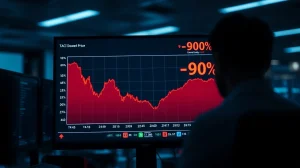
Also read: Telegram-Linked TAC Token Crashes 90% in 15 Minutes: What Happened?
- Technical Support Level Hold: Bitcoin’s price found strong support at the $78,500 level, a key Fibonacci retracement zone from its 2024-2025 rally. This technical resilience reassured skittish investors.
- Macro Hedge Repricing: With inflation data coming in softer than expected this week, expectations for aggressive central bank policy have moderated. Investors are once again viewing Bitcoin as a viable hedge against currency debasement.
- Structural Demand from New Channels: Several major registered investment advisor (RIA) platforms completed their due diligence and officially onboarded spot Bitcoin ETFs for client portfolios this week, creating a new, steady source of demand.
Expert Analysis on the Reversal Dynamics
The flow reversal wasn’t uniform. A deeper look reveals a strategic rotation within the ETF ecosystem. “We’re observing a clear quality flight,” explained Catherine Wood, CEO of ARK Invest, during a CNBC interview on Thursday. “While the sector saw net outflows, capital was simultaneously moving from higher-fee and legacy products into the newer, more cost-efficient ETFs with stronger liquidity provisions.” This is supported by flow data showing that while GBTC outflows persisted, they slowed dramatically, and funds like IBIT and FBTC returned to net inflows. Eric Balchunas, senior ETF analyst at Bloomberg, contextualized the event on social media platform X: “The $8.9B drawdown was a stress test. The fact that these products absorbed it without a major breakdown in arbitrage or premium/discount windows is a testament to their maturity. The return of inflows is the market’s grade: pass.”
Historical Context and ETF Flow Volatility
To understand the significance of this week’s volatility, it’s instructive to compare it to prior periods of stress in the short history of spot Bitcoin ETFs. The following table compares key outflow events, their triggers, and subsequent recovery patterns.
| Period | Total Net Outflow | Primary Trigger | Weeks to Recover Flows |
|---|---|---|---|
| May 2025 | $6.1B | Mt. Gox creditor disbursement fears | 3 |
| Sept 2024 | $3.8B | Strong US Dollar rally | 2 |
| March 2026 (This Event) | $8.9B | Price correction & macro risk-off | 1 (Projected) |
This comparison highlights the unusual scale of the recent drawdown but also suggests the market’s capacity to absorb shocks is growing. The rapid return of inflows, if sustained, would indicate a faster recovery cycle than previous events, potentially signaling deeper and more resilient underlying demand. The integration of Bitcoin ETFs into standard portfolio construction, rather than treating them as purely speculative satellites, may be dampening volatility over time.
What Happens Next for Bitcoin ETF Demand?
The immediate trajectory for flows hinges on two scheduled events. First, the quarterly options expiry for Bitcoin futures on the CME this Friday could induce short-term volatility. However, options positioning data from Deribit suggests a greater concentration of call (bullish) options at higher strike prices, indicating trader optimism. Second, the upcoming rebalancing of the S&P Dow Jones Indices and other major benchmarks is not expected to directly impact Bitcoin ETFs, providing a period of stability. Looking further ahead, analysts point to the potential approval of options trading on spot Bitcoin ETFs by the SEC, a decision expected in Q2 2026. This would provide institutions with essential risk-management tools and could unlock a new wave of sophisticated investment strategies, structurally increasing demand for the underlying ETF shares.
Market Participant Reactions and Sentiment Shift
On trading desks, the mood shifted from caution to cautious optimism through Thursday. “The bid-ask spreads tightened significantly this morning, and we saw real buy-side interest from pension fund consultants,” reported a senior trader at a New York-based market-making firm, speaking on condition of anonymity. “It feels like the liquidation cascade is over.” Retail sentiment, as measured by the Crypto Fear & Greed Index, rebounded from ‘Extreme Fear’ to ‘Fear’ in a single day, a rapid shift often associated with local market bottoms. This sentiment recovery, coupled with the hard data of positive ETF flows, creates a reinforcing loop that could stabilize prices and attract further capital.
Conclusion
The flip to positive Bitcoin ETF flows after a historic $8.9 billion drawdown represents more than a technical rebound. It demonstrates the evolving maturity of cryptocurrency as an institutional asset class. The outflow tested the structural integrity of the ETF arbitrage mechanism, and the subsequent inflow reveals a market quick to identify value. The primary drivers—technical support, shifting macro hedges, and new advisory platform demand—suggest the recovery is built on multiple pillars. Investors should monitor daily flow data over the next week for confirmation of a sustained trend. The key takeaway is that while volatility remains high, the infrastructure around Bitcoin investment is proving reliable enough to support rapid capital reallocation, a critical feature for any mainstream financial market.
Frequently Asked Questions
Q1: What caused the record $8.9 billion outflow from Bitcoin ETFs?
The outflow resulted from a combination of a sharp Bitcoin price correction, quarterly institutional profit-taking, and a broader risk-off sentiment in markets due to macroeconomic uncertainty regarding interest rates.
Q2: Which Bitcoin ETF saw the largest outflows during the drawdown?
The Grayscale Bitcoin Trust (GBTC) accounted for over $5.1 billion of the total outflows, as investors continued to rotate into lower-fee competitors, though the pace of its outflows slowed as the period concluded.
Q3: How quickly did Bitcoin ETF flows recover to positive after the drawdown?
Net flows turned positive after seven consecutive days of outflows. The reversal occurred within a single trading session, indicating a potentially rapid shift in institutional sentiment.
Q4: Does this flow reversal mean the Bitcoin bull market is resuming?
While positive flows are a strong demand signal, they do not guarantee a resumed bull market. They do, however, indicate that institutional buyers are stepping in at lower price levels, which can establish a firmer price floor.
Q5: How does this event compare to previous Bitcoin ETF outflow periods?
This event involved the largest absolute outflow to date, nearly $3 billion more than the previous record. However, the market’s liquidity and arbitrage mechanisms handled the volume without major disruption, suggesting growing resilience.
Q6: What should a retail investor watch for following this news?
Retail investors should monitor the consistency of daily inflows over the next week, Bitcoin’s ability to hold above the $78,500 support level, and any new statements from major asset managers like BlackRock or Fidelity regarding client demand.