Bitcoin Breaks $80K as Institutional Demand Resurges – Is $85K the Next Hurdle?

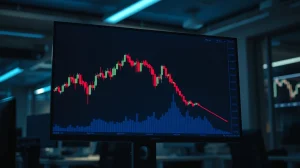
Bitcoin has reclaimed the $80,000 mark, staging a decisive breakout that has refocused market attention on the next major resistance level near $85,000. The move follows a single, sharp price leg that pushed the cryptocurrency above two critical on-chain pricing models: the True Market Mean at $78,200 and the Short-Term Holder Cost Basis at $79,100. These levels, often watched by analysts as gauges of market health and holder profitability, now serve as newly established support zones.
Institutional Demand Returns to the Market
A key driver behind the recent price action is a notable shift in US Spot Bitcoin ETF flows. After a period of net outflows, the 30-day aggregate flow has turned positive, signaling renewed appetite from institutional investors. This change in momentum suggests that large-scale capital is flowing back into the asset class, providing the liquidity needed to sustain a move above psychological resistance. ETF data from the past week shows consistent daily net inflows, reversing the cautious stance that had characterized much of the previous quarter.
Also read: BNB Chain Reveals New Layer 1 Blockchain for Agentic Trading, Mainnet Set for 2027
Short Gamma Dynamics Amplify Price Sensitivity
Derivatives market structure is adding to the volatility around current levels. A concentrated cluster of short gamma positions exists near the $82,000 strike price, with an estimated notional value of approximately $2 billion. Gamma, a measure of how an option’s delta changes relative to the underlying price, means that market makers holding short positions are forced to hedge more aggressively as Bitcoin approaches that zone. This creates a feedback loop where price movements are amplified, increasing the likelihood of rapid, sharp swings. Traders are watching this area closely, as a breakout above $82,000 could trigger a cascade of forced buying, accelerating the move toward $85,200.
Why $85,200 Matters
The $85,200 level is not an arbitrary round number. It represents the next major liquidity zone on the order book, where a significant volume of sell orders has accumulated. If Bitcoin can breach this level with conviction, it would open the path toward the next psychological threshold of $90,000. However, failure to clear $82,000 could lead to a retest of the newly reclaimed support levels, with $78,000 acting as the first line of defense.
Also read: Naver Financial and Dunamu Push Share Swap Deadline to December Amid Regulatory Hurdles
Conclusion
Bitcoin’s recovery above $80,000 is supported by genuine shifts in on-chain metrics and institutional flow data, not merely speculative hype. The convergence of ETF inflows and derivatives positioning creates a technically interesting setup, but the path to $85,000 is narrow and dependent on sustained buying pressure. For now, the market is watching whether the short gamma cluster near $82,000 will act as a springboard or a ceiling. Investors should remain cautious of the heightened volatility that such positioning typically brings.
FAQs
Q1: What is the True Market Mean and why does it matter?
The True Market Mean is an on-chain pricing model that calculates the average price at which all coins last moved, adjusted for lost or dormant coins. It is considered a fair value indicator. Bitcoin reclaiming this level suggests the market is trading above its aggregate cost basis, a historically bullish signal.
Q2: How do Bitcoin ETF inflows affect the price?
Spot Bitcoin ETFs allow institutional investors to gain exposure to Bitcoin without holding the asset directly. Sustained net inflows mean new capital is entering the market, increasing demand and providing upward price pressure. A reversal to positive 30-day flows is often interpreted as a vote of confidence from large-scale investors.
Q3: What is a short gamma cluster?
Gamma measures the rate of change of an option’s delta. When market makers are short gamma, they must buy the underlying asset as its price rises and sell as it falls to remain hedged. A large cluster of short gamma near a specific price level, like $82,000, can amplify price moves as market makers are forced to trade against their positions, creating a feedback loop that accelerates trends.