Bitcoin’s Bold $150K Target Overshadows Cardano’s Protocol 11 as AlphaPepe Draws Major Funds
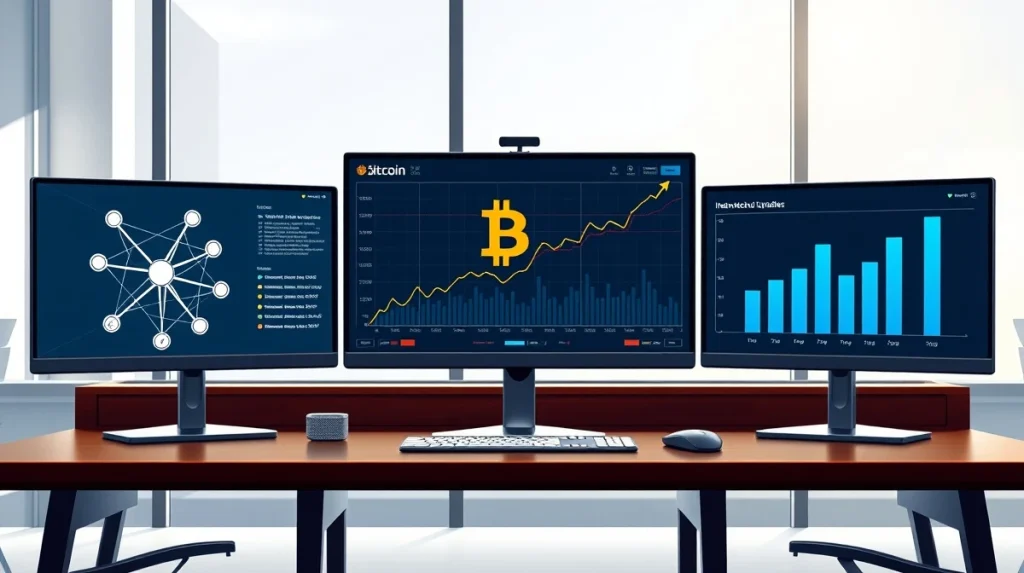
Bitcoin’s price trajectory is capturing headlines again, with analysts setting a $150,000 target for the leading cryptocurrency. Meanwhile, a significant shift in capital is underway. Institutional money is flowing into a specific memecoin, AlphaPepe, at a pace that currently overshadows market interest in Cardano’s latest technical upgrade, Protocol 11. This divergence highlights the complex forces shaping crypto markets in early 2026.
Bitcoin’s Path to $150,000: Analysis and Catalysts
Several prominent analysts have recently pointed to $150,000 as a plausible near-term target for Bitcoin. This projection isn’t made in a vacuum. It follows a period of consolidation and is supported by specific on-chain metrics and macroeconomic factors.
Also read: Telegram-Linked TAC Token Crashes 90% in 15 Minutes: What Happened?
Data from Glassnode shows a continued decline in Bitcoin held on exchanges, suggesting a long-term holding mentality among investors. Furthermore, the approval and subsequent inflows into U.S. spot Bitcoin ETFs have created a new, sustained source of demand. According to Bloomberg Intelligence, these funds have accumulated hundreds of thousands of BTC since their launch in early 2024.
“The supply shock narrative is real,” said James Butterfill, Head of Research at CoinShares, in a client note this month. “When you combine ETF buying with reduced miner sell pressure post-halving, the basic economics support higher prices.” The Bitcoin halving in April 2024 reduced the block reward from 6.25 to 3.125 BTC. Historically, such events have preceded major bull markets, though with a lag time of several months to a year.
Also read: XRP Scarcity Index on Binance Hits Highest Level Since Mid-2024, So Where Did the Coins Go?
Cardano’s Protocol 11 Upgrade: Technical Progress Meets Market Apathy
While Bitcoin dominates price discussions, the Cardano network is undergoing a substantial technical evolution. The Protocol 11 upgrade, now active on the testnet, represents a critical step for the blockchain. Its primary goals are to enhance network throughput and improve the experience for decentralized application (dApp) developers.
Key improvements in Protocol 11 include:
- Enhanced Block Propagation: Aims to reduce network latency, allowing blocks to be shared between nodes more efficiently.
- Node Performance Tweaks: Optimizations intended to lower the computational resources required to run a Cardano node.
- Plutus Script Improvements: Upgrades to Cardano’s smart contract platform designed to reduce costs and increase execution efficiency.
Despite these technical advancements, the market reaction has been muted. Cardano’s native token, ADA, has not seen significant price movement correlated with the testnet launch. This suggests that for many traders, fundamental network upgrades are a secondary concern to immediate capital flows and broader market sentiment.
The Institutional Memecoin Phenomenon
This brings us to the surprising trend of early 2026: institutional accumulation of AlphaPepe. Once considered the exclusive domain of retail speculators, certain memecoins are now attracting sophisticated capital. AlphaPepe, a token with a deflationary mechanism and a portion of fees dedicated to a buyback fund, has reportedly seen consistent buying from a cluster of crypto-focused hedge funds and family offices.
On-chain analytics firm Nansen reported that identified “smart money” wallets have increased their holdings of AlphaPepe by over 300% in the first quarter of 2026. The total value locked in AlphaPepe-related decentralized finance (DeFi) pools has also tripled since December 2025. This activity represents a notable deviation. Institutional players are typically associated with Bitcoin, Ethereum, and large-cap assets, not memecoins.
What explains this move? Some industry watchers note that after a prolonged bear market, institutions with higher risk tolerance are seeking asymmetric bets. “It’s a small allocation play for most of these funds,” said a source at a digital asset fund who requested anonymity. “But the collective action is moving the market. They’re chasing the liquidity and narrative momentum, even if the underlying asset is unconventional.”
Comparing Market Priorities: Technology vs. Capital Flows
The simultaneous occurrence of these events presents a clear contrast in what drives cryptocurrency valuations. On one side is Cardano, executing a detailed roadmap of technical improvements with little immediate price reward. On the other is AlphaPepe, a token with a meme origin story seeing explosive institutional interest.
This isn’t a new story in crypto, but the scale of the institutional move into a memecoin is noteworthy. It implies that capital allocation decisions are increasingly driven by short-term momentum and community sentiment, even among professional investors. The implication for projects like Cardano is challenging. They must continue to build and innovate while competing for attention in a market that often rewards hype over fundamentals.
For Bitcoin, the situation is different. Its $150,000 target is underpinned by both a macro narrative (digital gold, inflation hedge) and concrete, measurable demand from new financial products. This combination gives its price forecast more credibility in traditional finance circles.
What This Means for the Broader Crypto Market
The current dynamics suggest a market that is maturing in some ways and regressing in others. The institutionalization of Bitcoin via ETFs is a landmark development. However, the parallel institutional foray into high-risk memecoins shows that the speculative frenzy the sector is known for is far from over; it’s just attracting different players.
This could signal increased volatility ahead. Large, coordinated moves by institutions into smaller-cap assets like AlphaPepe can create violent price swings. Conversely, their potential exit could be just as rapid. For Cardano and other layer-1 networks, the path forward remains focused on utility. Their long-term value proposition hinges on user adoption and developer activity, not quarterly price trends.
Conclusion
The cryptocurrency market in April 2026 is a tale of diverging strategies. Bitcoin’s march toward $150,000 is fueled by structural demand and macroeconomic trends. Cardano’s Protocol 11 upgrade continues the painstaking work of blockchain scalability. Yet, the most striking action is the institutional accumulation of AlphaPepe, a trend that currently outpaces interest in fundamental network improvements. This triad of events underscores a complex reality: the market is driven by a mix of deep fundamentals, technological progress, and pure, unadulterated speculation—often all at once.
FAQs
Q1: What is the main reason analysts are giving for Bitcoin’s $150,000 price target?
The target is based on a combination of factors: sustained buying by spot Bitcoin ETFs, a decreasing supply of BTC on exchanges indicating holding behavior, and the historical market cycle pattern following the April 2024 halving event.
Q2: What is the practical goal of Cardano’s Protocol 11 upgrade?
Protocol 11 is primarily focused on improving network performance and efficiency. Its goals are to increase transaction throughput, reduce latency in block propagation, and lower the resource requirements for running network nodes, which should improve the experience for developers and users.
Q3: Is institutional investment in a memecoin like AlphaPepe common?
Historically, no. Traditional institutions have largely avoided memecoins, focusing on Bitcoin and major layer-1 tokens. The reported accumulation of AlphaPepe by hedge funds and family offices in early 2026 represents a notable shift, suggesting some professional investors are now willing to take calculated risks on high-volatility, narrative-driven assets.
Q4: Why hasn’t Cardano’s ADA price reacted strongly to the Protocol 11 news?
Market prices often respond more immediately to capital flows, hype, and broader market sentiment than to fundamental technical upgrades. The benefits of Protocol 11 may take time to materialize in terms of user growth and developer adoption, which are longer-term price drivers.
Q5: Could the institutional interest in AlphaPepe be a risk to the market?
Potentially, yes. Concentrated institutional buying in a low-liquidity asset can create a fragile price structure. If these large holders decide to sell simultaneously, it could trigger a steep decline. This activity adds a new layer of volatility risk to a segment of the market already known for its price swings.