Bitcoin at $100,000: Analyzing the Path Forward for BTC Price

The question of when Bitcoin will revisit the $100,000 price level has become a central topic in cryptocurrency markets. After reaching an all-time high near $73,000 in March 2024, the leading digital asset has experienced a period of consolidation, leaving investors and analysts debating the timing and likelihood of a return to six-figure territory.
Current Market Conditions and Historical Context
Bitcoin’s price trajectory has historically followed a cyclical pattern closely tied to its quadrennial halving events, which reduce the rate of new supply entering the market. The most recent halving occurred in April 2024, and previous cycles have seen significant price appreciation in the 12 to 18 months following the event. However, each cycle also features periods of sharp correction and prolonged consolidation.
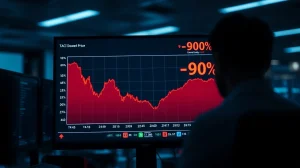
Also read: Telegram-Linked TAC Token Crashes 90% in 15 Minutes: What Happened?
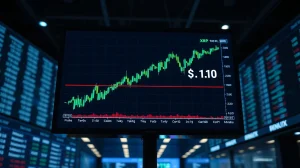
As of early 2025, Bitcoin trades in a range between $60,000 and $70,000, supported by institutional adoption through spot exchange-traded funds (ETFs) in the United States, but constrained by macroeconomic headwinds including persistent inflation and elevated interest rates. The $100,000 level represents a psychological milestone that would require a roughly 50% increase from current prices.
Key Factors Influencing the Path to $100,000
Several variables will determine whether Bitcoin can break above its previous all-time high and reach $100,000. Institutional demand remains a primary driver, with major asset managers and corporations continuing to allocate portions of their portfolios to Bitcoin as a hedge against currency debasement. The approval of spot Bitcoin ETFs in January 2024 opened the door for mainstream investors, contributing to a significant inflow of capital.
Also read: XRP Scarcity Index on Binance Hits Highest Level Since Mid-2024, So Where Did the Coins Go?
Regulatory clarity also plays a critical role. The evolving stance of the U.S. Securities and Exchange Commission and other global regulators toward digital assets creates either tailwinds or headwinds for price appreciation. A clear, supportive regulatory framework could accelerate institutional participation, while restrictive policies may dampen momentum.
Macroeconomic and Geopolitical Considerations
Bitcoin’s narrative as a store of value and inflation hedge is tested during periods of monetary tightening. High interest rates reduce the appeal of risk-on assets like cryptocurrencies, as investors can earn attractive yields in traditional fixed-income markets. A pivot toward monetary easing by the Federal Reserve would likely provide a catalyst for Bitcoin to challenge higher price levels.
Global economic uncertainty, including concerns about sovereign debt levels and currency devaluation in certain regions, has historically driven demand for decentralized assets. These factors, combined with Bitcoin’s fixed supply cap of 21 million coins, underpin the long-term bullish thesis for the asset.
Expert Perspectives and Market Sentiment
Analyst forecasts vary widely. Some models, such as the stock-to-flow model, project Bitcoin reaching $100,000 or higher during the current cycle, while more conservative estimates suggest a peak between $80,000 and $90,000. On-chain metrics, including the number of long-term holders and exchange outflows, indicate that a significant portion of the circulating supply is being held rather than traded, which can reduce selling pressure and support price appreciation.
Market sentiment remains cautiously optimistic, with the Crypto Fear & Greed Index frequently fluctuating between neutral and greed territory. The absence of euphoria typical of previous cycle tops suggests that the market may have room to run before reaching a speculative peak.
Conclusion
While no prediction can be made with certainty, the path for Bitcoin to reach $100,000 again depends on a confluence of favorable factors: continued institutional adoption, a supportive regulatory environment, and a shift toward looser monetary policy. The current cycle still has time to develop, and historical patterns suggest that major moves often occur when market expectations are lowest. Investors should remain focused on the fundamental drivers rather than short-term price action, as the asset’s long-term trajectory remains defined by its growing role in the global financial system.
FAQs
Q1: What is the main factor that could push Bitcoin to $100,000?
The most significant catalyst would be a shift in Federal Reserve policy toward interest rate cuts, combined with sustained institutional demand through spot ETFs and corporate treasuries.
Q2: Has Bitcoin ever been worth $100,000 before?
No, Bitcoin’s all-time high as of early 2025 is approximately $73,000, reached in March 2024. The $100,000 level has not yet been achieved.
Q3: How does the Bitcoin halving affect the price?
The halving reduces the block reward for miners by 50%, decreasing the rate of new Bitcoin supply. Historically, this supply shock has preceded significant price rallies in the 12-18 months following the event.