Five Months to Change Everything: The AI Supercycle Reshaping Global Finance
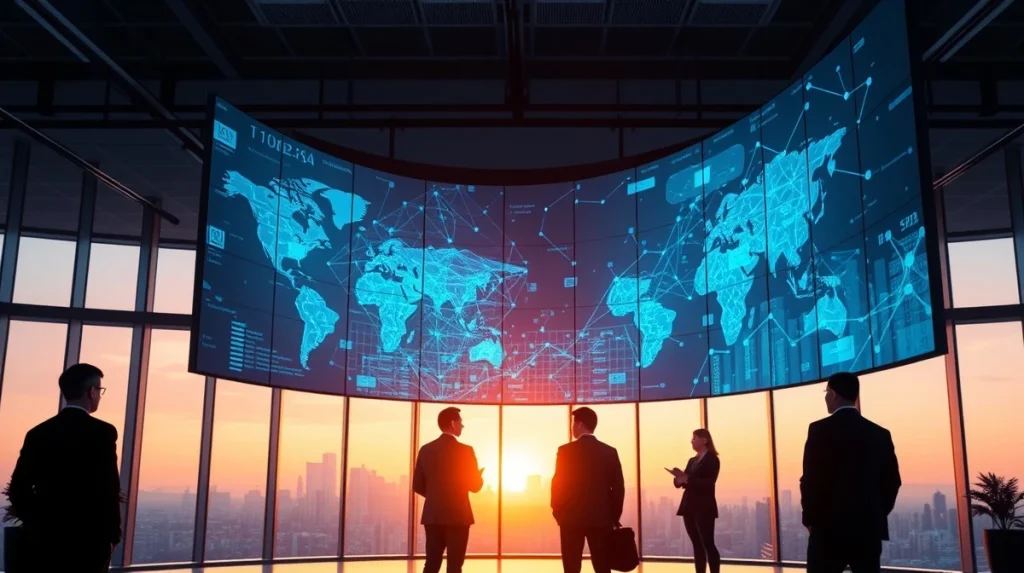
A growing chorus of macro investors argues that a fundamental shift is underway in global finance, one driven not by central bank policy alone, but by the immense capital expenditure required for artificial intelligence infrastructure. The thesis, championed most prominently by macro investor Raoul Pal, posits that traditional macroeconomic variables are now secondary to the single objective of building out the AI compute layer.
The AI Supercycle Thesis Explained
Raoul Pal’s concept of an ‘AI supercycle’ suggests that the global economy is entering a prolonged period of expansion, fueled by the massive investment needed to develop and deploy AI technologies. In this framework, traditional macro policy tools—interest rates, currency interventions, fiscal stimulus—are increasingly bending to accommodate the capital demands of the AI buildout. The dollar, bond yields, oil prices, and even geopolitical strategies from Beijing are, according to this view, downstream effects of a single, overriding objective: the AI capex cycle.
Also read: Lumi Finance Loses $270K in Arbitrum Exploit; Blockaid Flags Sodium Smart Account Flaw
Recent Diplomatic Signals and Market Interpretation
The official readouts from U.S. Treasury Secretary Scott Bessent’s recent trip to Tokyo, Seoul, and Beijing were notably muted, offering little in the way of concrete policy announcements. However, Pal, posting on X, argued that this quiet diplomacy was intentional. He suggested that the real work is occurring behind closed doors, with major economies aligning their macro stances to support the uninterrupted flow of capital and resources into AI infrastructure. This interpretation places recent moves in currency markets and commodity prices into a new, more coherent narrative.
Why This Matters for Investors and the Broader Economy
If the AI supercycle thesis holds, the implications are profound. It suggests that the next five months could be important, as governments and corporations finalize spending plans and work through the logistical challenges of building data centers, securing energy supplies, and manufacturing advanced semiconductors. For investors, this means focusing less on traditional recession indicators and more on the health of the AI supply chain and the fiscal policies supporting it. For the broader economy, it implies a potential decoupling from past business cycle patterns, with inflation and interest rates remaining elevated to fund the buildout, even as growth accelerates.
Also read: CLARITY Act Update: Did JPMorgan Actually Back the Crypto Market Structure Bill?
Conclusion
While the AI supercycle remains a thesis rather than a proven reality, its growing influence on macro strategy is undeniable. The next several months will be critical in testing whether the world’s largest economies can coordinate their policies to sustain this remarkable wave of investment. For now, the markets are watching closely, and the quiet diplomacy of recent weeks suggests that the foundational work is already underway.
FAQs
Q1: What is the AI supercycle thesis?
A1: The AI supercycle thesis, promoted by macro investor Raoul Pal, argues that the global economy is entering a long-term expansion driven by massive capital spending on AI infrastructure. It suggests that traditional macroeconomic factors like interest rates and currency values are now secondary to the goal of funding this AI buildout.
Q2: How does this affect traditional financial markets?
A2: According to the thesis, markets for the U.S. dollar, government bonds, and commodities like oil are increasingly being influenced by the capital demands of AI infrastructure, rather than by traditional business cycle dynamics. This could lead to persistent inflationary pressure and higher interest rates.
Q3: Why is the next five months considered important?
A3: The coming months are seen as a critical window for governments and corporations to finalize investment plans, secure energy and supply chains, and align macroeconomic policies to support the next phase of AI infrastructure deployment. The outcome of these decisions will test the validity of the supercycle thesis.