Ripple’s Mastercard Execution Phase Ignites Blockchain Settlement Revolution for Global Payments
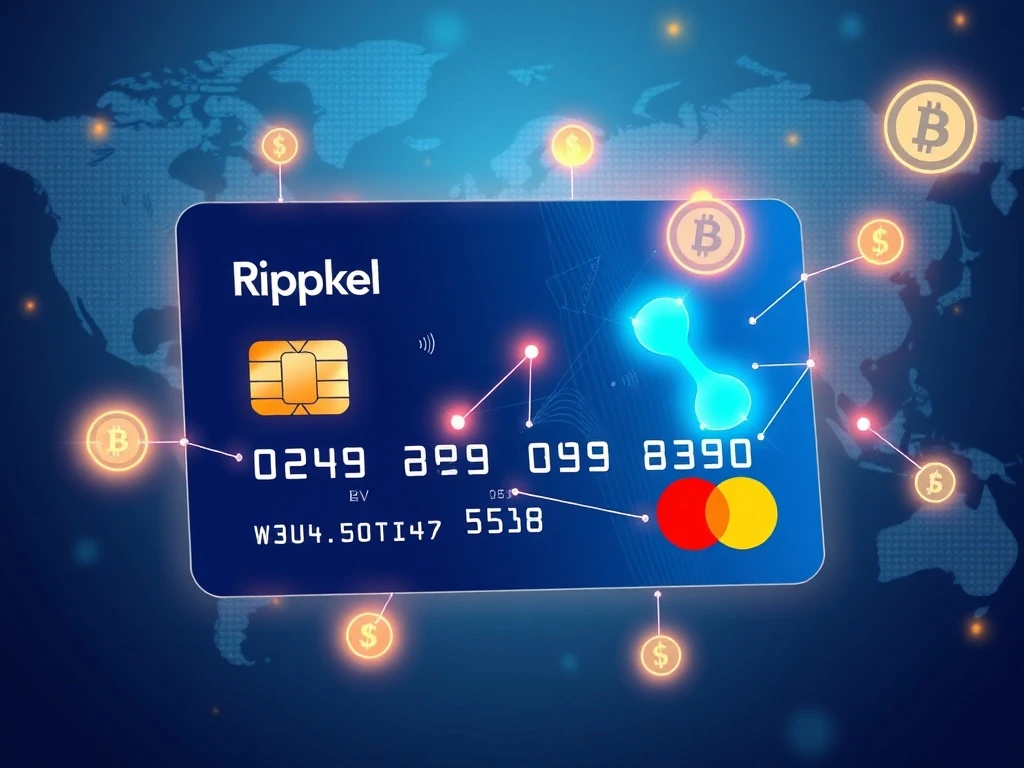
In a landmark development for financial technology, Ripple has officially transitioned from testing to active execution with Mastercard, implementing blockchain-based settlement for live card payments using the RLUSD stablecoin on the XRP Ledger. This strategic move, confirmed by Mastercard CEO Michael Miebach in Q1 2025, represents a significant evolution in how traditional payment networks leverage distributed ledger technology for near-instant settlement.
Ripple’s Mastercard Execution Phase Transforms Payment Infrastructure
The execution phase between Ripple and Mastercard marks a pivotal moment in blockchain adoption within mainstream finance. Consequently, this collaboration demonstrates how established financial institutions now actively implement distributed ledger solutions. The partnership specifically focuses on utilizing Ripple’s RLUSD stablecoin, which operates natively on the XRP Ledger (XRPL), to settle card transactions. This implementation enables settlement times measured in seconds rather than the traditional 1-3 business days required by conventional systems.
Mastercard’s decision to move beyond conceptual testing reflects growing confidence in blockchain’s reliability for high-volume transactions. The company has systematically expanded its blockchain initiatives since 2020, initially exploring central bank digital currencies before progressing to stablecoin integration. Meanwhile, Ripple has developed its payment infrastructure through strategic partnerships with over 100 financial institutions across 55 countries. This execution phase represents the culmination of extensive pilot programs that processed millions in test transactions throughout 2024.
The Technical Architecture Behind Instant Settlements
The implementation leverages several key technological components that enable its real-world functionality:
- RLUSD Stablecoin: Ripple’s dollar-pegged digital currency provides price stability while enabling programmable payments
- XRPL Infrastructure: The decentralized ledger processes transactions in 3-5 seconds with minimal energy consumption
- Interoperability Protocols: Specialized connectors bridge traditional payment networks with blockchain systems
- Regulatory Compliance Frameworks: Built-in mechanisms ensure adherence to global financial regulations
This architecture fundamentally transforms settlement processes. Traditionally, card payments involve multiple intermediaries, each requiring reconciliation. The new system creates a single source of truth on the XRPL, dramatically reducing operational complexity.
Blockchain Settlement Expansion Reshapes Global Payments
The transition to execution phase coincides with broader industry trends toward blockchain integration. Major payment processors have increasingly explored distributed ledger technology throughout the early 2020s. Visa, for instance, launched its own blockchain settlement capabilities in 2023, while SWIFT completed successful blockchain interoperability experiments in 2024. However, Ripple’s partnership with Mastercard represents the first implementation specifically targeting card payment settlement at scale.
Financial analysts highlight several immediate impacts from this development:
| Impact Area | Traditional System | Blockchain Implementation |
|---|---|---|
| Settlement Time | 1-3 business days | 3-5 seconds |
| Transaction Cost | Multiple intermediary fees | Reduced operational expenses |
| Capital Requirements | Substantial float capital | Near elimination of float |
| Transparency | Limited visibility | Complete audit trail |
These improvements particularly benefit cross-border transactions, which traditionally face higher costs and longer settlement times. The implementation initially focuses on business-to-business and premium consumer card products before potential expansion to broader payment categories.
Regulatory Landscape and Market Implications
The execution phase arrives amid evolving regulatory frameworks for stablecoins and blockchain payments. The European Union’s Markets in Crypto-Assets (MiCA) regulation, fully implemented in 2024, provides clear guidelines for stablecoin issuers. Similarly, the United States has progressed toward comprehensive digital asset legislation through 2024’s Financial Innovation and Technology Act. These regulatory developments create more predictable environments for institutional blockchain adoption.
Market analysts project significant implications for the broader payments industry. Traditional correspondent banking relationships may face pressure as blockchain settlement reduces reliance on intermediary banks. Payment processors could potentially offer new services around smart contract-enabled payments, while merchants might benefit from improved cash flow management through faster settlement.
Expert Perspectives on the Payment Revolution
Industry observers emphasize the strategic importance of this development. Sarah Johnson, Director of Digital Assets Research at FinTech Analytics Group, notes: “The Ripple-Mastercard execution phase represents a tipping point for blockchain in payments. We’re moving beyond theoretical benefits to measurable operational improvements.” Her analysis aligns with data from the 2024 Global Payments Report, which identified blockchain settlement as the highest-potential innovation for reducing payment friction.
Meanwhile, banking technology specialists highlight the implementation challenges overcome during testing. The partnership reportedly addressed several critical issues:
- Scalability: Ensuring the system handles peak transaction volumes exceeding 5,000 transactions per second
- Security: Implementing multi-layered protection against both traditional and blockchain-specific threats
- Interoperability: Creating seamless connections between legacy banking systems and the XRPL
- Compliance: Building automated regulatory reporting into the settlement process
These solutions provide a blueprint for other financial institutions considering similar implementations. The successful execution phase suggests that technical barriers to blockchain adoption in payments are increasingly surmountable.
Conclusion
Ripple’s execution phase with Mastercard marks a transformative moment for blockchain settlement in global payments. The implementation of RLUSD stablecoin on the XRPL for card payment settlement demonstrates distributed ledger technology’s practical utility in mainstream finance. This development accelerates the industry’s shift toward faster, more transparent, and cost-effective settlement mechanisms. As blockchain integration progresses from testing to execution, financial institutions worldwide must evaluate how similar implementations could enhance their own payment infrastructures. The Ripple-Mastercard partnership provides both a proof concept and a practical roadmap for this inevitable evolution.
FAQs
Q1: What does “execution phase” mean in the Ripple-Mastercard partnership?
The execution phase indicates that blockchain-based settlement has moved beyond testing into active implementation for live card payments, processing real transactions rather than simulated ones.
Q2: How does RLUSD stablecoin differ from other stablecoins in payments?
RLUSD operates natively on the XRP Ledger, enabling faster settlement (3-5 seconds) and lower transaction costs compared to stablecoins on other blockchains, while maintaining full regulatory compliance.
Q3: What types of card payments will initially use blockchain settlement?
The implementation initially focuses on cross-border business payments and premium consumer card transactions, with potential expansion to broader categories based on performance and regulatory approvals.
Q4: How does blockchain settlement benefit merchants and consumers?
Merchants receive payments faster, improving cash flow, while consumers may eventually benefit from reduced foreign transaction fees and enhanced payment security through blockchain’s transparent audit trail.
Q5: What regulatory frameworks support this blockchain payment implementation?
The implementation complies with the EU’s MiCA regulation, relevant US state money transmitter laws, and global financial action task force recommendations on digital assets, with built-in compliance monitoring.