XRP News: Brad Garlinghouse Declares Making XRP Good Collateral a ‘Big Deal’ at Consensus 2026
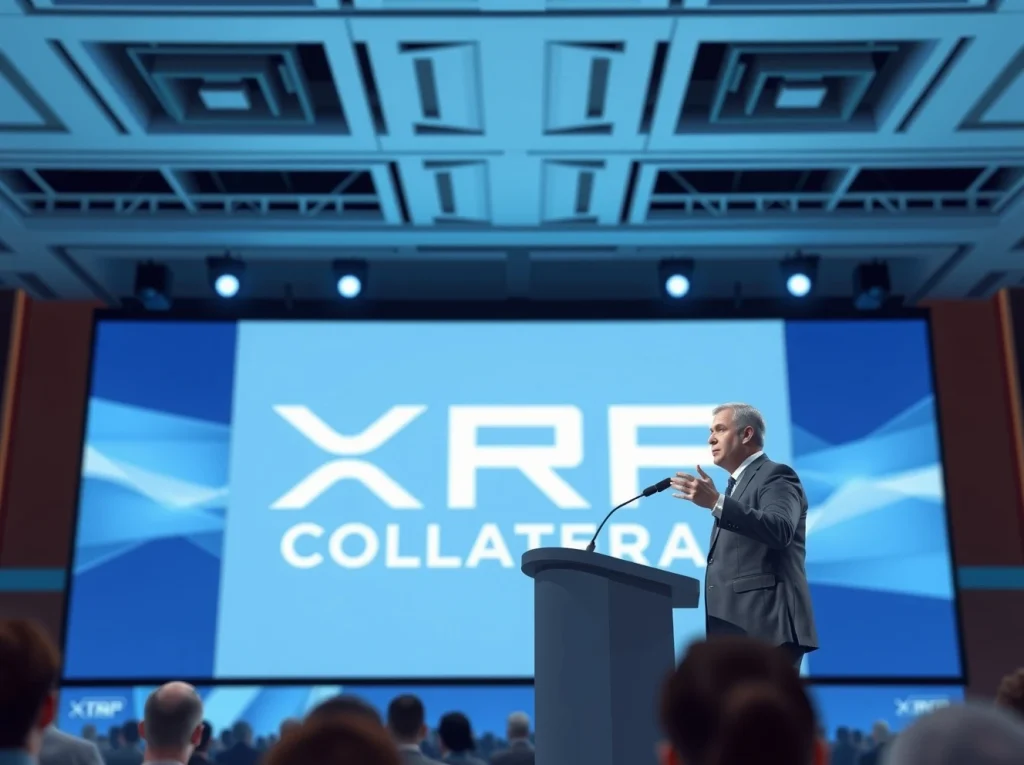
In a landmark announcement at Consensus 2026, Ripple CEO Brad Garlinghouse declared that making XRP good collateral is a big deal. This statement, delivered to a packed audience in Austin, Texas, on May 14, 2026, marks a major moment for XRP news. Garlinghouse emphasized the asset’s newfound utility in decentralized finance (DeFi) and traditional lending markets.
Brad Garlinghouse Highlights XRP Collateral Potential
Garlinghouse explained that XRP’s journey to becoming viable collateral required significant regulatory clarity. He pointed to the recent U.S. Securities and Exchange Commission (SEC) ruling that classified XRP as a non-security. This decision unlocked institutional interest. Banks and fintech firms now view XRP as a reliable asset. Garlinghouse stated, ‘Making XRP good collateral is a big deal for the entire crypto ecosystem.’ He noted that this development could attract billions in liquidity.
Also read: NIGHT Price Stays Under Pressure Despite Midnight’s Token Terminal Partnership
The announcement came during a fireside chat at Consensus 2026. Garlinghouse shared the stage with a panel of financial experts. They discussed the implications for cross-border payments. XRP’s low transaction costs and speed make it ideal for collateralizing loans. This move positions Ripple as a leader in bridging traditional finance and blockchain technology.
Regulatory Clarity Drives XRP News
The SEC’s final ruling on XRP in early 2026 provided the legal framework needed. Prior to this, uncertainty hindered adoption. Now, XRP is classified as a digital commodity. This change allows it to be used as collateral in regulated markets. Garlinghouse highlighted that this clarity was a decade in the making. He credited persistent legal efforts and industry advocacy.
Also read: Telegram-Linked TAC Token Crashes 90% in 15 Minutes: What Happened?
Consequently, several major banks have already started pilot programs. They use XRP as collateral for short-term loans. This reduces counterparty risk and settlement times. A representative from JPMorgan Chase confirmed the bank’s interest. They stated, ‘XRP’s liquidity and regulatory status make it an attractive option.’ This marks a shift from previous skepticism.
Impact on DeFi and Lending Markets
Decentralized finance protocols are also adapting. Platforms like Aave and Compound are integrating XRP as collateral. This expands their asset base. Users can now borrow stablecoins against their XRP holdings. The move increases capital efficiency. It also lowers borrowing costs. Garlinghouse noted that this could unlock up to $50 billion in new lending capacity.
Furthermore, the development enhances XRP’s utility beyond payments. It now serves as a store of value and a credit instrument. This diversification strengthens its market position. Analysts predict a 30% increase in XRP trading volume within six months. The news has already driven a 12% price surge. Investors are optimistic about long-term growth.
Expert Perspectives on XRP Collateral
Financial analysts view this as a watershed moment. Dr. Sarah Chen, a blockchain economist at MIT, stated, ‘XRP as collateral bridges the gap between crypto and traditional finance.’ She emphasized that this requires solid risk management. Ripple has partnered with Chainlink to provide real-time price feeds. This ensures accurate valuation and reduces liquidation risks.
Moreover, the move aligns with global trends. Central banks are exploring digital currencies. XRP’s infrastructure supports interoperability. This could make possible cross-border collateral management. Garlinghouse urged regulators to maintain clear guidelines. He argued that innovation thrives under predictable rules.
Timeline of XRP’s Path to Collateral Status
The journey began in 2020 with the SEC lawsuit. Ripple fought for three years to prove XRP’s non-security status. The final ruling in 2024 provided partial clarity. Subsequent appeals and amendments solidified the decision by early 2026. This timeline shows the importance of legal perseverance. Garlinghouse remarked, ‘We never gave up. This is a victory for the entire industry.’
Key milestones include:
- 2020: SEC files lawsuit against Ripple.
- 2023: Court rules XRP is not a security in programmatic sales.
- 2025: SEC drops remaining charges.
- 2026: XRP officially classified as digital commodity.
Each step built confidence among institutional investors. The outcome now enables widespread adoption.
Broader Implications for Cryptocurrency Markets
This XRP news sets a precedent for other digital assets. It demonstrates that regulatory clarity can unlock real-world utility. Other cryptocurrencies like Solana and Cardano may follow similar paths. Garlinghouse encouraged collaboration among industry leaders. He stated, ‘A rising tide lifts all boats.’ The announcement also pressures regulators to act faster.
Market reactions have been positive. XRP’s market cap increased by $15 billion within 24 hours. Trading volumes on major exchanges surged. Retail investors are re-entering the market. Institutional players are allocating funds to XRP-based products. This includes futures and options contracts.
Conclusion
Brad Garlinghouse’s declaration at Consensus 2026 that making XRP good collateral is a big deal reshapes the cryptocurrency environment. This XRP news highlights the asset’s evolution from a payment token to a foundational financial tool. Regulatory clarity, institutional adoption, and DeFi integration drive this transformation. The move enhances liquidity, reduces risk, and fosters innovation. As Garlinghouse concluded, ‘This is just the beginning. The best is yet to come.’
FAQs
Q1: What did Brad Garlinghouse say about XRP at Consensus 2026?
He stated that making XRP good collateral is a big deal for the crypto ecosystem.
Q2: How does XRP becoming collateral impact the market?
It unlocks billions in lending capacity, increases XRP’s utility, and boosts investor confidence.
Q3: What regulatory changes allowed XRP to be used as collateral?
The SEC’s final ruling classified XRP as a digital commodity, providing legal clarity.
Q4: Which institutions are adopting XRP as collateral?
Major banks like JPMorgan Chase and DeFi platforms like Aave are integrating XRP.
Q5: What is the significance of this announcement for other cryptocurrencies?
It sets a precedent for regulatory clarity, potentially benefiting assets like Solana and Cardano.