Flare Network Deploys Smart Accounts v1.3, Accelerating XRPFi Infrastructure
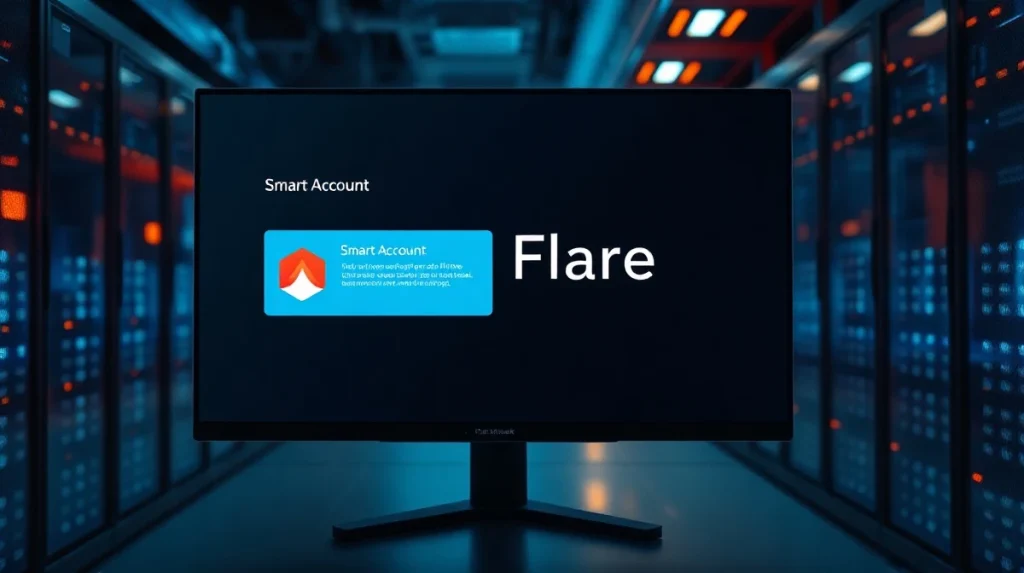
The Flare Network has officially released Smart Accounts v1.3, a significant upgrade to its account abstraction framework. The rollout, confirmed by the Flare development team on March 14, 2024, aims to provide developers with more sophisticated tools for building decentralized applications (dApps) that can natively manage XRP and other assets, further cementing the network’s role in the emerging XRPFi sector.
Smart Accounts v1.3 introduces advanced capabilities for customizing transaction execution, allowing developers to program more complex logic for how accounts interact with smart contracts. This includes enhanced options for batching transactions, sponsoring gas fees for users, and implementing custom security checks. These features are designed to lower the barrier to entry for new users and enable a new class of DeFi applications that were previously difficult to build on the network.
Also read: Gemini Enables Native XRP Ledger Transfers for Singapore Users
What Smart Accounts v1.3 Unlocks for Developers
The core of this update is an expansion of the account abstraction model, which separates an account’s ownership from its transaction-signing logic. This separation allows for a wide range of new functionalities:
- Gas Station Network (GSN) Integration: Developers can now more easily implement mechanisms to pay for users’ transaction fees, removing a major friction point for onboarding non-crypto-native users.
- Multi-Signature and Social Recovery: The update includes improved primitives for building multi-signature wallets and social recovery features, enhancing security for high-value accounts.
- Custom Execution Logic: Developers can write arbitrary logic for transaction validation and execution, enabling features like automatic token swaps, conditional orders, and subscription-based payments directly from a user’s smart account.
These capabilities are not entirely new to the broader blockchain space—Ethereum has been pursuing similar goals through ERC-4337—but Flare’s implementation is tailored to its specific architecture and its focus on bridging assets like XRP, Litecoin, and Dogecoin into a smart contract environment.
Also read: STX Price Prediction 2026: How Bitcoin Staking and DeFi Growth Could Drive Stacks
Strengthening the XRPFi Narrative
The term “XRPFi” refers to the growing ecosystem of decentralized finance applications built on or in conjunction with the XRP Ledger (XRPL). Flare Network plays a key role in this ecosystem by providing a Turing-complete smart contract platform that can securely use XRP as a primary asset. The Flare Time Series Oracle (FTSO) provides decentralized price data for XRP and other assets, which is critical for DeFi protocols like lending markets and decentralized exchanges.
With Smart Accounts v1.3, Flare is directly addressing some of the limitations that have historically hindered DeFi development on the XRPL, such as the lack of native account abstraction and complex smart contract capabilities. By offering a more flexible and user-friendly development environment, Flare aims to attract projects that want to build sophisticated financial products without leaving the XRP ecosystem.
What This Means for the Broader Market
The timing of this upgrade is notable. As regulatory clarity around digital assets, particularly XRP, improves in key jurisdictions, the appetite for building regulated DeFi applications is expected to grow. Flare’s focus on providing a compliant-ready infrastructure—including its integration with the XRPL’s native features and its decentralized oracle network—positions it to capture a share of this anticipated demand.
For end users, the practical benefits may not be immediately visible, but they are foundational. The ability to create applications where users do not need to manage private keys directly, or where transactions can be automated based on predefined conditions, is a significant step toward making DeFi more accessible and less intimidating. The success of this upgrade will ultimately be measured by the number and quality of dApps that launch on Flare in the coming months.
The Flare Network’s development team has indicated that further enhancements to the Smart Accounts framework are planned for later this year, focusing on interoperability with other blockchain networks and improved developer tooling.