Ethereum Triangle Breakdown: The Critical Support Level Revealed as Whales Face Historic Capitulation
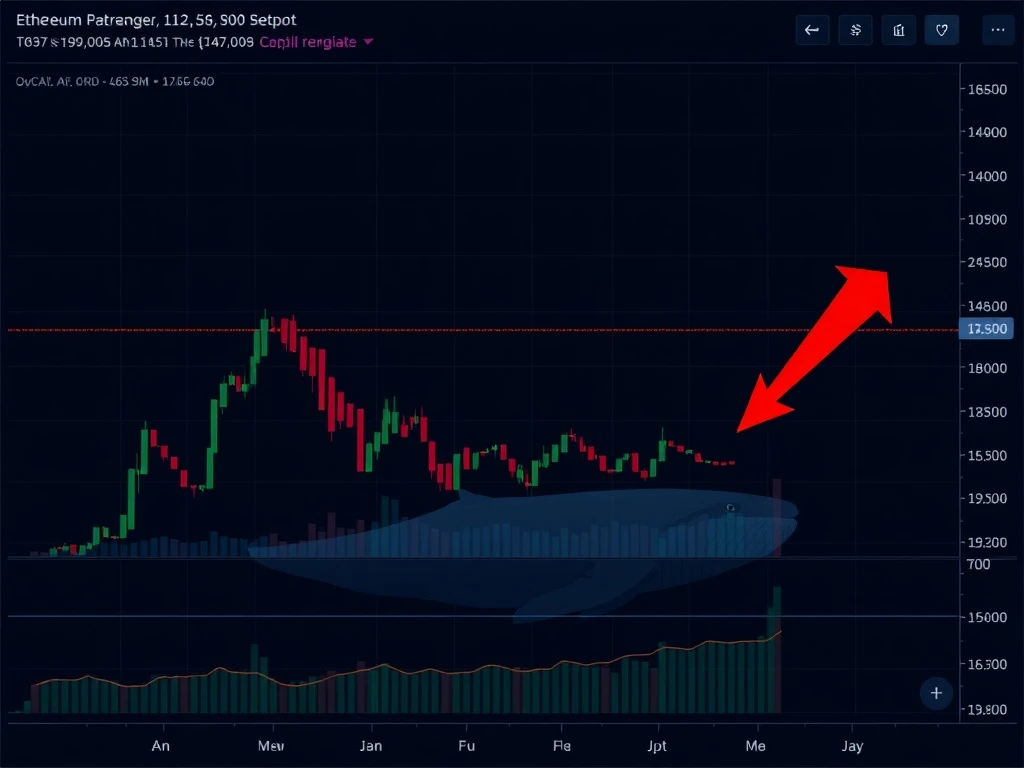
Market analysts worldwide are scrutinizing a crucial technical pattern in Ethereum’s charts as new data reveals every major whale cohort now holds positions underwater, potentially signaling a final capitulation phase before a market reversal. This convergence of technical and on-chain metrics presents a pivotal moment for ETH investors navigating the volatile 2025 cryptocurrency landscape. The critical question remains: what specific price level must hold to prevent further significant downside?
Ethereum Triangle Breakdown: Technical Analysis of the Critical Pattern
Technical analysts have identified a descending triangle formation on Ethereum’s medium-term charts, a pattern historically associated with continuation of the prevailing downtrend. This geometric pattern forms as price makes lower highs while finding consistent support at a horizontal level, creating a triangular shape that typically resolves with a breakout. The current ETH pattern has developed over approximately twelve weeks, showing remarkable symmetry in its structure.
Also read: CryptoNewsInsights Surge: Tokenization Platform's $8,000 Price Target Stuns Market
Market technicians emphasize several key characteristics of this formation. First, the descending upper boundary has been tested four times with decreasing intensity, showing weakening bullish momentum. Second, the horizontal support around $2,150 has held through multiple tests, creating a clear battle line between buyers and sellers. Finally, trading volume has generally declined throughout the pattern’s development, a common characteristic before significant breakouts.
The Precise Support Level to Monitor
Technical analysis principles suggest the measured move target following a triangle breakdown equals the pattern’s height projected downward from the breakout point. For the current Ethereum formation, this calculation yields a critical support zone between $1,850 and $1,920. This area represents not only a technical projection but also coincides with several historical support levels from 2023 and 2024, potentially creating a strong confluence zone.
Also read: Crypto Exchange Reserves Plummet as Corporate Buying Intensifies – A Critical Liquidity Warning
Market data from major exchanges shows significant liquidity clustering around these levels, with large limit orders waiting to execute if prices decline further. Additionally, this zone aligns with the 0.786 Fibonacci retracement level from Ethereum’s 2023 low to its 2024 high, adding another layer of technical significance. The $1,880 level specifically has appeared as a recurring pivot point throughout Ethereum’s trading history.
Whale Cohort Capitulation: Understanding the On-Chain Reality
Blockchain analytics firm CryptoNewsInsights released startling data revealing that all major Ethereum whale cohorts—defined as addresses holding between 1,000 and 10,000 ETH—now hold unrealized losses on their positions. This unprecedented situation marks the first time since Ethereum’s 2018 bear market that such widespread underwater positioning has occurred among the network’s largest stakeholders.
The data reveals several crucial insights about current market structure. Whale addresses holding between 1,000-10,000 ETH have accumulated approximately 8.2% of the total supply during the recent decline, suggesting accumulation despite paper losses. Exchange outflow data indicates whales are moving tokens to cold storage rather than selling, with a 34% increase in withdrawals over the past month. The average cost basis for these cohorts sits approximately 18% above current prices, creating significant psychological pressure.
| Cohort Size (ETH) | % of Total Supply | Average Cost Basis | Current Status |
|---|---|---|---|
| 1,000 – 10,000 | 8.2% | $2,540 | Underwater |
| 10,000 – 100,000 | 12.7% | $2,610 | Underwater |
| 100,000+ | 6.3% | $2,490 | Underwater |
Historical Context of Whale Capitulation Events
Historical analysis reveals that similar whale capitulation events have frequently marked significant market bottoms. During Ethereum’s 2018 bear market, whale cohorts reached similar underwater status approximately three weeks before prices formed a durable bottom. The 2020 market collapse saw parallel dynamics, with whale capitulation preceding a 480% rally over the following twelve months.
Market historians note several consistent patterns during these events. First, capitulation typically occurs in waves rather than simultaneously across all cohorts. Second, the final selling pressure often comes from leveraged positions rather than core holdings. Third, recovery periods vary significantly based on broader market conditions and fundamental developments within the Ethereum ecosystem.
Market Bottom Signals: Converging Technical and Fundamental Factors
Several converging indicators suggest the current market conditions may represent a cyclical bottom formation rather than merely another decline. The CryptoNewsInsights Whale Capitulation Index, which tracks the percentage of large holders at a loss, has reached levels historically associated with market reversals. This metric currently reads 94.7%, surpassing previous bottom signals in 2018 (91.2%) and 2020 (88.5%).
Fundamental developments within the Ethereum ecosystem continue despite price pressures. The network recently processed its one billionth transaction milestone, demonstrating sustained utility growth. Daily active addresses remain above 450,000, showing robust user engagement. Additionally, the total value locked in Ethereum DeFi protocols has stabilized around $42 billion despite market volatility.
- Network Fundamentals: Transaction count and active addresses show resilience
- Development Activity: GitHub commits remain consistently high
- Institutional Interest: ETF flows show accumulation patterns
- Derivatives Data: Funding rates have normalized from extreme negativity
Expert Perspectives on Current Market Conditions
Leading cryptocurrency analysts emphasize the importance of distinguishing between technical breakdowns and fundamental deterioration. While price patterns suggest potential further downside, Ethereum’s underlying network metrics show remarkable strength. This divergence between price and utility represents a classic value opportunity according to several institutional research reports.
Market structure analysts point to derivatives data as particularly informative. The normalization of funding rates across major exchanges suggests excessive pessimism has diminished. Open interest has declined approximately 28% from recent highs, indicating leverage reduction and potentially creating conditions for a healthier advance when sentiment shifts. Options market data shows increasing demand for longer-dated calls, suggesting sophisticated investors are positioning for eventual recovery.
Risk Management Strategies During Pattern Resolution
Professional traders emphasize specific risk management approaches during technical pattern resolutions. Position sizing becomes particularly crucial when support levels are tested, with many institutions implementing scaled entry strategies rather than binary positions. Stop-loss placement requires careful consideration of both technical levels and volatility metrics, typically using Average True Range calculations rather than fixed percentages.
The current market environment presents several specific risk considerations. First, correlation with traditional markets remains elevated, requiring monitoring of broader financial conditions. Second, regulatory developments continue to influence cryptocurrency valuations, particularly regarding institutional adoption pathways. Third, technological milestones like Ethereum’s ongoing protocol upgrades create both opportunities and implementation risks.
Monitoring Key Metrics for Pattern Confirmation
Traders should monitor several specific metrics to confirm pattern resolution direction. A breakdown below triangle support requires confirmation through both price action and volume characteristics. Specifically, a daily close below $2,150 with expanding volume would suggest bearish resolution, while a rejection from this level with decreasing selling pressure might indicate failed breakdown.
On-chain metrics provide complementary signals for pattern interpretation. Exchange net flow data indicates whether coins are moving to or from trading platforms, with sustained outflows typically bullish. The Network Value to Transactions (NVT) ratio helps assess whether network usage justifies current valuations. Miner and validator behavior also offers insights into network health and stakeholder confidence.
Conclusion
The convergence of Ethereum’s triangle pattern with unprecedented whale capitulation creates a critical juncture for cryptocurrency markets. The $1,850-$1,920 support zone represents the key technical level to monitor if breakdown occurs, while on-chain data suggests current conditions may resemble historical bottom formations. This Ethereum triangle breakdown analysis provides a framework for understanding both immediate technical risks and longer-term cyclical opportunities as markets navigate this complex phase. Ultimately, the resolution of this technical pattern will likely provide important signals about Ethereum’s medium-term trajectory within the evolving 2025 cryptocurrency landscape.
FAQs
Q1: What exactly is a descending triangle pattern in technical analysis?
A descending triangle is a bearish chart pattern characterized by a horizontal support line and a descending resistance line. It typically forms during downtrends and suggests continuation of selling pressure, with the measured move target calculated by projecting the pattern’s height downward from the breakout point.
Q2: How does whale capitulation potentially signal a market bottom?
Historical data shows that when large holders (whales) collectively hold underwater positions, selling pressure often exhausts as weak hands exit positions. This capitulation frequently precedes market reversals because it represents maximum pessimism, after which only committed long-term holders remain.
Q3: What other indicators should traders monitor alongside the triangle pattern?
Traders should watch volume confirmation on breakdowns or reversals, RSI divergences that might indicate weakening momentum, on-chain metrics like exchange flows, and broader market sentiment indicators. The convergence of multiple signals typically provides higher-probability trading setups.
Q4: How reliable are triangle patterns for predicting price movements?
While triangle patterns provide useful frameworks for understanding market structure, they should never be used in isolation. Statistical analysis shows triangle breakouts reach their measured targets approximately 65-70% of the time, making them probabilistic rather than deterministic indicators.
Q5: What time frame is most relevant for the current Ethereum triangle pattern?
The pattern has developed on daily charts over approximately twelve weeks, making it most relevant for medium-term traders and investors. Shorter-term traders might focus on intraday developments around key levels, while longer-term investors should consider fundamental factors beyond technical patterns.

This article was produced with AI assistance and reviewed by our editorial team for accuracy and quality.