Bitcoin Mining Electricity Cost in 2026: The Critical Profitability Challenge for Miners
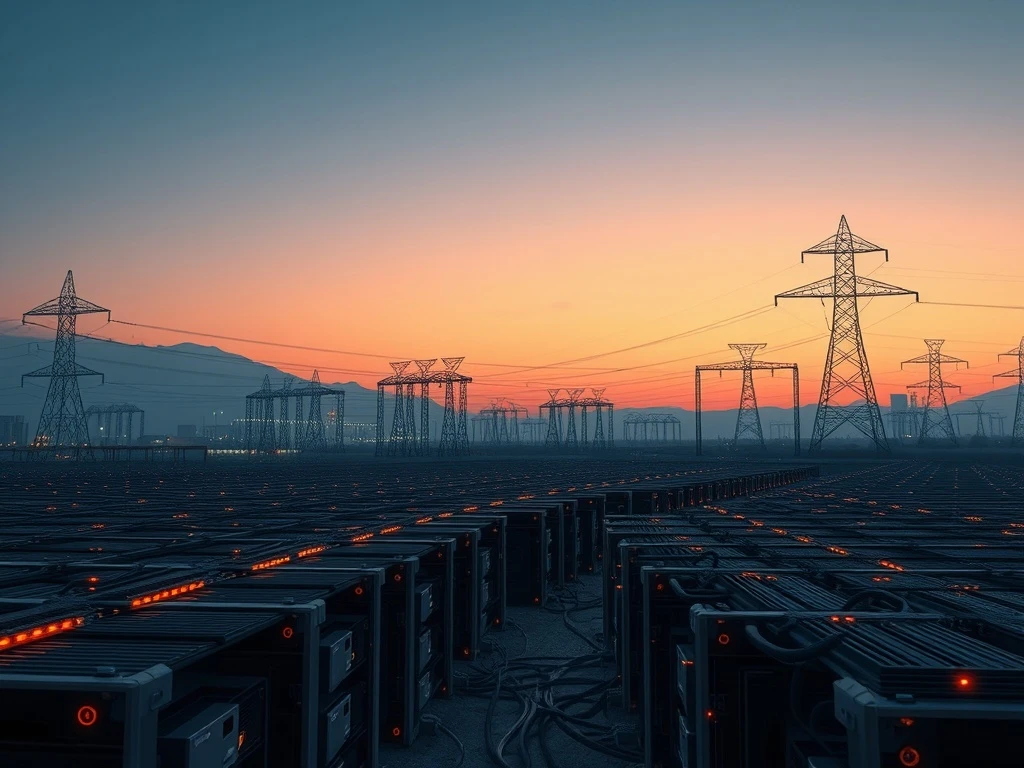
Global, December 2024 – The evolving environment of Bitcoin mining faces a central challenge as industry analysts project the electricity cost in 2026 will become the single most critical factor determining operational survival and profitability. Consequently, miners worldwide are preparing for a new era defined by energy innovation and financial precision.
Bitcoin Mining Electricity Cost in 2026: The Core Determinants
Three primary factors fundamentally dictate Bitcoin mining profitability. First, electricity cost represents the most significant and variable operational expense. Second, hardware efficiency determines how much computational work a miner can perform per watt of energy consumed. Finally, the market price of BTC establishes the revenue potential for each block reward. Historically, early miners operated with minimal concern for power bills. However, the industrial-scale operations of today require meticulous financial planning. For instance, a one-cent difference in electricity cost per kilowatt-hour can translate to millions in annual expenses for large facilities.
Also read: Bitcoin Death Cross Hints at Final Capitulation as Analysts Target $30K-$40K Macro Bottom
Industry data reveals a stark evolution. In Bitcoin’s early years, individuals could mine using standard desktop computers. The network’s low difficulty and minimal competition kept energy costs negligible. By contrast, the current ecosystem demands specialized Application-Specific Integrated Circuit (ASIC) miners. These machines consume vast amounts of power while solving complex cryptographic puzzles. Therefore, securing cheap, reliable electricity is no longer a luxury but an absolute necessity for commercial success.
The Global Energy Context for Cryptocurrency Mining
The geographic distribution of mining operations directly responds to regional energy prices and policies. Previously, China hosted a dominant share of the global Bitcoin hash rate. Stringent regulatory crackdowns in 2021, however, triggered a massive migration. Miners subsequently relocated to regions with favorable conditions. The United States, Kazakhstan, and Russia emerged as major hubs. Each location offers a distinct energy profile, from natural gas and coal to hydroelectric and nuclear power.
Also read: Ethereum's Puzzling Plunge: Record Network Usage Fails to Stop 33% Q1 Price Crash
Looking toward 2026, several macro-energy trends will inevitably influence mining economics. The global transition to renewable energy sources creates both opportunities and uncertainties. Solar and wind power, while sustainable, can be intermittent. Mining operations must therefore integrate sophisticated energy storage solutions or hybrid systems. Furthermore, increasing political and public scrutiny regarding the environmental impact of Proof-of-Work cryptocurrencies pressures miners to adopt greener practices. This societal shift could lead to carbon taxes or preferential grid access for verified clean-energy mining, adding another layer of cost complexity.
Expert Analysis on Hardware Efficiency Gains
Technological advancement in ASIC miners provides a vital counterbalance to rising energy costs. Leading manufacturers like Bitmain, MicroBT, and Canaan continuously release new models with improved joules per terahash (J/TH) ratings. This metric measures energy efficiency. Each new generation aims to deliver more computational power for the same or less electricity. For example, the shift from 7-nanometer to 5-nanometer chip technology marked a significant leap. Experts predict that by 2026, next-generation 3-nanometer or even more advanced chips could become standard.
Nevertheless, these efficiency gains come with a substantial upfront capital cost. Miners must calculate the payback period for new hardware. This calculation weighs the reduced operating expense against the machine’s purchase price and the ever-increasing network difficulty. A report from the Cambridge Centre for Alternative Finance suggests that the average lifespan of a competitive mining rig is now roughly 18-24 months before obsolescence. This rapid cycle forces continuous reinvestment, tightly coupling capital expenditure with operational energy strategy.
Modeling Profitability: A Data-Driven Forecast
Forecasting mining economics requires synthesizing multiple volatile variables. Analysts build models that project the Bitcoin network’s hash rate, block reward adjustments (including post-halving effects), and average electricity prices. The next Bitcoin halving, expected in 2024, will cut the block reward from 6.25 BTC to 3.125 BTC. This event historically induces market volatility and pressures less efficient miners out of the network. By 2026, the industry will have fully absorbed this new reward schedule.
The following table illustrates a simplified sensitivity analysis for a hypothetical mining operation in 2026:
| Electricity Cost (¢/kWh) | BTC Price (USD) | ASIC Efficiency (J/TH) | Projected Daily Profit/Margin |
|---|---|---|---|
| 4¢ | $80,000 | 20 | High Profitability |
| 7¢ | $80,000 | 20 | Moderate Profitability |
| 10¢ | $80,000 | 20 | Break-even / Low Margin |
| 7¢ | $50,000 | 25 | Potential Loss |
This model clearly demonstrates the interplay between core factors. A low electricity cost can sustain operations even during moderate BTC price periods. Conversely, high efficiency can partially offset expensive power. The break-even point is a dynamic frontier that miners must constantly monitor.
Strategic Adaptations and Future-Proofing
Forward-thinking mining companies are already deploying strategies to secure their 2026 position. These adaptations include:
- Power Purchase Agreements (PPAs): Securing long-term, fixed-rate contracts with energy producers to hedge against market price volatility.
- Grid Balancing Services: Participating in demand-response programs, where miners voluntarily power down during peak grid stress in exchange for credits or payments.
- Flared Gas Mitigation: Partnering with oil and gas producers to utilize otherwise wasted stranded or flared gas for on-site generation.
- Modular & Mobile Operations: Deploying containerized mining units that can be relocated to follow seasonal or regional energy surpluses, such as hydroelectric abundance during rainy seasons.
Additionally, the rise of ordinal inscriptions and other blockchain-based data storage methods could provide auxiliary revenue streams. These innovations might help subsidize energy costs by adding transaction fee revenue beyond the base block reward. However, their long-term economic viability remains a subject of active research within the cryptocurrency community.
Conclusion
The Bitcoin mining electricity cost in 2026 will undoubtedly serve as the ultimate gatekeeper for industry participation. Profitability will hinge not on a single factor but on the sophisticated management of the trifecta: energy expense, hardware capability, and Bitcoin’s market valuation. Miners who successfully work through this complex equation through strategic planning, technological adoption, and operational flexibility will likely thrive. The industry’s future, therefore, points toward greater integration with the global energy sector and a relentless pursuit of efficiency. Understanding these dynamics is essential for anyone involved in or observing the cryptocurrency ecosystem.
FAQs
Q1: What is the single biggest cost for a Bitcoin mining operation?
The overwhelming majority of ongoing operational costs, often 70-90%, are attributed to electricity consumption. This makes securing low-cost power the primary focus for profitable mining.
Q2: How does the Bitcoin halving in 2024 affect costs in 2026?
The halving cuts the block reward in half, directly reducing mining revenue per block. By 2026, the market and mining network will have adjusted. This makes operational efficiency and low electricity costs even more critical to compensate for the reduced reward.
Q3: Can renewable energy solve the high cost problem for miners?
Renewables like solar and wind can provide very low marginal costs after installation. However, their intermittent nature requires pairing with energy storage (batteries) or a stable grid backup, adding capital expense. They are a key part of the solution but not a simple fix.
Q4: What happens to miners who cannot access cheap electricity by 2026?
Miners operating with persistently high electricity costs will see their profit margins erode. They will likely become uncompetitive and be forced to shut down their operations unless they can find other strategic advantages or revenue streams.
Q5: Is home Bitcoin mining still feasible considering future electricity costs?
For most individuals, home mining with retail electricity rates is generally not feasible for Bitcoin in 2026. The scale and efficiency required are too great. However, mining other, less competitive cryptocurrencies or participating in cloud mining contracts may remain options.

This article was produced with AI assistance and reviewed by our editorial team for accuracy and quality.