Bitcoin Price Surge Meets Japan’s Regulatory Revolution: A Market Inflection Point

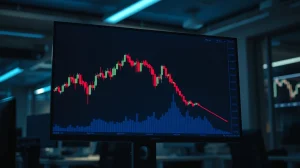
Bitcoin’s price surged past $73,000 again this week, but the real story may be unfolding in Tokyo. As the digital asset reclaims a key psychological level, Japan is implementing the most significant overhaul of its cryptocurrency rules in nearly a decade. This confluence of technical price action and fundamental regulatory change creates a critical juncture for the market’s structure. Data from CoinMetrics shows Bitcoin’s market capitalization has grown by over 40% in the first quarter of 2026. Meanwhile, Japan’s Financial Services Agency (FSA) is finalizing rules that could redirect billions in institutional capital. The timing is not coincidental. Market analysts see these events as deeply interconnected.
Japan’s Crypto Reform: A Structural Shift
Japan’s regulatory changes are not minor tweaks. They represent a foundational shift in how the world’s third-largest economy treats digital assets. The reforms, passed by Japan’s Diet in late 2025 and now entering the implementation phase, have several core components. First, they remove barriers for major traditional investment trusts, similar to U.S.-style ETFs, to hold crypto assets directly. Second, they streamline the licensing process for crypto exchanges, aiming to reduce a backlog that has stifled competition. Third, and perhaps most significantly, the rules provide clearer tax guidance for corporations holding digital assets on their balance sheets.
Also read: Zcash Co-Founder Eli Ben-Sasson Questions Bitcoin's 21M Cap, Proposes 4% Annual Growth
According to a white paper published by the FSA in March 2026, the goal is to make Japan “a more competitive environment for digital asset innovation while ensuring solid consumer protection.” This marks a notable pivot. Japan was once a leading crypto market but saw its influence wane after the 2018 Coincheck hack and subsequent strict regulations. Industry watchers note that the new approach seeks to reclaim that lost ground. “Japan is methodically rebuilding its framework,” said a report from the Nomura Research Institute. “The implication is a more open door for institutional participation.”
Bitcoin’s $73,000 Reclaim: More Than a Number
Bitcoin’s return to the $73,000 level is a key technical event. Data from blockchain analytics firm Glassnode indicates that the move was accompanied by a substantial increase in exchange inflows from long-term holders. This suggests some profit-taking, but on-chain metrics also show strong accumulation by larger addresses. The price recovery follows a period of consolidation that lasted several weeks. Trading volume spiked by over 60% on major global exchanges during the ascent, according to data aggregated by CryptoCompare.
Also read: Binance DOJ Report Raises New Questions About Crypto Enforcement
What does this mean for investors? The breakout above a previous resistance level often attracts momentum-driven capital. However, the context matters greatly. This price action is occurring alongside tangible regulatory progress in a major economy, not in a vacuum. The simultaneous developments create a feedback loop. Positive regulatory news can improve sentiment, driving price. A rising price, in turn, validates regulatory efforts for policymakers watching market reception. This interplay between policy and price is now a central feature of crypto markets.
The Institutional Calculus: Japan as a New Gateway
The potential impact of Japan’s reforms extends far beyond its borders. Japan’s Government Pension Investment Fund (GPIF), the world’s largest pension fund with over $1.5 trillion in assets, announced in January 2026 that it would begin researching digital assets as part of its diversified portfolio. While no investment has been made, the signal was powerful. Other Japanese institutional giants, like megabanks and insurance firms, have been cautiously exploring the space, awaiting clearer rules.
With the new regulatory path, these entities could begin allocating capital in a more meaningful way. Analysts at Bloomberg Intelligence estimate that even a small allocation from Japan’s vast institutional pools could represent tens of billions of dollars in new demand for assets like Bitcoin. This demand would likely be channeled through regulated domestic custodians and exchanges, fundamentally altering liquidity patterns in the Asia-Pacific region. The structure of the market—where trading occurs and who the major holders are—could see a notable eastward shift.
Global Regulatory Divergence and Market Fragmentation
Japan’s move highlights a growing global divergence in crypto regulation. The United States has taken a slower, enforcement-heavy approach under the SEC. The European Union has implemented its comprehensive Markets in Crypto-Assets (MiCA) framework. Singapore and Hong Kong have also established distinct regimes. Japan’s latest reforms place it in a more competitive stance with Singapore and Hong Kong for regional hub status.
This divergence leads to market fragmentation. Trading hours, liquidity, and available products differ by jurisdiction. For global asset managers, this creates complexity but also opportunity. They can seek the most favorable regulatory environments for different activities. Japan’s reforms, particularly around investment trusts, could make it a preferred location for launching new funds aimed at Asian investors. This could siphon product innovation and capital flow from other regions.
Risks and Challenges on the New Path
Despite the optimistic outlook, significant challenges remain. Implementing complex financial regulations takes time and can encounter unforeseen obstacles. Japan’s banking sector, while innovative, is also known for its risk aversion. Widespread adoption by the largest institutions may still be gradual. Furthermore, global macroeconomic factors, such as interest rate decisions by the U.S. Federal Reserve or the Bank of Japan, continue to exert a powerful influence on the price of risk assets like Bitcoin. A shift toward tighter monetary policy could dampen enthusiasm across all markets.
Another consideration is technological. Japan’s reforms require exchanges and custodians to meet stringent operational resilience standards. Scaling this infrastructure to handle a potential influx of institutional volume will be a test. Security remains a paramount concern for regulators still mindful of past exchange failures. The success of the new framework will depend on its execution in the coming 12 to 18 months.
Conclusion
Bitcoin’s price recovery to $73,000 and Japan’s concurrent regulatory revolution are not separate events. They are intertwined developments signaling a potential inflection point. Japan is positioning itself to capture a new wave of institutional crypto investment. If successful, this could reshape Asia’s market structure and provide a fresh source of sustained demand for digital assets. For market participants, the critical task is to monitor the implementation of these rules and the subsequent flow of capital. The coming months will reveal whether this juncture leads to a lasting change in the Bitcoin market’s architecture or a temporary realignment. The balance between regulatory clarity and market momentum will define the next phase.
FAQs
Q1: What are the main components of Japan’s new crypto reforms?
The reforms focus on three areas: allowing traditional investment trusts to hold crypto, streamlining exchange licensing, and clarifying corporate tax treatment for digital asset holdings. The goal is to attract institutional investment while maintaining consumer protections.
Q2: How could Japan’s reforms affect Bitcoin’s price?
By making it easier for large Japanese institutions like pension funds and banks to invest, the reforms could open a new source of large-scale, long-term demand. This fundamental change in the investor base could provide support for prices beyond typical retail trading cycles.
Q3: Is Japan’s approach different from the United States?
Yes. Japan is creating a comprehensive regulatory framework for crypto asset services through its financial regulator, the FSA. The U.S. currently lacks a unified federal framework, with regulation split between the SEC, which often treats crypto as securities, and the CFTC, which treats them as commodities.
Q4: What is the significance of Bitcoin trading above $73,000?
From a technical analysis perspective, reclaiming a previous high price level can indicate sustained bullish momentum and break through selling pressure. It often attracts attention from traders and can act as a catalyst for further gains if volume supports the move.
Q5: When will Japan’s new rules take full effect?
The legislation was passed in late 2025. The Financial Services Agency is now in the rule-making and implementation phase, which is expected to unfold throughout 2026. Specific licenses and products under the new rules will likely begin appearing in the second half of the year.