Bitcoin Futures Imbalance Sparks Fears of Explosive Liquidation Rally to $90K
Global cryptocurrency markets face a critical juncture as Bitcoin’s recent price decline creates what analysts describe as a dangerous futures market imbalance, potentially setting the stage for a dramatic liquidation-fueled rally toward $90,000. The situation, unfolding in January 2025, represents one of the most significant derivatives market asymmetries since Bitcoin’s last major correction.
Bitcoin Futures Market Shows Extreme Positioning Imbalance
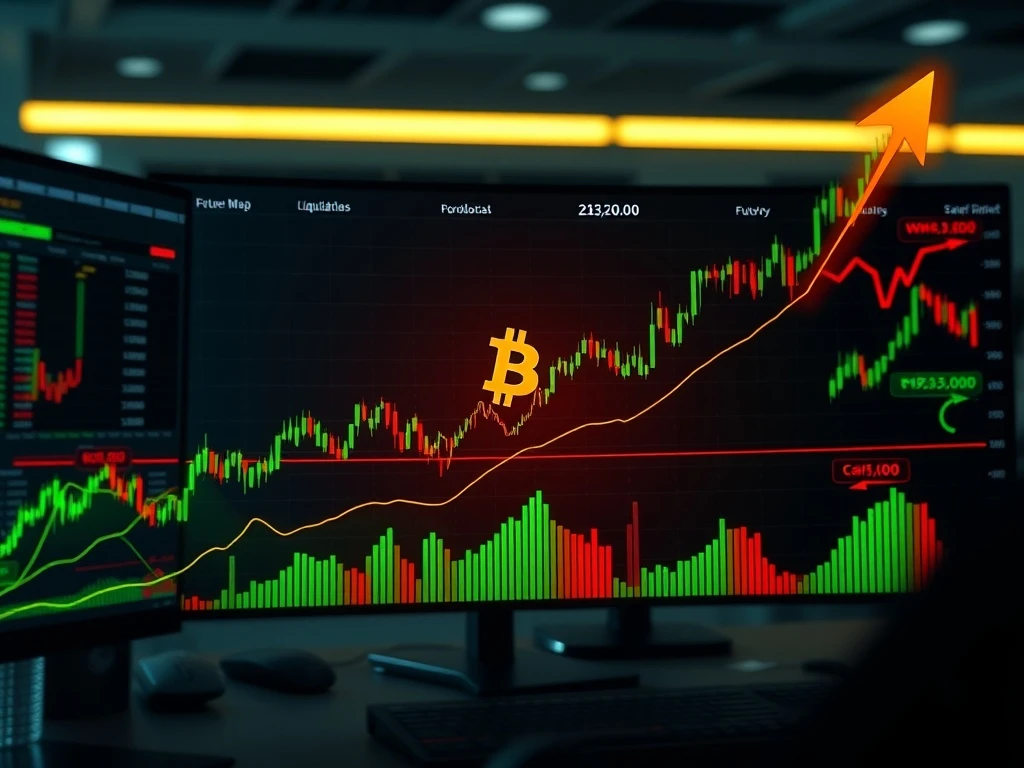
Market data reveals a concerning concentration of short positions in Bitcoin futures markets as prices recently tested the $81,000 support level. According to derivatives analytics platform CoinGlass, this positioning creates what traders call “liquidation fuel”—a scenario where forced buying could accelerate price movements dramatically. The current market structure shows approximately $6.5 billion in short positions vulnerable between $85,000 and $92,000, compared to only $1.2 billion in long positions at risk below $72,600.
This 5:1 imbalance represents one of the most asymmetric risk profiles in recent Bitcoin market history. Market analysts note that similar imbalances have preceded significant price movements in both 2023 and 2024. The concentration of risk occurs primarily on major exchanges including Binance, OKX, and Bybit, where the majority of cryptocurrency derivatives trading occurs.
Technical Analysis Points to Critical Support Test
Bitcoin’s price action over the past 16 days has seen a 14.5% decline, pushing the Crypto Fear & Greed Index to 16—its lowest reading of 2025 and firmly in “Extreme Fear” territory. However, technical analysts observe that this decline has cleared significant support levels between $80,000 and $83,000, potentially removing downside liquidity that had accumulated during previous consolidation periods.
Market structure analysis suggests this move may represent what technical traders call a “liquidity sweep,” where prices briefly dip below established support to trigger stop-loss orders before reversing. Several prominent analysts, including crypto commentator Marty Party, have framed this action within the context of Wyckoff Accumulation theory—a market analysis framework that identifies accumulation phases before significant upward movements.
Derivatives Market Activity Reveals Contradictory Signals
Despite the price decline, Bitcoin futures open interest tells a more complex story. Data from CryptoQuant shows Binance open interest has increased approximately 31% from October 2025 lows, reaching 123,500 BTC. This increase suggests traders are actively rebuilding positions rather than exiting the market entirely. The rebuilding occurs even as broader market volume has declined, with January 2025 futures volume across all exchanges falling to approximately $1.09 trillion—the lowest monthly total since 2024.
The concentration of trading activity remains notable. Binance continues to dominate with $378 billion in January volume, followed by OKX at $169 billion and Bybit near $156 billion. This concentration creates potential systemic implications, as liquidations on major exchanges can create cascading effects across the entire cryptocurrency derivatives ecosystem.
| Metric | Value | Significance |
|---|---|---|
| Short Liquidation Risk | $6.5B | Potential buying pressure above $85K |
| Long Liquidation Risk | $1.2B | Limited selling pressure below $72K |
| Open Interest Increase | 31% | From October 2025 lows |
| Fear & Greed Index | 16 | Extreme Fear territory |
| 24-Hour Liquidations | $800M | Largest since November 2024 |
Market Psychology and the “Revenge Rally” Scenario
The concept of a “revenge rally” emerges from market psychology where extreme positioning creates conditions for rapid reversals. When traders become overly concentrated in one direction—particularly during periods of extreme fear—even modest buying pressure can trigger disproportionate moves as positions unwind. Historical precedents exist throughout Bitcoin’s history, most notably during the 2020 March crash recovery and the 2022 post-FTX collapse rebound.
Current market conditions exhibit several characteristics that typically precede such movements:
- Extreme sentiment readings on fear indices
- High futures open interest with directional concentration
- Technical support tests that clear liquidation clusters
- Reduced spot selling pressure from long-term holders
Market participants should note that these conditions don’t guarantee upward movement but rather increase the probability of volatile price action in either direction. The asymmetry in liquidation levels simply means that upward moves face less immediate resistance from forced selling than downward moves face from forced buying.
Institutional Perspective and Market Structure Evolution
The current derivatives market structure reflects Bitcoin’s ongoing maturation as an asset class. Since 2023, institutional participation in Bitcoin futures has increased significantly, particularly through regulated vehicles like CME Group’s Bitcoin futures. This institutional involvement has changed market dynamics, creating more sophisticated positioning and risk management approaches.
However, the concentration of risk in perpetual futures contracts—particularly on offshore exchanges—remains a concern for market stability. Regulators worldwide have increased scrutiny of cryptocurrency derivatives markets following several high-profile liquidation events in 2023 and 2024. The current imbalance occurs against this backdrop of increased regulatory attention and institutional participation.
Risk Factors and Alternative Scenarios
While the liquidation rally scenario presents compelling possibilities, several risk factors could alter market trajectories. These include:
- Macroeconomic developments affecting risk assets globally
- Regulatory announcements targeting cryptocurrency derivatives
- Exchange-specific issues affecting liquidity or operations
- Unexpected selling pressure from miners or large holders
- Technical breakdowns below critical support levels
Market analysts emphasize that derivatives data represents only one facet of Bitcoin’s complex market structure. Spot market flows, on-chain metrics, and macroeconomic conditions all contribute to price discovery. The current futures imbalance creates potential for volatility but doesn’t operate in isolation from these other factors.
Conclusion
The Bitcoin futures market presents a significant imbalance that could potentially fuel a dramatic liquidation rally toward $90,000. This situation emerges from concentrated short positioning during a period of extreme market fear, creating conditions where forced buying could accelerate price recovery. While technical and derivatives data suggest potential for upward movement, market participants must consider multiple risk factors and the broader context of cryptocurrency market evolution. The coming weeks will test whether current positioning creates the anticipated volatility or whether alternative scenarios emerge in this rapidly evolving market landscape.
FAQs
Q1: What is a liquidation rally in cryptocurrency markets?
A liquidation rally occurs when concentrated positions in derivatives markets become forced to close through buying or selling, creating accelerated price movements. In Bitcoin’s current case, excessive short positions above current prices could trigger forced buying if prices rise sufficiently.
Q2: How does the Fear & Greed Index relate to market reversals?
The Crypto Fear & Greed Index measures market sentiment from multiple data sources. Historically, extreme readings (below 20 for fear, above 80 for greed) have often preceded market reversals as sentiment reaches unsustainable levels.
Q3: What is Wyckoff Accumulation theory?
Wyckoff theory is a technical analysis framework that identifies accumulation and distribution phases in markets. The “spring” phase involves prices briefly breaking below support to trigger stop-losses before reversing upward, which some analysts believe describes Bitcoin’s recent action.
Q4: Why is futures open interest increasing during a price decline?
Rising open interest during declines often indicates traders are establishing new positions rather than closing existing ones. This can signal conviction in directional views or hedging activity, creating more potential fuel for volatility.
Q5: What risks do concentrated derivatives positions create?
Concentrated positions increase systemic risk as liquidations can cascade across exchanges and products. They also reduce market efficiency and can create exaggerated price movements disconnected from fundamental factors.