Foundry USA Hashrate Plummets 60%: Winter Storm Fern Cripples US Bitcoin Mining Operations
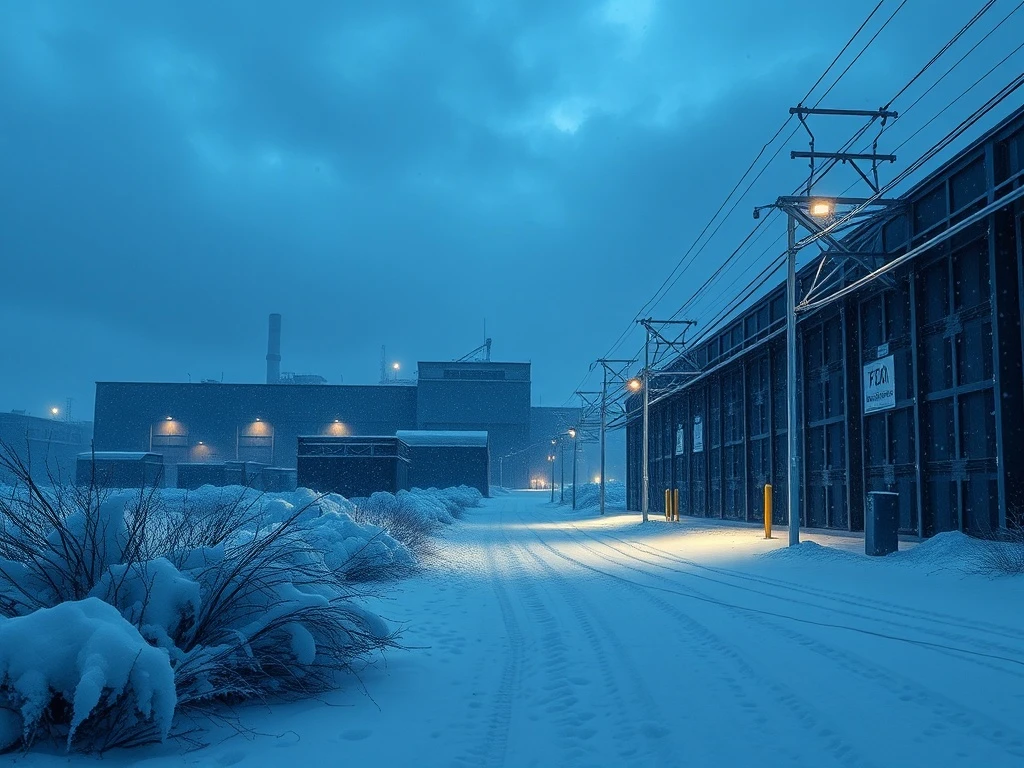
United States, March 2025: The Bitcoin network is experiencing significant operational strain as extreme weather batters North America. Foundry USA, one of the world’s largest Bitcoin mining pools, has seen its contributed hashrate fall by approximately 60% since last Friday. This dramatic drop is a direct consequence of Winter Storm Fern, which has swept across the United States, causing widespread power outages and forcing mining firms to voluntarily curtail operations to relieve pressure on fragile electrical grids. The event highlights the complex and often vulnerable intersection between global cryptocurrency infrastructure and localized physical realities.
Foundry USA Hashrate Plunge and Immediate Network Impact
Data from blockchain analytics firms and public mining pool dashboards confirms a severe reduction in computational power from Foundry USA. The pool, which consistently ranks among the top contributors to the Bitcoin network, has shed an estimated 200 exahashes per second (EH/s) of processing power. This represents a substantial portion of the global network’s total security. The immediate technical consequence has been a slowdown in block production. Bitcoin’s protocol dynamically adjusts difficulty to target a new block every 10 minutes, but with a major source of hash power offline, the average block time has temporarily extended to around 12 minutes. This slowdown reduces the speed of transaction confirmations and illustrates how concentrated mining infrastructure in specific geographic regions can create network-wide points of failure during regional crises.
Anatomy of a Disruption: Winter Storm Fern’s Path of Destruction
Winter Storm Fern, a powerful system combining Arctic air with significant moisture, has impacted a broad swath of the United States from the Plains through the Midwest and into the Northeast. The storm has brought heavy snow, ice accumulation, and hurricane-force wind gusts. Utility companies report over one million households and businesses without power, with some of the most severe impacts in states like Texas, Oklahoma, Kansas, and Iowa—regions that have become hotspots for industrial-scale Bitcoin mining due to historically low energy costs and deregulated markets. Mining operations, which require massive, uninterrupted electricity to run thousands of specialized computers (ASICs), are particularly sensitive to grid instability. When power generation falters or transmission lines fail, these facilities are among the first large-scale consumers to be asked or forced to shut down.
The Delicate Balance Between Mining and Grid Stability
This event is not the first of its kind. The relationship between Bitcoin mining and power grids, especially in Texas, has been a subject of intense study and regulatory discussion since the winter storm of 2021. Mining operations can act as a unique “flexible load” for grid operators. During periods of high demand or low supply—such as a deep freeze when home heating needs spike—miners can power down almost instantly, freeing up megawatts of electricity for residential consumers. This voluntary or contracted curtailment is precisely what is occurring now. Mining companies like those contributing to Foundry USA are halting operations not solely because their own power is cut, but as a civic and often contractual measure to prevent broader, cascading blackouts. This demonstrates a maturation in the industry’s relationship with utility providers, moving from pure consumption to a potential grid-supporting role, albeit one tested under severe duress.
Historical Context and Industry Resilience
The Bitcoin network is designed to be resilient to the comings and goings of individual miners. The protocol’s difficulty adjustment, which occurs approximately every two weeks, will eventually recalibrate to the lower total hashrate, bringing block times back toward the 10-minute target even if the offline power does not return. However, the speed and magnitude of Foundry USA’s hashrate drop are noteworthy. It echoes similar weather-related disruptions in Kazakhstan in 2022 (due to civil unrest and energy shortages) and in China prior to the 2021 mining ban. Each event tests the network’s decentralization thesis. While mining is geographically distributed globally, regional concentration within countries like the U.S. creates new forms of systemic risk. The table below outlines recent major hashrate disruptions for comparison.
| Event | Date | Primary Region | Estimated Hashrate Drop | Cause |
| China Mining Ban | Mid-2021 | China | ~50% (Global) | Government Policy |
| Kazakhstan Protests | Jan 2022 | Kazakhstan | ~15% (Global) | Internet Shutdown, Energy Crisis |
| Winter Storm Elliott | Dec 2022 | Texas, USA | ~30% (from Texas) | Extreme Cold, Grid Curtailment |
| Winter Storm Fern | Mar 2025 | Central & Eastern USA | ~60% (from Foundry USA pool) | Extreme Weather, Grid Curtailment |
The current situation differs in that it appears to be a coordinated, voluntary response to a public emergency, rather than a forced shutdown. This proactive stance may help the industry build more durable political and social capital in its host communities, countering narratives that miners are purely extractive. The financial impact on the affected mining companies is immediate, however, as they forgo all Bitcoin reward revenue for the duration of the shutdown while still bearing fixed costs like facility leases and hardware financing.
Broader Implications for Cryptocurrency and Energy Infrastructure
This weather-driven disruption arrives during a pivotal moment for the cryptocurrency mining sector. Several key implications are now coming into sharper focus:
- Geographic Diversification: The event will likely accelerate discussions within mining firms about further diversifying their geographic footprint to mitigate weather and single-grid risk. This could benefit regions with stable, baseload power like nuclear or hydroelectric.
- Grid Integration Models: The value of “interruptible” load agreements between miners and grid operators is being proven in real-time. These models may become more standardized and sophisticated, potentially providing miners with new revenue streams for grid services.
- Network Security Perception: While the Bitcoin network continues to operate, such a sharp hashrate drop from a major pool renews questions about the resilience of its current hash power distribution. It underscores that true decentralization requires not just many miners, but miners spread across diverse political and climatic zones.
- Renewable Energy Debate: Critics may point to the disruption as evidence of mining’s strain on grids, while proponents may argue it shows miners’ unique ability to shed load instantly—a trait that could facilitate higher penetration of intermittent renewables by providing a ready buyer of last resort for excess power and a shutdown valve during shortages.
Conclusion
The 60% drop in Foundry USA’s Bitcoin hashrate is a stark reminder that the digital world of blockchain is fundamentally anchored in the physical world of energy, weather, and infrastructure. Winter Storm Fern has exposed a critical vulnerability in the current concentration of mining power within specific U.S. grids prone to extreme weather. While the Bitcoin network’s difficulty adjustment will ensure its continued operation, the event has significant immediate consequences for block times, miner revenue, and regional power stability. It also provides a real-world case study in the evolving, and sometimes symbiotic, relationship between large-scale cryptocurrency mining and the traditional power grid. As the climate becomes more volatile, the industry’s long-term sustainability may depend on its ability to navigate these physical disruptions as adeptly as it navigates market volatility.
FAQs
Q1: What caused Foundry USA’s hashrate to drop 60%?
The primary cause is Winter Storm Fern, which caused widespread power outages across the central and eastern United States. Mining facilities contributing to the Foundry USA pool voluntarily powered down to reduce strain on overwhelmed electrical grids, leading to the massive drop in computational power.
Q2: How does this affect the average Bitcoin user?
Users may experience slightly slower transaction confirmation times due to the average block time increasing from 10 minutes to about 12 minutes. The network remains fully functional, and the protocol’s built-in difficulty adjustment will eventually correct the block time once hashrate returns.
Q3: Is the Bitcoin network at risk when hashrate drops so sharply?
The network’s security model is designed to handle fluctuations in hashrate. While a lower total hashrate theoretically makes a 51% attack slightly less expensive to execute, the scale and distributed nature of the remaining global hash power make such an attack during this event highly improbable and economically irrational.
Q4: Why would mining companies voluntarily shut down?
Many large mining operations in regions like Texas have special agreements with grid operators. They agree to power down quickly during grid emergencies in exchange for favorable electricity rates or direct payments. This helps prevent broader blackouts and is a strategic business decision to maintain good relations with utilities and regulators.
Q5: When will hashrate return to normal levels?
Hashrate will return as power is restored to affected regions and mining facilities receive the all-clear from grid operators. This depends entirely on the duration of the winter storm and the subsequent repair work needed on the power infrastructure. A full recovery could take days after the storm passes.