Breaking: XRP vs XLM – 5 Critical Differences Shaping Global Finance in 2026
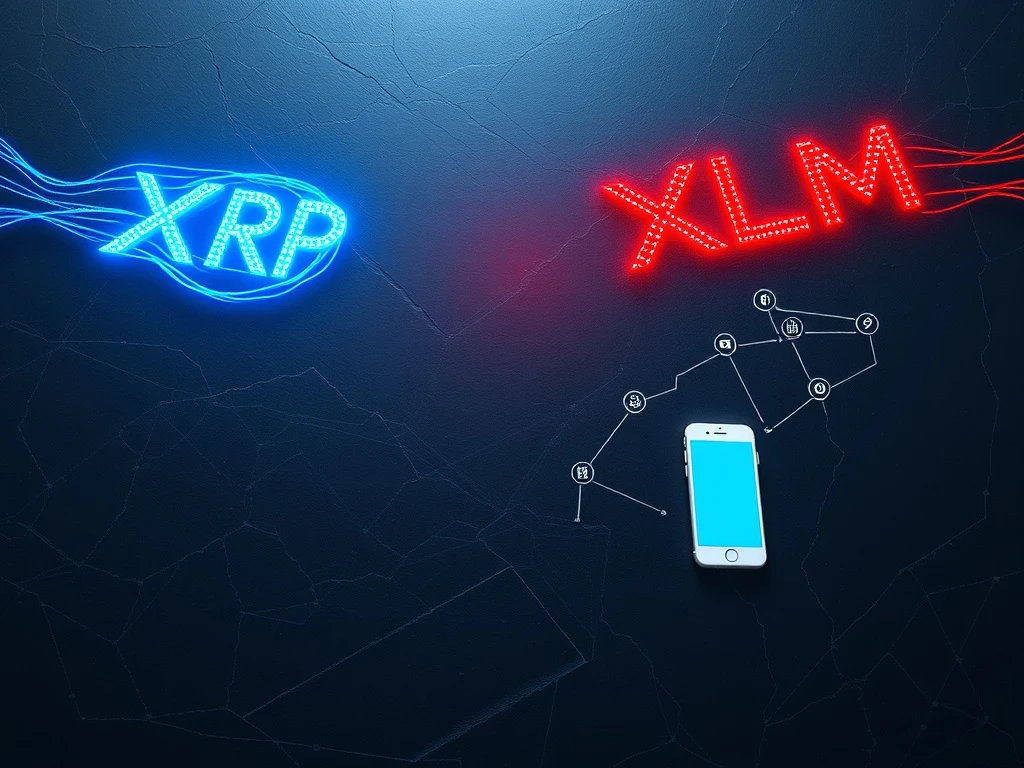
LONDON, March 15, 2026 — The cryptocurrency field faces a central moment as two assets with a shared genesis, XRP and XLM (Stellar Lumens), chart increasingly divergent courses in the global financial system. Initially developed from similar codebases, these networks now embody fundamentally different philosophies for modernizing value transfer. Consequently, understanding their distinct use cases, governance models, and technical architectures has become essential for investors, regulators, and financial institutions dealing with the 2026 digital asset ecosystem. This divergence represents more than a technical split; it reflects a broader debate about the future of inclusive finance.
Shared Genesis, Forked Destiny: The Origin Story
The intertwined history of XRP and XLM begins with Jed McCaleb. After co-founding Ripple Labs (originally OpenCoin) and contributing to the creation of the XRP Ledger in 2012, McCaleb left in 2014 following strategic disagreements. He subsequently founded the Stellar Development Foundation (SDF), launching the Stellar network with a forked version of the Ripple protocol. While the initial code was similar, the foundational visions differed immediately. Ripple focused on optimizing existing banking corridors, while Stellar targeted financial inclusion for the unbanked. This philosophical schism, evident from day one, set the stage for over a decade of parallel yet separate evolution, a fact often cited by blockchain historians like David Schwartz, Ripple’s Chief Technology Officer, in recent industry panels.
Also read: Litecoin Price Tests Critical Support: Will the $43 Floor Hold for a 2026 Breakout?
Key early milestones underscore their separate paths. Ripple secured its first major bank partnership with American Express in 2017 using its xCurrent product. Meanwhile, Stellar partnered with IBM in 2018 for its World Wire project, focusing on cross-border payments in developing economies. The regulatory journeys also diverged sharply. The U.S. Securities and Exchange Commission’s lawsuit against Ripple in December 2020 created significant uncertainty for XRP, while Stellar largely avoided similar direct regulatory scrutiny, positioning XLM differently in the eyes of institutional investors.
Divergent Core Use Cases and Target Markets
The primary distinction between XRP and XLM lies in their intended users and market positioning. RippleNet, the network built around the XRP Ledger, explicitly targets established financial institutions. Its flagship product, Ripple Payments (formerly ODL), uses XRP as a bridge currency to make possible real-time, low-cost international settlements between banks and payment providers. For example, Tranglo’s partnership with Ripple processes millions of transactions annually across Southeast Asia, demonstrating the institutional scale. The value proposition is efficiency and cost-saving for entities like Santander and SBI Remit, reducing pre-funded nostro accounts and settlement times from days to minutes.
Also read: Dogecoin RSI Hits Historic Bottom Zone: Can the Meme Coin Recover?
Conversely, the Stellar network targets financial inclusion and grassroots access. Its ecosystem supports the issuance of stablecoins and other digital assets, enabling low-cost remittances and microlending directly to individuals and small businesses. A prominent 2025 case study involves MoneyGram Access powered by Stellar, which allows users in remote regions to send remittances directly to digital wallets at near-zero cost. Furthermore, Stellar’s partnership with the Ukrainian Ministry of Digital Transformation in 2023 to explore a digital hryvnia highlighted its focus on public-sector financial infrastructure. Stellar’s goal, as articulated by SDF CEO Denelle Dixon in a 2025 World Economic Forum interview, is “to unlock the world’s economic potential by making money more fluid, markets more open, and people more empowered.”
Technical Architectures and Consensus Mechanisms
While both networks eschew energy-intensive mining, their consensus mechanisms differ significantly, impacting decentralization and speed. The XRP Ledger uses the XRP Ledger Consensus Protocol. A unique set of trusted validator nodes, initially chosen by Ripple but now including independent entities like universities and exchanges, must agree on the order and validity of transactions. This design prioritizes speed (settling in 3-5 seconds) and finality for high-volume institutional payments. Critics argue this introduces a degree of centralization, though the validator list has diversified.
The Stellar network operates on the Stellar Consensus Protocol (SCP), a federated Byzantine agreement system. Nodes form quorum slices—groups of other nodes they trust—and the network reaches consensus when these overlapping slices agree. This model allows for a more flexible and potentially more decentralized validator set. However, it can theoretically be slightly slower under certain conditions than XRPL’s consensus. A 2024 report by the Blockchain Research Institute noted that SCP’s design makes it particularly resilient to node failure, a key feature for networks serving volatile regions.
Governance, Supply, and Key Performance Metrics
A side-by-side comparison reveals stark differences in economic and governance models, critical for long-term valuation analysis. These structural choices directly influence scarcity, inflation, and network control.
| Metric | XRP (XRP Ledger) | XLM (Stellar Network) |
|---|---|---|
| Total Supply | 100 billion (all minted at genesis) | 50 billion (all minted at genesis) |
| Circulating Supply (Mar 2026) | ~55 billion (~55% of total) | ~29 billion (~58% of total) |
| Inflation Mechanism | Deflationary; small transaction fees are destroyed | No protocol-level inflation; fixed supply |
| Entity Holding Largest Supply | Ripple Labs holds ~5-6 billion in escrow (per Q4 2025 report) | Stellar Development Foundation holds ~~10 billion for development |
| Primary Governance | Ripple + XRPL Foundation + community validator votes | Stellar Development Foundation (non-profit) + community |
| 2025 Ave. Daily Transaction Volume | ~2.1 million (per XRPScan) | ~6.8 million (per Stellar Expert) |
Regulatory Posture and 2026 Market Trajectory
The regulatory environment continues to be the single largest factor influencing the trajectories of both assets. Ripple’s partial legal victory in July 2023, where a judge ruled that programmatic sales of XRP were not securities, provided significant relief. However, ongoing SEC appeals and the unresolved status of institutional sales create a complex overhang. This has led Ripple to aggressively expand in jurisdictions with clearer frameworks, like the UK, Singapore, and the UAE. In contrast, Stellar has proactively engaged with regulators to frame XLM as a utility token for its network, focusing on compliance tools like Anclage’s digital asset platform built on Stellar for regulated institutions.
Looking forward, the paths hinge on adoption drivers. For XRP, success depends on the expansion of Ripple Payments and the outcome of the remaining SEC case. Analyst forecasts from Gartner’s 2026 Blockchain in Banking report suggest that if regulatory clarity solidifies in the U.S., institutional adoption could accelerate by 35% year-over-year. For XLM, growth is tied to stablecoin issuance and central bank digital currency (CBDC) projects. The European Central Bank’s exploration of Stellar as a potential settlement layer for a digital euro, mentioned in a 2025 discussion paper, represents a significant potential catalyst. The network’s ability to serve as a platform for other assets, like the Ukrainian e-hryvnia pilot, may prove more valuable than the native XLM token itself in the long term.
Community and Developer Ecosystem Sentiment
The developer communities reflect each project’s ethos. The XRP Ledger community, energized by the legal wins, is focused on expanding DeFi and NFT capabilities (through the Hooks amendment proposal) to compete with Ethereum and Solana. The Stellar developer community remains oriented toward financial inclusion projects, with hackathons often targeting solutions for refugee aid disbursement and fair-trade supply chain financing. A survey by the Electric Capital Developer Report (2025) noted a 40% year-over-year increase in monthly active developers on Stellar, compared to a 25% increase on XRPL, though from a smaller base, indicating growing grassroots momentum.
Conclusion
The evolution of XRP and XLM from a common codebase into distinct financial instruments underscores the maturation of the cryptocurrency sector. XRP has solidified its role as a bridge asset for institutional liquidity, with its future tied to banking sector adoption and final regulatory resolution. XLM has carved a niche as an inclusive platform for asset issuance and grassroots finance, with growth linked to stablecoin and CBDC innovation. For market participants in 2026, the choice is not about which technology is superior, but which economic model and use case alignment best serve a specific financial need. As global finance digitizes, both networks are likely to find significant, but fundamentally different, roles in the new monetary sector. Investors should monitor Ripple’s legal developments and Stellar’s central bank partnerships as the key indicators for their respective trajectories through the remainder of the decade.
Frequently Asked Questions
Q1: What is the main practical difference between using XRP and XLM today?
If you are a bank or money service business looking to settle large cross-border payments between established currencies, Ripple’s XRP-based solutions are tailored for you. If you are a developer building a remittance app for unbanked populations or a project issuing a stablecoin, Stellar’s XLM network provides the tools and low-cost environment.
Q2: Which asset is more decentralized, XRP or XLM?
Both use consensus mechanisms distinct from proof-of-work mining. Stellar’s SCP is generally considered more decentralized in its validator selection model, allowing anyone to participate in consensus by being trusted by a quorum slice. The XRP Ledger uses a Unique Node List of trusted validators, which, while more diversified than in the past, represents a more permissioned approach favoring stability and speed for financial institutions.
Q3: How did the SEC lawsuit affect the development of XRP compared to XLM?
The lawsuit (2020-2023) significantly hampered Ripple’s U.S. business development and exchange listings for XRP, forcing a strategic pivot to international markets. Stellar, largely avoiding direct regulatory action, was able to continue U.S. partnerships and developer outreach uninterrupted, potentially gaining a first-mover advantage in certain compliance-focused projects during that period.
Q4: Can XRP and XLM be used for everyday purchases?
While technically possible, neither is primarily designed as a direct consumer payment coin like Bitcoin or Litecoin. Their value is derived from their utility within their respective networks—XRP for institutional settlement and XLM for powering transactions and preventing spam on the Stellar network, which hosts other assets used for payments.
Q5: What are the biggest risks facing XRP and XLM in 2026?
For XRP, the primary risk remains regulatory uncertainty, particularly the final outcome of the SEC case and potential restrictive legislation. For XLM, the key risk is competitive, as other blockchains like Solana and Algorand also target the asset issuance and CBDC space with high throughput and low costs.
Q6: How does the token supply and distribution affect long-term value?
Both have large total supplies, but significant portions are held by their founding entities (Ripple and SDF). XRP has a deflationary burn mechanism from fees, while XLM’s supply is fixed. Long-term value will be driven less by artificial scarcity and more by the utility and transaction volume demanded on each network, which consumes or requires the holding of the respective native token.

This article was produced with AI assistance and reviewed by our editorial team for accuracy and quality.