Digital Asset Regulation: White House Hosts Critical Meeting to Break Senate Deadlock on Crypto Rules
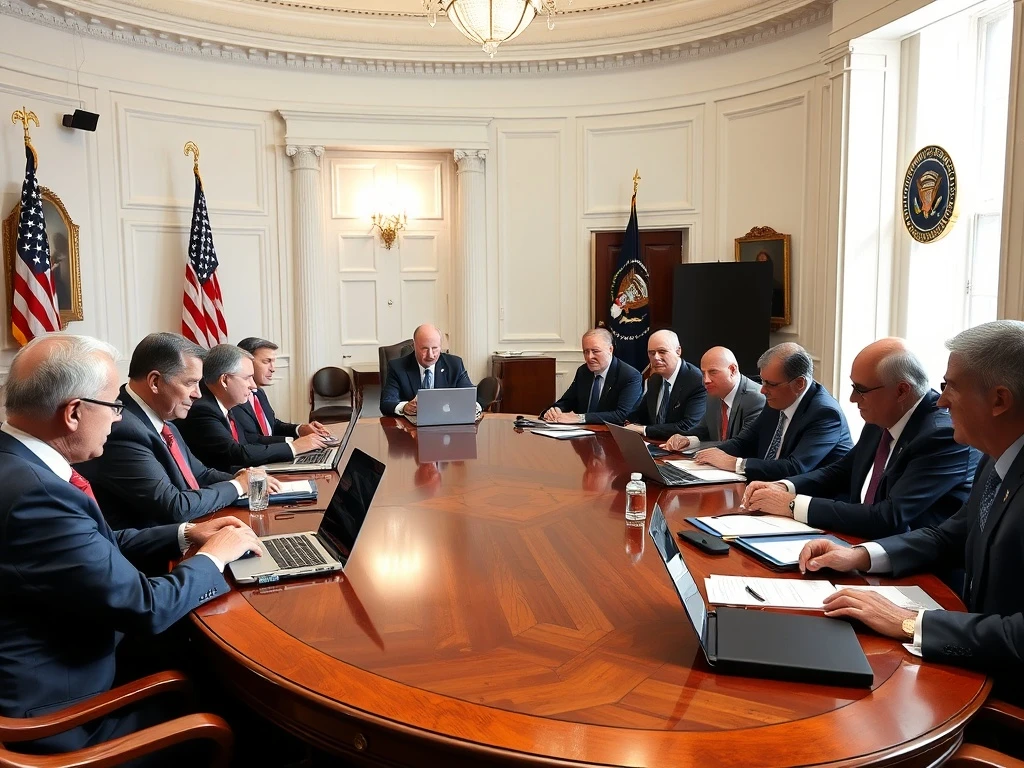
WASHINGTON, D.C., January 2025 – The White House is orchestrating a key meeting between senior banking executives and cryptocurrency industry leaders this Monday, aiming to resolve the legislative impasse that has stalled comprehensive digital asset regulation in the Senate. This high-stakes gathering represents the Trump administration’s most direct intervention yet to bridge the regulatory divide that threatens America’s position in the global crypto economy.
White House Steps Into Crypto Regulatory Standoff
The scheduled meeting, organized by the White House Crypto Council, comes after months of stalled progress in Senate committees. According to sources familiar with the planning, the session will specifically address unresolved questions surrounding stablecoin incentives – the same issue that has paralyzed the Senate Banking Committee’s momentum. This regulatory bottleneck has persisted despite bipartisan recognition that clearer rules are urgently needed for the rapidly evolving digital asset sector.
Also read: AI Trading Agents: The Revolutionary Path to Mastering Your Crypto Portfolio in 2025
Banking associations have raised significant concerns about the GENIUS Act, the stablecoin legislation passed in July 2025. This law prohibits issuers from paying returns directly to holders but permits third-party platforms like exchanges to offer incentives. Consequently, traditional financial institutions argue this creates an uneven playing field that could divert deposits from community banks and strain the traditional banking system.
Stablecoin Incentives: The Core Regulatory Dispute
The conflict centers on fundamentally different interpretations of financial fairness and risk management. Banking representatives contend that unclear stablecoin rules could:
Also read: RunBot AI Trading Bot: Revolutionizing Automated Cryptocurrency Strategies with Machine Learning
- Create systemic risks through unregulated deposit alternatives
- Undermine consumer protection standards
- Weaken traditional banks’ deposit bases
- Introduce regulatory arbitrage opportunities
Conversely, cryptocurrency advocates maintain that banks are attempting to limit legitimate competition. They point out that similar discussions about financial incentives were already progressing before the GENIUS Act became law. Crypto industry representatives argue that tailored legislation is essential because existing financial frameworks don’t adequately address blockchain-based assets.
Industry Perspectives on the Regulatory Impasse
Summer Mersinger, Chief Executive of the Blockchain Association, has welcomed the White House’s intervention. “We appreciate the opportunity to engage directly with policymakers,” Mersinger stated recently. “Our industry wants to collaborate with Congress to establish durable market rules that preserve American leadership in the global crypto economy.”
This sentiment reflects broader industry frustration with the Senate’s slow progress. The House of Representatives previously passed the Clarity Act with support from some Democratic lawmakers, demonstrating that bipartisan agreement is possible. However, the Senate Agriculture and Banking Committees must first revise and approve their respective bills before full chamber consideration can occur.
Legislative Timeline and Recent Setbacks
The path to comprehensive crypto legislation has encountered multiple obstacles in recent months. A hearing originally scheduled for January 15 was canceled after Coinbase withdrew its support, highlighting ongoing concerns about tokenized equities and stablecoin rewards. Meanwhile, the Senate Agriculture Committee still plans to hold its hearing this Thursday, though draft proposals released last week failed to secure backing from Democratic members.
This legislative stagnation occurs against a backdrop of increasing international competition. Other major economies are advancing their own digital asset frameworks, potentially positioning themselves to attract crypto innovation and investment away from United States markets. The regulatory uncertainty has already affected business decisions and investment patterns within the American crypto sector.
| Date | Event | Status |
|---|---|---|
| July 2025 | GENIUS Act passed | Became law |
| January 15, 2026 | Scheduled Senate hearing | Canceled |
| January 2026 | White House meeting announced | Scheduled |
| This Thursday | Senate Agriculture Committee hearing | Planned |
Administration’s Strategic Position and Future Implications
Patrick Witt, Executive Director of the President’s Council of Advisors for Digital Assets, has emphasized the administration’s commitment to resolving the regulatory standoff. “There will be a crypto market structure bill – it’s a question of when, not if,” Witt declared recently. He noted that current conditions present a rare opportunity with presidential support for crypto, congressional alignment for movement, and a reliable industry capable of implementing new rules.
Witt also issued a cautionary note about potential consequences of further delays. He suggested that postponed legislation might result in future policymakers introducing stricter, more punitive measures following any potential financial crisis. This warning underscores the administration’s view that proactive regulation is preferable to reactive measures implemented under crisis conditions.
The White House meeting represents more than just another policy discussion. It signals the administration’s determination to maintain American competitiveness in financial innovation while addressing legitimate concerns about financial stability and consumer protection. The outcome could set the trajectory for digital asset regulation for years to come.
Broader Economic Context and Market Impacts
The regulatory uncertainty affects various market participants differently. Traditional financial institutions have reported increased compliance costs as they deal with unclear guidelines. Meanwhile, cryptocurrency companies face challenges in planning long-term strategies without regulatory certainty. Investors, both institutional and retail, have expressed concerns about the lack of clear rules governing digital asset markets.
International observers are closely monitoring these developments. Regulatory clarity in the United States could influence global standards for digital asset oversight. Conversely, continued impasse might encourage other jurisdictions to establish themselves as more welcoming environments for crypto innovation and investment.
Expert Analysis on Regulatory Pathways
Financial policy experts note several possible outcomes from the White House meeting. A breakthrough could accelerate Senate consideration of pending legislation. Alternatively, continued disagreement might necessitate revised legislative approaches or administrative actions. Some analysts suggest that incremental progress on specific issues, beginning with stablecoins, might be more achievable than comprehensive legislation.
The meeting’s timing is particularly significant given upcoming congressional schedules and election-year dynamics. Political considerations inevitably influence legislative priorities, adding complexity to an already challenging policy area. Nevertheless, the administration appears committed to advancing the discussion regardless of political calendar pressures.
Conclusion
The White House meeting on digital asset regulation represents a critical juncture in America’s approach to cryptocurrency oversight. By bringing together banking and crypto industry leaders, the administration seeks to break the Senate deadlock that has delayed comprehensive legislation. The outcome will significantly influence financial innovation, consumer protection, and America’s competitive position in the global digital economy. As regulatory discussions continue, market participants await clearer rules that balance innovation with stability in this rapidly evolving sector.
FAQs
Q1: What is the main purpose of the White House meeting on cryptocurrency regulation?
The primary objective is to bridge differences between banking institutions and cryptocurrency companies regarding stablecoin incentives and other regulatory issues, thereby breaking the legislative impasse in the Senate that has stalled comprehensive digital asset regulation.
Q2: Why has the Senate struggled to pass crypto legislation compared to the House?
The Senate faces additional procedural hurdles requiring both the Banking and Agriculture Committees to approve their respective bills before full chamber consideration. Substantive disagreements about stablecoin rules and other provisions have further complicated progress in these committees.
Q3: What are the key disagreements between banks and crypto companies?
Banking associations worry that unclear stablecoin rules could divert deposits from traditional lenders and create systemic risks. Crypto companies argue that banks seek to limit competition and that existing financial laws don’t adequately address blockchain-based assets, necessitating tailored legislation.
Q4: How does the GENIUS Act factor into these discussions?
Passed in July 2025, the GENIUS Act prohibits stablecoin issuers from paying returns directly to holders but allows third-party platforms to offer incentives. This distinction has sparked debate about whether the framework gives digital asset firms an unfair advantage over traditional banks.
Q5: What happens if the regulatory deadlock continues?
Continued impasse could disadvantage American competitiveness as other jurisdictions advance their own crypto frameworks. Administration officials warn that delays might eventually lead to stricter, more punitive measures implemented reactively rather than proactive, balanced regulation developed through current discussions.

This article was produced with AI assistance and reviewed by our editorial team for accuracy and quality.