Virginia Crypto Kiosk Regulation Bill: Landmark Consumer Protection Legislation Awaits Governor’s Vital Decision
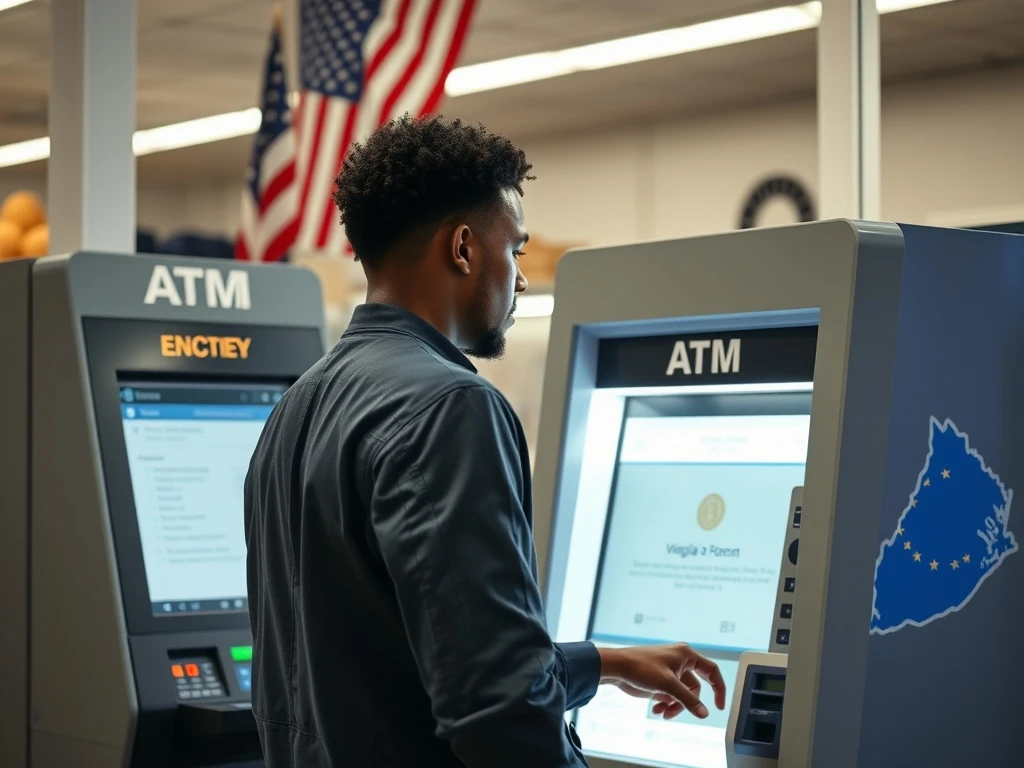
RICHMOND, Virginia – February 2025 marks a decisive moment for cryptocurrency regulation as Virginia lawmakers advance comprehensive crypto kiosk legislation to the governor’s desk. This novel Virginia crypto kiosk regulation bill represents one of the most significant state-level digital asset protection measures in recent years. Consequently, the legislation aims to address growing concerns about consumer vulnerability at cryptocurrency ATMs and kiosks statewide.
Virginia Crypto Kiosk Regulation Bill: Core Provisions and Requirements
The proposed legislation establishes a comprehensive regulatory framework for cryptocurrency kiosk operators. First, the bill mandates state licensing for all crypto kiosk businesses operating within Virginia. Additionally, it imposes strict transaction limits to prevent large-scale fraudulent transfers. Furthermore, operators must implement strong identity verification systems comparable to traditional financial institutions.
Also read: Bittensor TAO Sell Signal: TD Sequential Flashes Warning After Stunning 160% Surge
Key consumer protection measures include:
- Mandatory fraud warnings displayed prominently on all kiosk interfaces
- 24-hour transaction reversal periods for certain transaction types
- Daily purchase limits of $1,000 per customer identification
- Operator liability requirements for compliance failures
- Transparent fee disclosure mandates before transaction completion
Virginia’s approach mirrors regulatory trends in other states. For instance, Texas implemented similar kiosk regulations in 2023. However, Virginia’s legislation includes more extensive consumer notification requirements. Meanwhile, California continues to debate comparable measures in its legislature.
Also read: XRP Whale's $35 Million Gamble Exposes Deep Market Rift
Legislative Timeline and Political Context
The bill progressed through Virginia’s General Assembly with bipartisan support. Initially introduced in January 2025, it passed the House of Delegates with a 68-32 vote. Subsequently, the Senate approved the measure 28-12 after minor amendments. Now, Governor Glenn Youngkin must decide whether to sign, veto, or propose modifications to the legislation.
This legislative action responds directly to documented consumer protection issues. According to the Virginia Attorney General’s office, cryptocurrency-related complaints increased 240% between 2022 and 2024. Moreover, the Federal Trade Commission reports Virginians lost approximately $45 million to crypto scams in 2024 alone. These statistics underscore the urgent need for regulatory intervention.
Expert Analysis: Balancing Innovation and Protection
Financial regulation experts highlight the bill’s significance. Dr. Elena Rodriguez, a Georgetown University blockchain policy researcher, explains, “Virginia’s legislation represents a thoughtful middle ground. It protects consumers without stifling innovation. The transaction limits and reversal periods specifically target common scam methodologies.”
Industry representatives express cautious optimism. Michael Chen, spokesperson for the Crypto Kiosk Operators Association, states, “While compliance will require operational adjustments, clear regulations benefit legitimate operators. Uniform standards help distinguish compliant businesses from bad actors.”
The legislation’s economic implications warrant consideration. Virginia hosts approximately 320 cryptocurrency kiosks across 85 municipalities. These machines processed an estimated $180 million in transactions during 2024. Regulatory compliance costs may affect operator profitability. However, increased consumer confidence could stimulate greater adoption.
Comparative Analysis: State Regulatory Approaches
Virginia joins a growing number of states addressing cryptocurrency kiosk regulation. The table below illustrates key differences between state approaches:
| State | Daily Limit | License Required | Fraud Warning Mandate | Implementation Year |
|---|---|---|---|---|
| Virginia (Proposed) | $1,000 | Yes | Yes | 2025 |
| Texas | $2,000 | Yes | No | 2023 |
| New York | $3,000 | BitLicense | Yes | 2022 |
| Florida | None | No | No | N/A |
Virginia’s proposed $1,000 daily limit represents a conservative approach compared to other states. This threshold aims to balance accessibility with risk mitigation. Notably, the legislation includes provisions for periodic limit reviews based on market conditions and fraud patterns.
Consumer Impact and Protection Mechanisms
The legislation’s consumer protection features address specific vulnerability points. For example, mandatory fraud warnings must appear before transaction initiation. These warnings specifically mention common scam types including romance scams, investment fraud, and impersonation schemes. Additionally, kiosk operators must provide telephone support during all operating hours.
Transaction monitoring requirements represent another key protection. Operators must implement systems detecting suspicious patterns. These include rapid successive transactions or transactions to known high-risk wallet addresses. When systems flag suspicious activity, operators must pause transactions for manual review. This approach mirrors anti-money laundering protocols in traditional banking.
Consumer education provisions complement regulatory measures. The legislation allocates funds for public awareness campaigns about cryptocurrency risks. These campaigns will target populations most vulnerable to crypto scams including seniors and recent immigrants. Furthermore, the Attorney General’s office will maintain a dedicated cryptocurrency complaint portal.
Implementation Timeline and Compliance Requirements
If signed, the legislation establishes a phased implementation schedule. Operators have 90 days to register with the Virginia State Corporation Commission. Subsequently, they must achieve full compliance within 180 days. The Commission will conduct random audits to verify compliance. Penalties for violations include fines up to $25,000 per incident and potential license revocation.
Technology upgrades represent the most significant compliance challenge. Many existing kiosks require software updates to implement new warning systems and transaction limits. Hardware modifications may also prove necessary for enhanced identity verification. Industry analysts estimate compliance costs between $3,000 and $8,000 per machine.
National Implications and Federal Context
Virginia’s legislation arrives during ongoing federal regulatory discussions. The Financial Crimes Enforcement Network (FinCEN) proposed national cryptocurrency kiosk regulations in late 2024. However, congressional approval remains uncertain. Consequently, state-level initiatives like Virginia’s may establish de facto national standards through market pressure.
Interstate coordination presents another consideration. Cryptocurrency transactions inherently cross state boundaries. Therefore, regulatory fragmentation could create compliance complexities. Virginia officials indicate willingness to harmonize regulations with neighboring states. Regional approaches might emerge similar to the Conference of State Bank Supervisors model for money transmission.
The legislation’s success could influence broader cryptocurrency regulation. Positive outcomes might encourage similar approaches for decentralized finance platforms and cryptocurrency exchanges. Conversely, implementation challenges could prompt regulatory reconsideration. Either way, Virginia’s experiment will provide valuable data for policymakers nationwide.
Conclusion
Virginia’s crypto kiosk regulation bill represents a significant advancement in consumer protection within the digital asset space. The legislation balances innovation accessibility with necessary safeguards against fraud. Moreover, its comprehensive approach addresses documented vulnerabilities in the current cryptocurrency kiosk ecosystem. As the bill awaits Governor Youngkin’s decision, its potential impacts extend beyond Virginia’s borders. Ultimately, this Virginia crypto kiosk regulation bill could establish important precedents for state-level digital asset regulation nationwide. The coming months will determine whether Virginia leads this consumer protection initiative or joins other states in observing its implementation.
FAQs
Q1: What exactly does the Virginia crypto kiosk regulation bill require?
The legislation mandates state licensing for operators, imposes $1,000 daily transaction limits, requires prominent fraud warnings, establishes 24-hour reversal periods for certain transactions, and enforces transparent fee disclosure before transactions complete.
Q2: How will this legislation affect ordinary cryptocurrency users in Virginia?
Consumers will see enhanced protections including clearer warnings about scams, transaction limits to prevent large fraudulent transfers, and better support options when issues arise. Some users making large legitimate transactions may need to use multiple kiosks or alternative platforms.
Q3: What happens if the governor signs the bill into law?
If signed, cryptocurrency kiosk operators have 90 days to register with the state and 180 days to achieve full compliance. The State Corporation Commission will oversee implementation and conduct compliance audits with penalties for violations.
Q4: How does Virginia’s approach compare to other states’ cryptocurrency kiosk regulations?
Virginia’s proposed $1,000 daily limit is more conservative than Texas ($2,000) or New York ($3,000). However, Virginia includes more comprehensive fraud warning requirements and consumer education provisions than most other states with similar regulations.
Q5: Why are state governments regulating cryptocurrency kiosks instead of the federal government?
While federal agencies have proposed regulations, comprehensive federal legislation remains stalled in Congress. States like Virginia are addressing immediate consumer protection concerns through their existing authority over financial services and consumer protection within their borders.

This article was produced with AI assistance and reviewed by our editorial team for accuracy and quality.