USD1 Stablecoin Surpasses PYUSD in Market Size: Eric Trump Announces Pivotal Digital Dollar Milestone
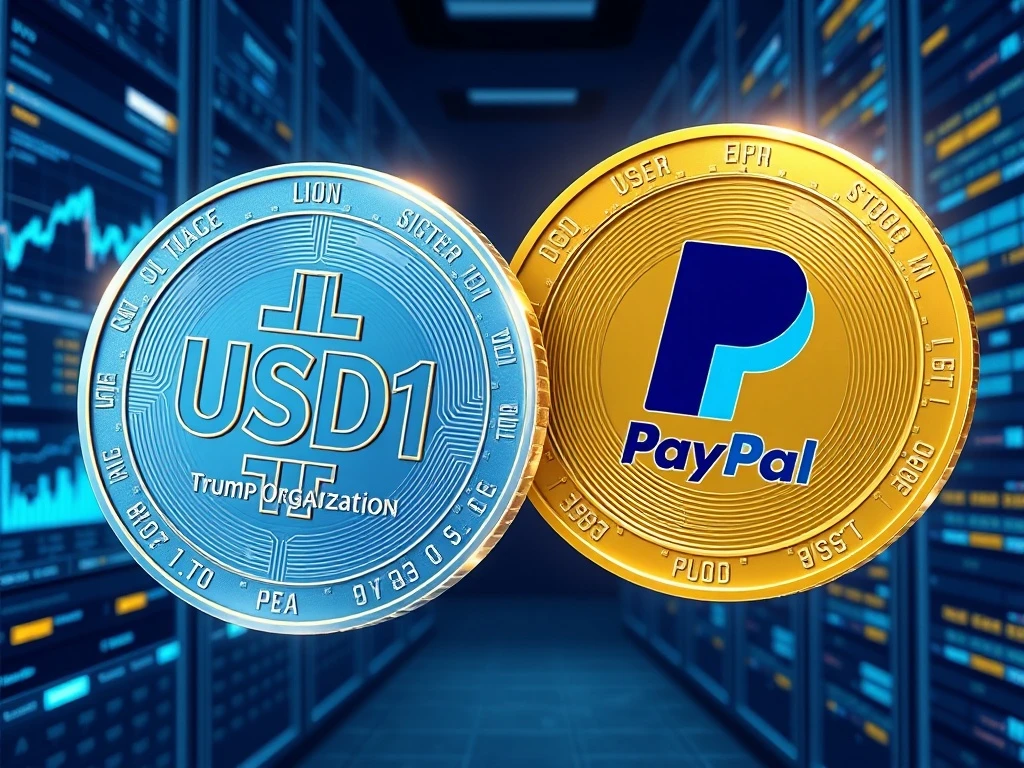
In a significant development for the digital currency landscape, Eric Trump announced on November 15, 2024, that the USD1 stablecoin has officially surpassed PayPal’s PYUSD in market capitalization. This milestone represents more than just numerical superiority—it signals a shifting dynamic in the race to establish dominant digital dollar platforms for global finance. The announcement, made via social media platform X, frames USD1’s growth as part of a broader vision to build “the future of global money,” transcending traditional cryptocurrency narratives.
USD1 Stablecoin Achieves Market Leadership Over PYUSD
The stablecoin market has witnessed remarkable evolution since the first dollar-pegged digital assets emerged nearly a decade ago. Currently, the total stablecoin market capitalization exceeds $160 billion globally, with Tether’s USDT and Circle’s USDC maintaining dominant positions. However, the competition among newer entrants has intensified significantly. USD1’s reported surpassing of PYUSD represents a notable achievement, particularly given PayPal’s established position in digital payments.
Market analysts note several factors contributing to this development. First, institutional adoption of stablecoins has accelerated throughout 2024. Second, regulatory clarity in several jurisdictions has provided more certainty for market participants. Third, technological improvements have enhanced stablecoin utility beyond simple value transfer. Consequently, USD1’s growth trajectory reflects these broader market trends while also demonstrating specific strategic advantages.
Comparative Analysis: USD1 vs. PYUSD
Understanding the significance of this milestone requires examining both platforms’ fundamental characteristics. The following table outlines key differences:
| Feature | USD1 | PYUSD |
|---|---|---|
| Launch Date | 2023 | 2023 |
| Issuing Entity | Trump Organization affiliates | PayPal Holdings, Inc. |
| Blockchain Support | Ethereum, Solana, Avalanche | Ethereum, Solana |
| Primary Use Cases | Cross-border payments, institutional finance | PayPal ecosystem payments, remittances |
| Regulatory Approach | State-level money transmitter licenses | New York Department of Financial Services trust charter |
Industry experts emphasize that market capitalization represents just one metric among many. Daily transaction volume, user adoption rates, and integration partnerships provide additional context for evaluating stablecoin success. Nevertheless, surpassing a competitor backed by a payments giant like PayPal undoubtedly marks a significant moment for the USD1 project.
The Evolving Digital Dollar Landscape
The competition between USD1 and PYUSD occurs within a rapidly transforming financial ecosystem. Central bank digital currencies (CBDCs) now exist in over 130 countries according to Atlantic Council research. Meanwhile, private sector digital dollar initiatives continue proliferating. This environment creates both opportunities and challenges for stablecoin issuers seeking market share.
Several key developments have shaped the current landscape:
- Regulatory frameworks have matured in jurisdictions including the European Union, Singapore, and the United Arab Emirates
- Institutional infrastructure has expanded with more custody solutions, trading venues, and settlement systems
- Technological interoperability has improved through cross-chain protocols and standardized interfaces
- Use case diversification has occurred with stablecoins now serving DeFi, gaming, and supply chain applications
Against this backdrop, USD1’s growth reflects strategic positioning rather than mere market timing. The project has reportedly focused on specific verticals including international trade finance and asset tokenization. These applications potentially offer higher transaction values than consumer payments, which could explain rapid capitalization growth despite PYUSD’s broader retail accessibility.
Expert Perspectives on Market Dynamics
Financial technology analysts offer nuanced interpretations of this development. Dr. Elena Rodriguez, a digital currency researcher at Stanford University, notes: “Market capitalization comparisons provide useful snapshots but don’t capture network effects or ecosystem integration. PayPal’s PYUSD benefits from immediate access to millions of merchants and consumers, while USD1 appears focused on institutional corridors. Both approaches have merit in a fragmented global market.”
Meanwhile, regulatory experts highlight compliance considerations. “Stablecoin issuers face increasing scrutiny regarding reserve management and consumer protection,” observes Michael Chen, a former financial regulator now consulting for blockchain projects. “The entities behind both USD1 and PYUSD have invested significantly in compliance infrastructure, which represents a positive development for market maturity.”
Strategic Implications for Global Finance
Eric Trump’s characterization of USD1 as building “the future of global money” reflects broader industry aspirations. Stablecoins increasingly serve as bridges between traditional finance and blockchain-based systems. Their growth potentially impacts several areas:
Cross-border payments represent perhaps the most immediate application. The World Bank estimates remittance costs average 6.2% globally. Stablecoins can potentially reduce these costs while improving settlement speed. Both USD1 and PYUSD compete in this space alongside established players like Ripple and traditional correspondent banking networks.
Financial inclusion initiatives also utilize stablecoin technology. Unbanked populations can access dollar-pegged assets through mobile applications without traditional bank accounts. However, regulatory identification requirements and technological access barriers remain challenges for widespread adoption.
Institutional adoption continues accelerating. Asset managers, corporations, and even governments now explore stablecoin integration for treasury management and payment systems. This institutional interest provides growth opportunities for compliant, well-capitalized stablecoin issuers regardless of their consumer brand recognition.
Technological Infrastructure and Security Considerations
Beyond market metrics, technical architecture influences stablecoin success. Both USD1 and PYUSD utilize blockchain technology but implement different approaches to key challenges:
- Scalability solutions address transaction throughput limitations
- Privacy features balance transparency with commercial confidentiality
- Interoperability protocols enable cross-chain functionality
- Security audits verify smart contract integrity and reserve management
These technical considerations increasingly differentiate stablecoin projects as the market matures. Users and integrators evaluate not just the issuing entity’s reputation but also the underlying technology’s robustness and roadmap.
Conclusion
The USD1 stablecoin surpassing PYUSD in market size represents a notable milestone in digital currency development. This achievement highlights the competitive dynamics within the expanding digital dollar ecosystem. While market capitalization provides one measure of success, broader adoption metrics, regulatory compliance, and technological innovation will ultimately determine which platforms shape the future of global money. As Eric Trump’s announcement emphasizes, this competition extends beyond cryptocurrency markets into fundamental questions about how value will move in an increasingly digital global economy.
FAQs
Q1: What exactly is a stablecoin?
A stablecoin is a type of cryptocurrency designed to maintain a stable value relative to a specific asset, most commonly the U.S. dollar. Unlike volatile cryptocurrencies like Bitcoin, stablecoins achieve price stability through various mechanisms including holding reserve assets or using algorithmic controls.
Q2: How does USD1 differ from traditional cryptocurrencies?
USD1 is a dollar-pegged stablecoin, meaning its value is designed to remain equivalent to one U.S. dollar. This contrasts with traditional cryptocurrencies like Bitcoin or Ethereum, which experience significant price fluctuations based on market supply and demand dynamics.
Q3: Why does market capitalization matter for stablecoins?
Market capitalization indicates the total value of all coins in circulation. For stablecoins, higher market cap generally suggests greater adoption, liquidity, and network effects. It can also indicate stronger reserve backing and increased utility across applications.
Q4: What are the primary use cases for stablecoins like USD1 and PYUSD?
Primary use cases include cross-border payments, remittances, trading between cryptocurrencies, decentralized finance applications, and as digital dollar equivalents for users in countries with volatile local currencies or limited banking access.
Q5: How are stablecoins regulated in the United States?
Stablecoin regulation involves multiple agencies including the SEC, CFTC, and state financial regulators. Current regulatory approaches focus on reserve transparency, consumer protection, anti-money laundering compliance, and issuer accountability, with comprehensive federal legislation under consideration.
This article was produced with AI assistance and reviewed by our editorial team for accuracy and quality.