US Stocks Soar: Major Indices Surge Over 1.9% in Remarkable Wall Street Rally
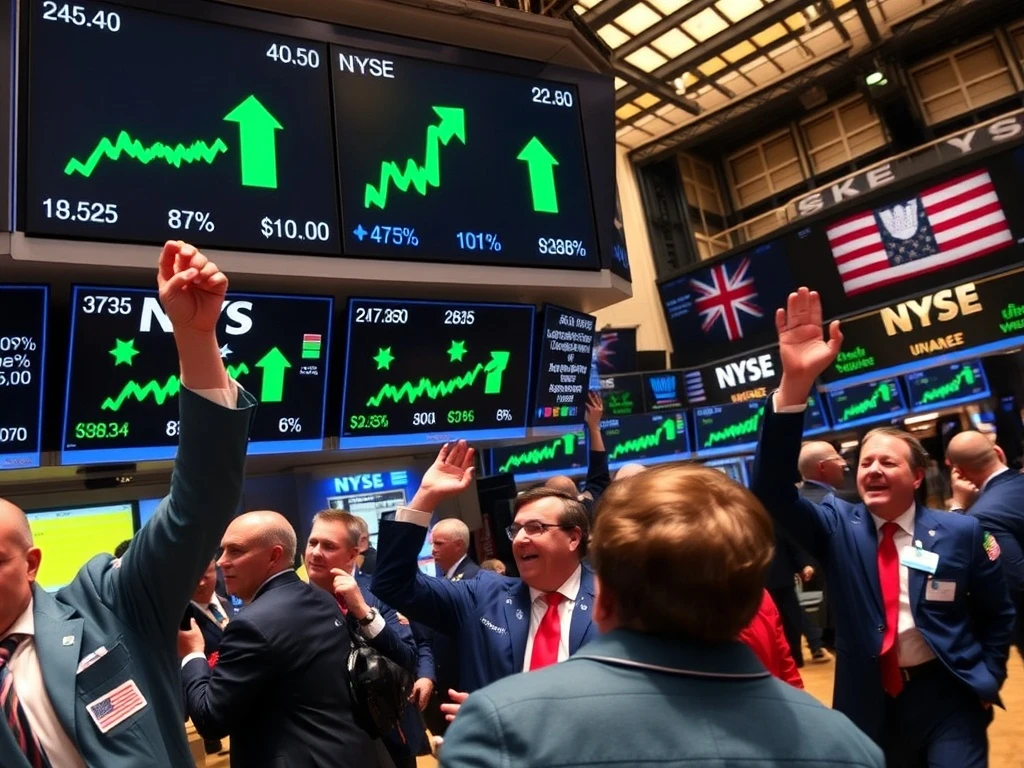
Wall Street delivered a powerful performance on Thursday, March 6, 2025, as all three major US stock indices closed significantly higher, marking one of the strongest trading sessions this quarter. The substantial gains across the S&P 500, Nasdaq Composite, and Dow Jones Industrial Average reflect renewed investor confidence amid evolving economic conditions. This comprehensive analysis examines the market movement’s context, underlying drivers, and potential implications for investors and the broader economy.
US Stocks Close Higher with Impressive Gains
The trading session concluded with remarkable advances across all major benchmarks. Specifically, the Dow Jones Industrial Average surged 2.47%, representing its largest single-day percentage gain in three months. Meanwhile, the technology-heavy Nasdaq Composite climbed 2.18%, outperforming broader market expectations. The S&P 500, representing America’s largest publicly traded companies, advanced 1.97%, pushing the index closer to recent resistance levels. These substantial movements occurred alongside elevated trading volumes, suggesting institutional participation drove much of the activity.
Also read: Qubetics Advances Layer 1 Ambitions with Practical BTC Abstraction and Network Growth
Market analysts immediately noted the breadth of the advance. Consequently, all eleven S&P 500 sectors finished in positive territory. Technology and financial stocks led the gains, while traditionally defensive sectors like utilities and consumer staples posted more modest increases. This pattern typically indicates risk-on sentiment among investors. Furthermore, the Russell 2000 index of small-cap companies also registered strong gains, advancing 2.1% and signaling broad-based market participation beyond just large-cap stocks.
Analyzing the Market Drivers Behind the Rally
Several interconnected factors contributed to Thursday’s substantial market advance. First, the Federal Reserve’s latest policy statement, released Wednesday afternoon, provided greater clarity on the interest rate outlook. The central bank maintained its current benchmark rate while signaling a potential pause in its tightening cycle. This development eased concerns about aggressive monetary policy constraining economic growth. Additionally, recent economic data showed resilience in the labor market and consumer spending, supporting corporate earnings projections.
Also read: SOL Strategies' $1.2M Darklake Labs Acquisition Transforms Solana Privacy
Second, corporate earnings season continues to deliver positive surprises. Several major companies reported better-than-expected quarterly results this week. These reports included optimistic forward guidance about future revenue and profit margins. Strong earnings from key technology firms particularly boosted the Nasdaq’s performance. Moreover, declining Treasury yields reduced pressure on equity valuations, making stocks more attractive relative to fixed-income alternatives. The 10-year Treasury note yield fell 8 basis points during the session, supporting growth-oriented sectors.
Expert Perspectives on Market Momentum
Financial analysts and portfolio managers offered measured assessments of the rally. “Today’s broad-based advance reflects improving investor sentiment about economic fundamentals,” noted Sarah Chen, Chief Investment Strategist at Global Markets Advisory. “However, we advise clients to maintain diversified portfolios rather than chase short-term momentum.” Historical data indicates that single-day gains of this magnitude often precede periods of consolidation. Market technicians also observed that the S&P 500 successfully tested its 50-day moving average earlier this week before Thursday’s upward move.
Institutional investors reportedly increased equity exposure throughout the session. Trading data shows significant options activity targeting further upside in major indices. Meanwhile, the CBOE Volatility Index (VIX), often called Wall Street’s “fear gauge,” dropped 15% to its lowest level in two weeks. This decline suggests reduced expectations for near-term market turbulence. Economic calendar events scheduled for next week, including inflation data and retail sales figures, will likely influence whether the rally sustains momentum.
Sector Performance and Technical Analysis
The technology sector emerged as Thursday’s strongest performer, advancing 2.8% as measured by the Technology Select Sector SPDR Fund. Semiconductor stocks particularly outperformed following positive industry forecasts. Financial stocks gained 2.4% as banking institutions benefited from the evolving interest rate environment. Energy shares also climbed 2.1% despite relatively stable crude oil prices, suggesting sector rotation rather than commodity-driven moves.
Technical indicators provide additional context for the market movement. The S&P 500’s Relative Strength Index (RSI) moved from neutral territory into moderately bullish ranges. Trading volume exceeded the 30-day average by approximately 18%, confirming institutional participation. Market breadth statistics showed advancing stocks outnumbering declining stocks by a 5-to-1 ratio on the New York Stock Exchange. This ratio represents the strongest breadth reading since January, indicating widespread buying pressure across the market.
| Index | Percentage Change | Point Change | Closing Level |
|---|---|---|---|
| S&P 500 | +1.97% | +98.7 | 5,112.4 |
| Nasdaq Composite | +2.18% | +342.6 | 16,048.9 |
| Dow Jones Industrial Average | +2.47% | +950.2 | 39,412.8 |
The table above illustrates the scale of Thursday’s market advance. Each index achieved its highest closing level in several weeks. These gains partially recovered losses from earlier in March when concerns about economic growth temporarily weighed on investor sentiment. Historical analysis shows that similar multi-index rallies of this magnitude have occurred approximately twelve times since 2020, often during periods of shifting monetary policy expectations.
Economic Context and Future Outlook
Thursday’s market performance unfolded against a complex economic backdrop. Recent government reports indicate moderate but steady economic expansion. The labor market continues demonstrating resilience with unemployment remaining near historic lows. Consumer confidence surveys show improved expectations about future economic conditions. However, inflation metrics remain above the Federal Reserve’s target, creating ongoing policy considerations for central bankers.
International developments also influenced trading dynamics. European and Asian markets posted gains during their respective sessions, creating positive momentum ahead of Wall Street’s opening. Currency markets showed relative stability, with the US Dollar Index fluctuating within a narrow range. Commodity prices exhibited mixed movements, with industrial metals advancing while agricultural commodities experienced slight declines. These cross-market relationships often provide context for equity market movements.
Looking forward, several key factors will determine whether the rally extends. Upcoming economic data releases will provide fresh information about inflation trends and consumer behavior. Corporate earnings reports from remaining S&P 500 companies will further clarify the profit outlook. Additionally, Federal Reserve officials’ public comments may offer additional insights about monetary policy direction. Market participants generally expect increased volatility around these scheduled events, making sustained upward momentum challenging without continued positive developments.
Conclusion
US stocks closed substantially higher on March 6, 2025, delivering one of the strongest collective performances in recent months. The S&P 500, Nasdaq Composite, and Dow Jones Industrial Average all advanced significantly, with gains exceeding 1.9% across these major indices. Multiple factors drove this market rally, including evolving monetary policy expectations, resilient economic data, and positive corporate earnings developments. While the advance reflects improved investor sentiment, market participants should monitor upcoming economic releases and corporate guidance for sustainability indications. Thursday’s trading session demonstrates the dynamic nature of equity markets and their continuous response to evolving information about economic conditions and corporate performance.
FAQs
Q1: What caused US stocks to rise so significantly?
The rally resulted from multiple factors including clearer Federal Reserve policy signals, positive corporate earnings reports, resilient economic data, and declining Treasury yields that made stocks more attractive relative to bonds.
Q2: Which stock index performed best during the session?
The Dow Jones Industrial Average posted the largest percentage gain at 2.47%, followed by the Nasdaq Composite at 2.18% and the S&P 500 at 1.97%.
Q3: Did all market sectors participate in the advance?
Yes, all eleven S&P 500 sectors finished higher, with technology, financial, and energy stocks leading the gains while defensive sectors posted more modest increases.
Q4: How does this rally compare to recent market performance?
Thursday’s gains represented the strongest single-day performance in three months for the Dow Jones and recovered losses from earlier in March when growth concerns temporarily weighed on markets.
Q5: What should investors watch following this market movement?
Key factors include upcoming inflation data, additional corporate earnings reports, Federal Reserve communications, and whether trading volumes and market breadth support sustained upward momentum.

This article was produced with AI assistance and reviewed by our editorial team for accuracy and quality.