Greenland Agreement Stalls: Critical US-NATO Pact Remains Unwritten Amid Arctic Tensions
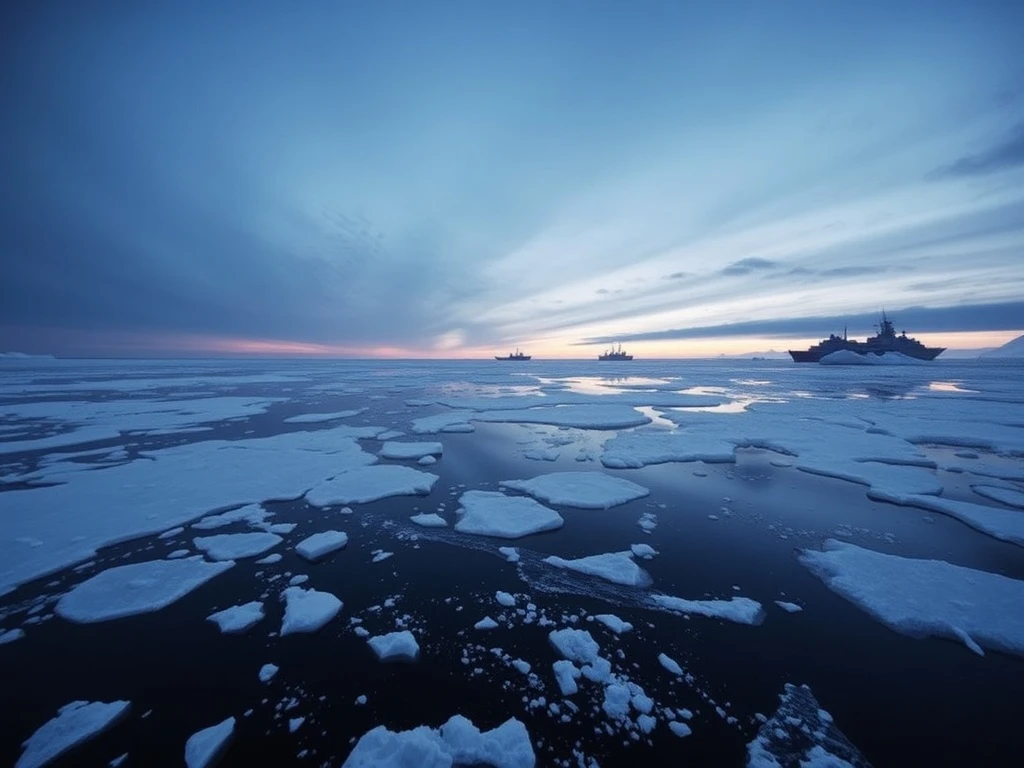
WASHINGTON, D.C. – A critical geopolitical understanding concerning the future of the Arctic remains dangerously informal. According to a report by Walter Bloomberg, no written agreement has yet been finalized between the United States and the North Atlantic Treaty Organization (NATO) regarding the strategic island of Greenland. This absence of a formal document, following high-level discussions between U.S. President Donald Trump and NATO Secretary General Mark Rutte, injects significant uncertainty into Western strategy in the High North. Consequently, other NATO allies currently lack a clear, verifiable framework for the proposed measures, which include revising a key military pact and restricting foreign investment.
Analyzing the Stalled Greenland Agreement
The reported discussions between U.S. and NATO leadership centered on a multi-pronged strategy for Greenland. Firstly, officials aimed to amend the foundational 1951 U.S.-Denmark-Greenland defense agreement. This pact grants the U.S. military rights to Thule Air Base, America’s northernmost installation. Secondly, the talks involved proposals to ban investments from Russia and China in Greenland’s burgeoning resource and infrastructure sectors. Finally, the conversations explored an expanded operational role for NATO in the region. However, without a written accord, these concepts lack the binding clarity that member states require for coordinated planning and resource allocation. This situation creates a strategic vacuum that competing powers could potentially exploit.
The Geopolitical Significance of the Arctic
The Arctic is no longer a frozen periphery but a central theater for 21st-century geopolitics. Climate change is rapidly melting sea ice, thereby opening new shipping lanes like the Northern Sea Route and exposing vast reserves of natural resources. For instance, the U.S. Geological Survey estimates the region may hold 13% of the world’s undiscovered oil and 30% of its natural gas. Consequently, nations are aggressively asserting their interests. Russia has notably militarized its Arctic coastline, reopening Soviet-era bases and deploying advanced anti-access systems. China, declaring itself a “near-Arctic state,” is pursuing scientific and investment ventures across the region, including in Greenland. This context makes formal, collective Western policy essential.
Historical Context and Legal Frameworks
Greenland’s status is uniquely complex. It is an autonomous territory within the Kingdom of Denmark, which handles its foreign and security policy. The 1951 defense agreement between the U.S. and Denmark provides the legal basis for the U.S. presence at Thule Air Base, a crucial node for missile warning and space surveillance. Any amendment to this pact would require trilateral negotiation involving the Greenlandic government in Nuuk. Furthermore, NATO operates on the principle of consensus. Therefore, any formal expansion of the alliance’s role in Greenland would necessitate agreement from all 32 member states, a process hampered by the lack of a detailed written proposal from U.S.-NATO talks.
Potential Impacts of an Unwritten Understanding
The absence of a formal agreement carries immediate and long-term consequences. For NATO allies, the uncertainty complicates defense planning and budgetary commitments. Alliance members cannot reliably ascertain their obligations or the scope of intended U.S. actions. For Denmark and Greenland, the informal nature of the discussions may raise concerns about sovereignty and being presented with a *fait accompli*. Moreover, the proposed investment bans on Russia and China, while a clear signal, lack legal enforceability without detailed, ratified terms. This ambiguity could deter some foreign capital while failing to fully address security risks from strategic investments in critical minerals or dual-use infrastructure.
Key unresolved issues include:
- Scope of Investment Bans: Which sectors and transaction types would be covered?
- NATO’s Role: Would involvement be limited to exercises, or include permanent infrastructure?
- Pact Amendments: Specific changes to the 1951 agreement regarding U.S. force posture or activities.
- Implementation Timeline: A clear schedule for enacting any agreed measures.
Expert Perspectives on Alliance Diplomacy
Security analysts emphasize that complex multilateral agreements require meticulous documentation. “In alliance politics, the devil is always in the details,” notes Dr. Anya Petrova, a senior fellow at the Center for Strategic and International Studies. “Verbal understandings between leaders are a starting point, but they must be translated into precise legal and operational language by diplomats and military planners. The current delay suggests either significant unresolved disagreements or a deliberate pacing of negotiations.” Furthermore, the process highlights the inherent challenges of coordinating policy among sovereign states with varying threat perceptions and economic interests, particularly regarding relations with China.
The Path Forward for Arctic Security
Moving from discussion to document will require focused diplomatic effort. The next likely step involves the NATO Secretariat and the U.S. State Department drafting a formal negotiating text. This draft would then circulate among key capitals, including Copenhagen and Nuuk, for input. Subsequently, negotiations would address specific contentious points, such as balancing environmental concerns with security needs or defining “critical infrastructure.” The timeline remains uncertain, but the strategic imperative is clear. As Arctic activity accelerates, a coherent, written Western strategy becomes increasingly urgent to ensure stability and deter conflict.
Conclusion
The lack of a written Greenland agreement between the US and NATO represents more than a procedural delay; it signifies a tangible gap in Western Arctic strategy. While high-level talks have identified key areas for cooperation—from modernizing the military pact to countering adversarial investment—the transition to actionable, alliance-wide policy remains incomplete. This interim period of uncertainty underscores the intricate diplomacy required to secure the High North. Ultimately, formalizing this Greenland agreement is crucial for presenting a unified front, assuring allies, and clearly defining the rules of engagement in a rapidly changing geopolitical landscape.
FAQs
Q1: What was reportedly agreed upon verbally between the US and NATO regarding Greenland?
A1: Reports indicate discussions covered amending the U.S.-Denmark-Greenland defense pact, banning Russian and Chinese investment in Greenland’s economy, and expanding NATO’s operational role in the Arctic region.
Q2: Why is the lack of a written agreement significant for other NATO members?
A2: Without a formal document, other member states cannot verify the details, scope, or obligations of the proposed measures, hindering their own defense planning and consensus-building within the alliance.
Q3: What is the 1951 agreement mentioned in relation to Greenland?
A3: It is the Defense of Greenland Agreement between the U.S. and Denmark, which grants the United States military rights to operate Thule Air Base, a critical strategic installation for space and missile surveillance.
Q4: How does Greenland’s political status affect these negotiations?
A4: Greenland is an autonomous territory of Denmark. Any changes to security arrangements or international investment policy would require engagement and likely approval from the Greenlandic government in Nuuk, not just Denmark and the U.S.
Q5: What are the broader geopolitical stakes in the Arctic that make this agreement important?
A5: The Arctic is becoming increasingly accessible due to climate change, revealing new trade routes and vast natural resources. This has intensified competition, with Russia militarizing its coast and China seeking influence, making a coherent NATO and U.S. strategy essential for regional stability.