Coinbase Ad Ban: UK’s Stern Crackdown on ‘Trivialized’ Crypto Risks Sends Shockwaves Through Industry
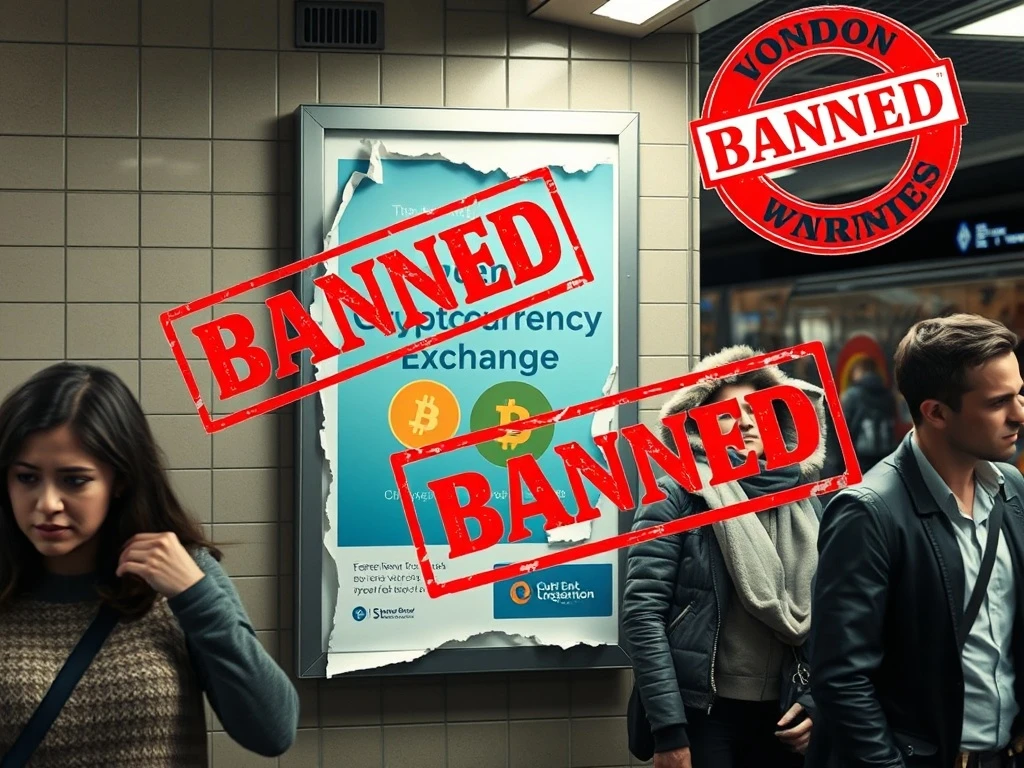
In a landmark decision that signals tightening regulatory scrutiny, the United Kingdom’s advertising watchdog has issued a comprehensive ban against Coinbase’s controversial marketing campaign for allegedly making light of cryptocurrency investment risks. This decisive move by the Advertising Standards Authority (ASA), reported on Wednesday, represents a significant escalation in the UK’s efforts to enforce responsible financial promotion standards within the volatile digital asset sector. The ruling comes amid growing global concerns about consumer protection in cryptocurrency markets and establishes a significant precedent for how crypto services can be marketed to the public.
Coinbase Ad Ban Details and Regulatory Rationale
The ASA’s prohibition specifically targets a musical-style video advertisement and three accompanying posters that Coinbase deployed across digital platforms and high-traffic physical locations. According to The Guardian’s report, regulators determined these materials presented cryptocurrency investment through Coinbase as a straightforward solution to serious economic anxieties while failing to adequately communicate associated dangers. The banned campaign included provocative slogans referencing unaffordable home ownership, rising food costs, and stagnant wages, alongside the tagline “If everything’s fine, don’t change anything.”
Also read: Bittensor TAO Sell Signal: TD Sequential Flashes Warning After Stunning 160% Surge
Regulators identified multiple compliance failures in their assessment. Firstly, the advertisements contained no risk warnings about cryptocurrency volatility, despite Financial Conduct Authority (FCA) mandates requiring prominent disclosures. Secondly, the ASA concluded that using humor to address genuine financial hardships irresponsibly simplified complex, high-risk financial products. Thirdly, the campaign implied cryptocurrency represented an obvious remedy to systemic economic problems without substantiating evidence. This regulatory action follows Clearcast’s earlier rejection of the television version in August, which cited similar concerns about presenting crypto as an unverified solution to economic challenges.
The Content That Crossed the Line
The two-minute musical advertisement depicted British citizens singing “everything is just fine” amidst visual metaphors of decay, including crumbling homes, litter-strewn streets, and rat infestations. Scenes showed shoppers lamenting food prices and workers facing mass layoffs before culminating with trash raining down on a street. This satirical approach, while creatively executed, ultimately conflicted with financial promotion principles requiring balanced risk presentation. The parallel poster campaign in London Underground and rail stations featured text highlighting specific economic pressures directly adjacent to Coinbase’s branding, creating what regulators deemed an irresponsible association between cryptocurrency investment and financial relief.
Also read: XRP Whale's $35 Million Gamble Exposes Deep Market Rift
Broader Context of UK Crypto Advertising Regulation
This enforcement action occurs within a rapidly evolving regulatory arena for cryptocurrency promotions in the United Kingdom. Since October 2023, the Financial Conduct Authority has required all crypto asset promotions to comply with existing financial services marketing rules, including clear risk warnings and a ban on misleading claims. The ASA’s decision against Coinbase represents one of the most prominent applications of these strengthened standards to a major industry player. Furthermore, it aligns with the FCA’s ongoing campaign against unauthorized crypto ATMs and non-compliant promotions that potentially exploit consumer vulnerabilities during economic uncertainty.
Industry analysts note this ruling establishes several important precedents. Firstly, it confirms that cryptocurrency advertisements must maintain the same seriousness as traditional financial product promotions, regardless of creative execution. Secondly, it demonstrates regulators’ willingness to scrutinize implied claims about cryptocurrency’s role in addressing macroeconomic issues. Thirdly, it reinforces that digital and physical advertisements face identical compliance requirements. The table below summarizes key regulatory developments shaping UK crypto advertising:
| Date | Regulatory Development | Impact on Advertising |
|---|---|---|
| October 2023 | FCA extends financial promotion rules to crypto assets | Mandatory risk warnings and balanced claims |
| August 2024 | Clearcast rejects Coinbase TV ad | Broadcast media restrictions for unsubstantiated claims |
| January 2025 | ASA bans Coinbase digital/print campaign | Complete campaign prohibition for trivializing risks |
| Ongoing | FCA actions against unauthorized crypto ATMs | Broader enforcement against non-compliant promotions |
Industry Response and CEO Defense
Coinbase CEO Brian Armstrong previously defended the campaign’s messaging following the television ban in August. Armstrong argued the Clearcast rejection indicated “there must be a kernel of truth” in the advertisement’s critique of traditional financial systems. He framed cryptocurrency as representing a necessary evolution rather than a political statement, emphasizing how “the traditional financial system is not working for many people.” Notably, Armstrong welcomed regulatory scrutiny as potentially amplifying the message, stating attempts at censorship “just helps it spread.” This confrontational stance highlights the tension between crypto industry disruption narratives and regulatory consumer protection mandates.
Industry observers have noted several implications from this exchange. Firstly, it demonstrates how cryptocurrency companies increasingly position themselves as alternatives to established financial institutions. Secondly, it reveals differing interpretations of what constitutes responsible financial promotion between innovators and regulators. Thirdly, it shows how marketing controversies can generate additional attention, potentially offsetting traditional advertising limitations. However, compliance experts warn that deliberately provocative campaigns risk escalating regulatory responses and undermining industry credibility during important policy formation periods.
Global Regulatory Parallels and Market Implications
The UK’s action against Coinbase reflects broader international trends in cryptocurrency advertising regulation. Multiple jurisdictions have recently implemented stricter promotional guidelines following consumer protection concerns. For instance, Spain now requires crypto influencers to provide 10-day advance notice of promotions to regulators. Similarly, Singapore mandates that cryptocurrency advertisements cannot target the general public and must emphasize risk. These parallel developments suggest a global regulatory convergence toward treating cryptocurrency promotions with financial services-level seriousness rather than conventional product advertising standards.
Market analysts identify several likely consequences from this regulatory shift. Legitimate cryptocurrency exchanges may increase compliance investments in marketing departments. Advertising creative approaches will likely become more conservative with prominent risk disclosures. Smaller platforms lacking compliance resources could face competitive disadvantages. Furthermore, regulatory clarity might paradoxically benefit established players by raising industry standards and consumer trust. The ASA’s decision particularly impacts how cryptocurrency services communicate their value proposition during economic uncertainty, requiring careful navigation between highlighting potential benefits and acknowledging substantial risks.
Consumer Protection and Financial Literacy Considerations
At its core, the ASA’s ruling addresses fundamental consumer protection principles in complex financial markets. Cryptocurrency investments involve unique risks including extreme volatility, technological complexity, and limited regulatory safeguards compared to traditional assets. Research indicates many consumers underestimate these dangers while overestimating potential returns, particularly when exposed to simplified marketing messages. The banned Coinbase campaign’s association between cryptocurrency and solutions to systemic economic issues potentially exacerbated these misunderstandings by implying accessible remedies for deep-seated financial challenges.
Financial education advocates have welcomed the regulatory intervention as reinforcing several significant principles. Firstly, financial product promotions must avoid exploiting consumer anxieties during difficult economic periods. Secondly, humor and satire require careful application in financial contexts where consumers might misinterpret tone. Thirdly, all investment communications must balance opportunity presentations with proportionate risk disclosures. These standards become particularly important for cryptocurrency given its increasing mainstream adoption and the demographic diversity of new investors entering the market through accessible platforms like Coinbase.
Conclusion
The UK’s comprehensive ban on Coinbase’s advertising campaign establishes a significant regulatory precedent for cryptocurrency marketing standards. This decision underscores authorities’ commitment to ensuring financial promotions, regardless of creative execution, adequately communicate investment risks and avoid trivializing serious economic concerns. As cryptocurrency continues its transition toward mainstream financial services, marketing approaches must similarly evolve to meet established consumer protection expectations. The ASA’s action provides clear guidance for the industry while reinforcing fundamental principles that balance innovation with responsible communication. Ultimately, this regulatory development represents another step toward integrating cryptocurrency within conventional financial oversight frameworks, potentially increasing long-term market stability and consumer confidence.
FAQs
Q1: Why did the UK ban Coinbase’s advertisements?
The Advertising Standards Authority banned the campaign for being “irresponsible” and “trivializing the risks of cryptocurrency.” Regulators determined the ads presented crypto investment as an easy solution to economic concerns without required risk warnings.
Q2: What specific content was banned?
The ban covers a musical video advertisement depicting economic decay and three posters displayed in London Underground and rail stations. All materials linked Coinbase’s services to solutions for housing affordability, food costs, and wage stagnation concerns.
Q3: How does this relate to broader UK cryptocurrency regulation?
This enforcement aligns with Financial Conduct Authority rules requiring crypto promotions to include clear risk warnings and avoid misleading claims. It demonstrates regulators’ willingness to apply traditional financial advertising standards to cryptocurrency marketing.
Q4: What was Coinbase’s response to the advertising ban?
CEO Brian Armstrong previously defended the campaign’s message about traditional financial system shortcomings. He suggested regulatory opposition validated the advertisement’s critique and might help spread its underlying message about crypto’s potential role.
Q5: What does this mean for future cryptocurrency advertising?
The ruling establishes that crypto ads must maintain seriousness about risks, avoid oversimplifying complex products, and include mandatory disclosures. Marketing approaches will likely become more conservative with prominent risk communication alongside benefit presentations.

This article was produced with AI assistance and reviewed by our editorial team for accuracy and quality.