Trump Iran Tariff: Explosive 25% Threat Against Nations Trading with Tehran
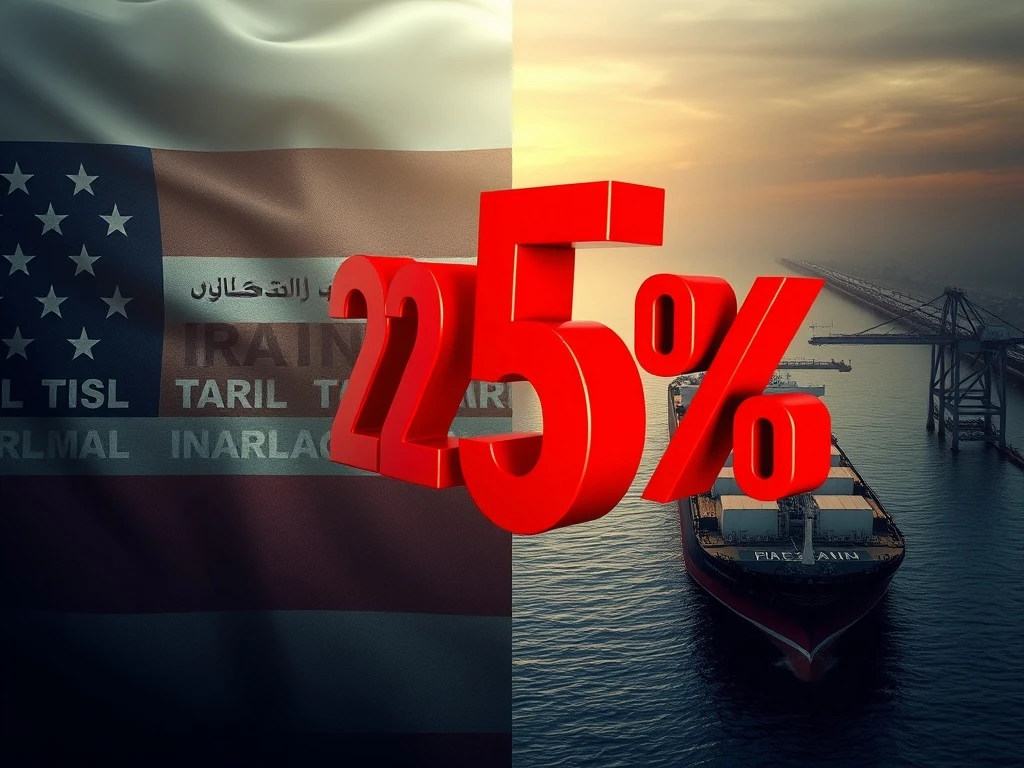
WASHINGTON, D.C., March 15, 2025 – President Donald Trump has issued a stark warning to the international community, threatening to impose a sweeping 25% tariff on all nations that continue trading with Iran. This explosive declaration marks a significant escalation in the United States’ economic pressure campaign against Tehran. Consequently, global markets are bracing for potential disruptions. The Trump Iran tariff threat represents one of the most aggressive unilateral trade measures announced in recent years.
Trump Iran Tariff: The Immediate Announcement and Context
President Trump made the announcement during a press briefing at the White House. He stated the tariff would target “any country doing business with the Iranian regime.” This move directly escalates existing sanctions. The United States has maintained various sanctions against Iran since 2018. However, this proposed 25% blanket tariff represents a broader, more punitive approach. It specifically aims to cripple Iran’s ability to engage in international commerce.
Furthermore, the announcement comes amid stalled nuclear negotiations. The Joint Comprehensive Plan of Action (JCPOA), commonly known as the Iran nuclear deal, collapsed in 2018. Subsequent attempts to revive the agreement have failed. The Trump administration has consistently advocated for a “maximum pressure” strategy. This new tariff threat is the latest manifestation of that policy. Experts note it could affect dozens of countries, including key U.S. allies.
Historical Precedent and Legal Authority
The President likely derives authority for this action from several statutes. Primarily, the International Emergency Economic Powers Act (IEEPA) grants broad powers during declared national emergencies. The Trump administration has previously used this authority for sanctions. Additionally, Section 232 of the Trade Expansion Act of 1962 allows tariffs based on national security threats. The administration has invoked this section for tariffs on steel and aluminum in the past. Legal scholars anticipate immediate challenges in domestic and international courts.
Global Trade Tensions and Potential Impacts
The immediate reaction from trading partners has been one of concern and condemnation. The European Union, China, and India are among Iran’s largest trading partners. A 25% tariff on all their U.S.-bound goods would be economically devastating. For instance, the EU exported over $500 billion in goods to the U.S. in 2024. A blanket tariff could add $125 billion in costs. Global supply chains, still recovering from recent disruptions, would face new shocks.
Major economies have already begun formulating responses. The European Commission announced it would “consider all appropriate measures” in response. China’s Foreign Ministry warned against “bullying unilateralism.” Meanwhile, financial markets reacted negatively. Oil prices surged over 8% on fears of supply constraints. Iran is a major oil producer. Disruptions to its trade could tighten global supplies significantly.
- Oil Markets: Brent crude jumped to $98 per barrel, the highest level in 18 months.
- Currency Fluctuations: The U.S. dollar strengthened against most currencies, while the Iranian rial hit record lows.
- Trade Volume Projections: Analysts predict a 3-5% reduction in global trade volume if the tariff is implemented.
Expert Analysis on Economic Consequences
Dr. Anya Sharma, Director of Geoeconomics at the Center for Strategic Studies, provided context. “This isn’t just a trade policy,” she explained. “It’s a geopolitical instrument with profound economic ripple effects. The 25% figure is deliberately punitive. It’s designed to make the cost of trading with Iran prohibitive. However, it also risks fragmenting the global trading system. Nations may seek alternative financial channels outside U.S. jurisdiction.”
Historical data supports this analysis. Previous U.S. sanctions on Iran reduced its oil exports by over 80% between 2018 and 2020. The new tariff, however, shifts the burden onto third-party countries. This “secondary sanctions” mechanism is more controversial. It effectively forces other nations to choose between trading with Iran or the United States.
Iran’s Response and Regional Stability
Iranian officials have denounced the threat as “economic terrorism.” Foreign Minister Hossein Amir-Abdollahian stated Iran would “not yield to pressure.” He also hinted at potential retaliatory measures. These could include accelerating nuclear activities or regional military posturing. The Strait of Hormuz, a critical chokepoint for global oil shipments, remains a potential flashpoint. Approximately 20% of the world’s oil passes through this strait.
Regional allies are watching closely. Israel has publicly supported increased pressure on Iran. Saudi Arabia and the United Arab Emirates have remained more cautious. Both nations have recently sought to de-escalate tensions with Tehran. A major economic shock could destabilize these delicate diplomatic efforts. Furthermore, it could impact global energy security for years to come.
| Country | Trade with Iran (Est. $B) | U.S. Trade Volume ($B) | Potential 25% Tariff Impact ($B) |
|---|---|---|---|
| China | 28.7 | 658.8 | 164.7 |
| European Union | 5.2 | 901.2 | 225.3 |
| India | 2.1 | 128.5 | 32.1 |
| Turkey | 1.8 | 31.2 | 7.8 |
| South Korea | 1.2 | 168.2 | 42.1 |
Implementation Timeline and Legal Hurdles
The announcement is currently a threat, not an implemented policy. The administration must follow specific procedural steps. Typically, this involves a formal proclamation, a Federal Register notice, and a comment period. This process could take 60-90 days. During this window, intense diplomatic negotiations will likely occur. Congress may also weigh in. Several lawmakers have already expressed constitutional concerns about executive trade authority.
International legal challenges are certain. The World Trade Organization (WTO) prohibits discriminatory tariffs. The U.S. would likely invoke a national security exception, as it has before. This argument has created significant tension within the WTO. A dispute of this magnitude could paralyze the organization’s dispute settlement system. Ultimately, the threat itself may be a negotiating tactic. The administration may seek concessions before actual implementation.
The Domestic Political Calculus
Domestically, the move plays to President Trump’s political base. It reinforces his image as a leader willing to take aggressive action. However, it also risks backlash from business groups and agricultural exporters. American farmers and manufacturers fear retaliatory tariffs from affected countries. The U.S. Chamber of Commerce issued a statement warning of “job losses and higher prices.” The political impact will depend heavily on the global response and economic consequences.
Conclusion
The Trump Iran tariff threat represents a pivotal moment in international economic statecraft. The proposed 25% levy on nations trading with Tehran escalates the maximum pressure campaign to unprecedented levels. It carries significant risks for global trade stability, energy markets, and diplomatic relations. While the immediate future involves procedural steps and negotiations, the announcement has already altered geopolitical calculations. The world now watches to see if this Trump Iran tariff will transition from threat to reality, potentially reshaping global trade alliances and economic security for years to come.
FAQs
Q1: What exactly did President Trump announce regarding Iran?
President Trump threatened to impose a 25% tariff on all goods imported into the United States from any country that continues to trade with Iran. This is not yet an active tariff but a declared intention to implement one.
Q2: Which countries would be most affected by this 25% tariff?
Countries with significant trade both with Iran and the United States would be most affected. This primarily includes China, the European Union member states, India, Turkey, and South Korea, based on current trade volume data.
Q3: What legal authority does the President have to impose such a tariff?
The administration would likely cite national security authorities under Section 232 of the Trade Expansion Act of 1962 and the International Emergency Economic Powers Act (IEEPA). These laws grant the President broad powers during declared emergencies or for national security reasons.
Q4: How have global markets reacted to this announcement?
Financial markets reacted with volatility. Oil prices surged over 8% due to fears of constrained Iranian exports. The U.S. dollar strengthened, while equities in sectors dependent on global trade saw declines. Bond markets also showed signs of risk aversion.
Q5: What happens next in this process?
The threat initiates a process that typically includes a formal proclamation, publication in the Federal Register, a comment period, and potential legal challenges. This provides a window of approximately 60-90 days for diplomatic negotiations and possible modifications before any tariff could take effect.