Tether USAt Launch: A Strategic Triumph for Crypto Under New U.S. Stablecoin Rules
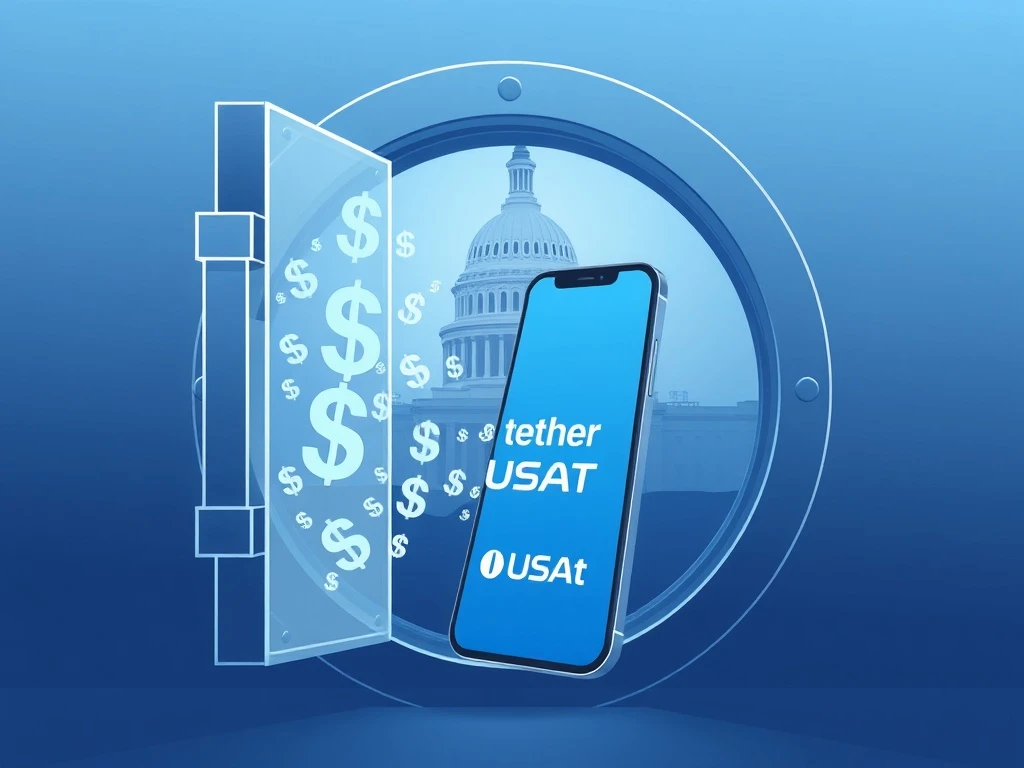
In a landmark move for the cryptocurrency industry, Tether has officially launched its U.S.-regulated stablecoin, USAt, directly responding to and operating within the newly established federal framework of the GENIUS Act. This major development, confirmed on Tuesday, October 28, 2025, signals a new era of compliance and institutional engagement for digital assets in the United States. Consequently, the launch represents a strategic evolution for Tether, the operator of the world’s dominant stablecoin, USDt (USDT), as it navigates a shifting regulatory arena.
Tether USAt Enters the Market Under Federal Oversight
Tether’s new offering, USAt, is explicitly designed as a “federally regulated, dollar-backed stablecoin.” Significantly, its operational blueprint is the U.S. GENIUS Act (Generating New Economic Initiatives and Upholding Security Act), which Congress passed and the President signed into law in July 2025. This legislation created the first comprehensive federal framework for payment stablecoins. Therefore, USAt’s launch is not merely a product release but a direct implementation of this new legal structure. Anchorage Digital Bank, a federally chartered digital asset bank, serves as the official issuer, while global financial giant Cantor Fitzgerald acts as the designated reserve custodian and preferred primary dealer.
Also read: Zero-Knowledge Proofs Guide: Hoskinson's Free 337-Page GitHub Release Empowers Developers
Initially, the stablecoin is available on several major cryptocurrency exchanges and platforms. These include Bybit, Crypto.com, Kraken, OKX, and MoonPay. “USAt is now available to US users seeking a dollar-backed token built to operate within the US’s dedicated federal regime,” Tether stated. This targeted availability underscores the product’s focus on the domestic U.S. market, a strategic departure from USDt’s global, often offshore, footprint.
The Regulatory Catalyst: Understanding the GENIUS Act
The GENIUS Act of 2025 fundamentally reshaped the playing field for stablecoin issuers in the United States. Prior to its enactment, stablecoin regulation existed in a patchwork of state-level money transmitter licenses and evolving guidance from federal agencies. The Act established clear federal standards for issuers, mandating stringent reserve requirements, routine attestations and audits, consumer protection rules, and anti-money laundering protocols. For Tether, a company that has historically faced scrutiny over its reserve composition and transparency, launching a product under this regime is a calculated move to build trust with a previously skeptical institutional audience.
Also read: Crypto Liquidations Surge Past $450M as Options Expiry and Oil Shock Fuel Market Panic
Institutional Demands and Tether’s Strategic Pivot
Tether’s announcement heavily emphasized meeting the needs of “America’s most demanding institutions.” Paolo Ardoino, Tether’s CEO, framed USAt as an extension of the company’s core mission. “USDT has proven for more than a decade that digital dollars can deliver trust, transparency, and utility at a global scale,” Ardoino noted. “USAt extends that mission by providing a federally regulated product designed for the US.” This dual-coin strategy allows Tether to maintain its dominant global position with USDT while simultaneously capturing a new, compliance-focused market segment domestically.
The leadership team for USAt further signals this institutional and regulatory focus. Bo Hines, appointed CEO of Tether USAt, previously led the Republican President Donald Trump’s Council of Advisers on Digital Assets. His experience in policy circles is viewed as a critical asset for dealing with the federal regulatory environment. “With the launch of USAt, we see a digital dollar that is designed to meet federal regulatory expectations,” Hines stated. “Our focus is stability, transparency, and responsible governance, ensuring that the United States continues to lead in dollar innovation.”
Key Differentiators of USAt vs. Global USDT:
- Regulatory Jurisdiction: USAt operates under the U.S. GENIUS Act; USDT operates under a global, multi-jurisdictional framework.
- Primary Issuer: USAt is issued by the federally chartered Anchorage Digital Bank; USDT is issued by Tether Holdings.
- Target Market: USAt is designed for U.S. users and institutions; USDT serves a global, largely non-U.S. user base.
- Reserve Custodian: USAt reserves are custodied by Cantor Fitzgerald, a major U.S. primary dealer; USDT reserves are held by a variety of global financial institutions.
Broader Market Impact and Competitive Space
The introduction of USAt arrives amid increasing competition in the regulated stablecoin space. Other entities, including traditional banks and fintech companies, are expected to launch their own GENIUS Act-compliant tokens. Tether’s first-mover advantage, employing its massive existing scale and liquidity from USDT, presents a significant challenge to new entrants. However, the launch also validates the growing institutional demand for digital dollar instruments that offer the speed and programmability of crypto with the regulatory certainty of traditional finance.
Analysts point to several potential impacts. First, it could accelerate the migration of institutional capital into the digital asset ecosystem. Second, it provides a clear, compliant on-ramp and off-ramp for U.S.-based DeFi applications. Finally, it places pressure on other global stablecoin issuers to clarify their own regulatory strategies, potentially leading to a bifurcation between “offshore” and “on-shore” stablecoin models. A recent report from Standard Chartered highlighted that regulated stablecoins like USAt could pose a “real threat to bank deposits” by offering a more attractive, yield-bearing digital cash alternative, a debate that USAt’s launch will undoubtedly intensify.
Transparency and the Road Ahead
At the time of writing, USAt has not yet appeared on Tether’s public transparency page, which currently lists its other stablecoin products: USDT, CHNt (CNY), MXNt (MXN), and XAUt (gold). Observers will closely monitor when and how USAt’s reserve attestations are published, as this will be a critical test of its commitment to the transparency mandates of the GENIUS Act. The involvement of Cantor Fitzgerald as custodian is seen as a step toward meeting those expectations, given the firm’s reputation in traditional finance.
Conclusion
The launch of Tether’s USAt stablecoin under the new GENIUS Act framework is a transformative event for the cryptocurrency industry. It represents a strategic embrace of federal regulation by the sector’s largest player, potentially unlocking vast pools of institutional capital and lending newfound legitimacy to the concept of digital dollars. While questions around transparency and competitive response remain, the debut of USAt marks a definitive pivot point. It moves stablecoins from the periphery of finance toward the center, governed by clear rules and designed for the world’s most demanding financial institutions. The success of the Tether USAt initiative will likely serve as a key benchmark for the entire regulated digital asset economy in the years to come.
FAQs
Q1: What is the Tether USAt stablecoin?
USAt is a new U.S. dollar-pegged stablecoin issued by Tether in partnership with Anchorage Digital Bank. It is specifically designed to be fully compliant with the United States’ new federal stablecoin law, the GENIUS Act.
Q2: How is USAt different from the regular USDT (Tether)?
The key difference is regulation and target market. USAt operates under the U.S. GENIUS Act, is issued by a federally chartered bank, and is aimed at U.S. users and institutions. USDT operates under an international framework and serves a global audience.
Q3: What is the GENIUS Act?
The Generating New Economic Initiatives and Upholding Security (GENIUS) Act is a U.S. federal law passed in July 2025. It establishes the first comprehensive national regulatory framework for payment stablecoins, setting rules for reserves, consumer protection, and anti-money laundering compliance.
Q4: Who is backing and holding the reserves for USAt?
Cantor Fitzgerald, a leading global financial services firm, serves as the designated reserve custodian and preferred primary dealer for USAt. This means they are responsible for securely holding the U.S. dollar assets that back each USAt token in circulation.
Q5: Where can I buy or trade the new USAt stablecoin?
At launch, USAt is listed on several major cryptocurrency exchanges and platforms, including Bybit, Crypto.com, Kraken, OKX, and MoonPay. Its availability is primarily focused on serving users within the United States.

This article was produced with AI assistance and reviewed by our editorial team for accuracy and quality.