Stablecoins Revolutionize Africa: Former UN Official Declares Digital Currency Now More Vital Than Traditional Aid
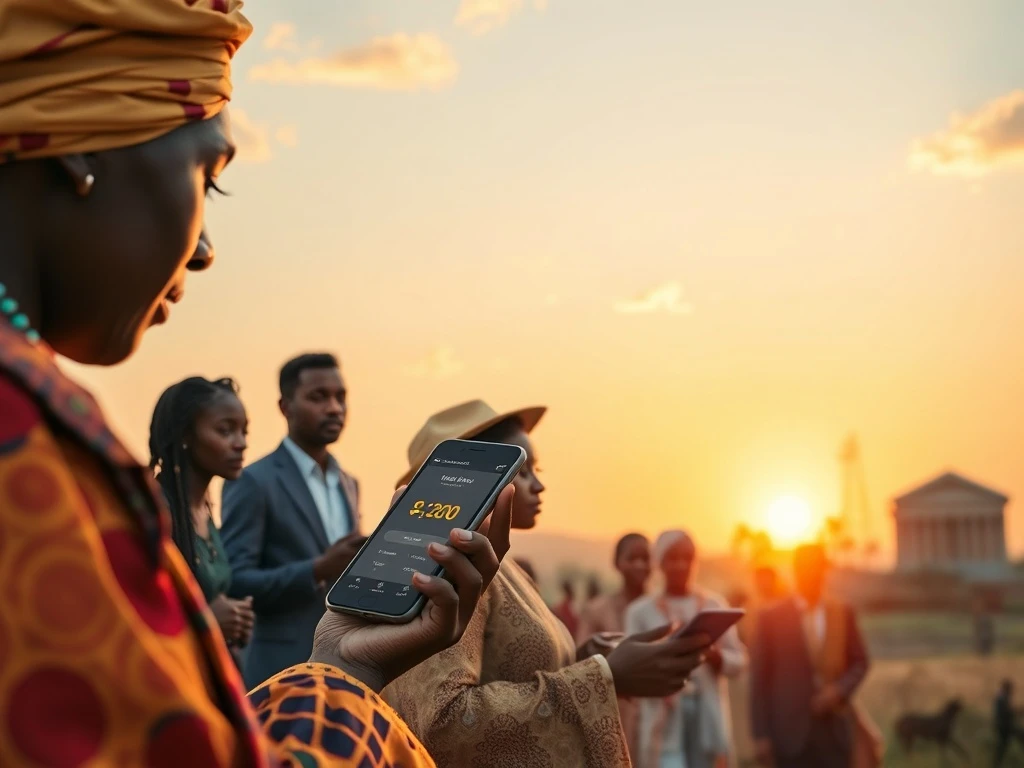
DAVOS, Switzerland – In a groundbreaking declaration that signals a seismic shift in African financial systems, former United Nations Under-Secretary-General Vera Songwe has asserted that stablecoins now hold greater importance for the continent’s economic development than traditional foreign aid. Speaking at the prestigious World Economic Forum in Davos, the renowned economist presented compelling evidence that dollar-pegged digital currencies are fundamentally reshaping how money moves across Africa, offering unprecedented efficiency and accessibility where conventional systems have consistently failed.
Stablecoins Transform African Remittance Landscape
The traditional remittance system in Africa has long burdened users with excessive costs and frustrating delays. Previously, sending just $100 within the continent incurred an average fee of six dollars while requiring multiple days for settlement. This inefficient process disproportionately affected migrant workers, small business owners, and families separated by borders. Consequently, these financial barriers hindered economic growth and limited opportunities for millions.
Stablecoins now provide a dramatically superior alternative through blockchain technology. These digital currencies maintain steady value by pegging to stable assets like the US dollar. Users can transfer funds across borders within minutes rather than days. Transaction fees typically range from mere cents to a few dollars regardless of transfer amount. This technological advancement directly addresses what the World Bank identifies as a critical barrier to financial inclusion in developing regions.
The Economic Impact Beyond Simple Transfers
Vera Songwe’s analysis extends far beyond basic money transfers. The former UN official emphasizes how stablecoins facilitate broader economic activities across Africa. Small and medium enterprises increasingly utilize these digital currencies for cross-border trade. Farmers access international markets more efficiently. Freelancers receive global payments without excessive banking fees. This represents a fundamental shift from aid dependency toward sustainable economic participation.
Several African nations demonstrate particularly rapid adoption of stablecoin technology. Nigeria, Kenya, Ghana, and South Africa lead in cryptocurrency usage according to recent Chainalysis reports. Meanwhile, countries like Tanzania and Uganda show accelerating growth in digital currency adoption. This continental trend reflects deeper changes in how Africans engage with financial systems and global markets.
Expert Perspectives on Financial Inclusion
Financial technology experts corroborate Songwe’s assessment with additional data points. The African Development Bank reports that over 60% of adults in Sub-Saharan Africa lack access to formal banking services. However, mobile phone penetration exceeds 80% across most regions. This creates ideal conditions for stablecoin adoption through smartphone applications. Unlike traditional banking infrastructure requiring physical branches, digital currencies operate through existing mobile networks.
Comparative analysis reveals stark contrasts between systems. Traditional remittance channels typically involve multiple intermediaries including banks, money transfer operators, and currency exchanges. Each participant extracts fees while adding processing time. Blockchain-based stablecoin transfers eliminate most intermediaries through decentralized verification. This technological efficiency translates directly to user benefits including lower costs and faster access to funds.
| System | Average Fee ($100 Transfer) | Settlement Time | Access Requirements |
|---|---|---|---|
| Traditional Banking | $6.00 | 2-5 days | Bank account, identification documents |
| Money Transfer Operators | $8.50 | 1-3 days | Physical location, identification |
| Stablecoin Transfers | $0.50-$2.00 | 2-15 minutes | Smartphone, internet connection |
Regulatory Evolution and Future Prospects
African governments demonstrate increasingly sophisticated approaches to cryptocurrency regulation. Rather than implementing blanket prohibitions, forward-thinking nations develop frameworks that balance innovation with consumer protection. Nigeria’s Securities and Exchange Commission recently published comprehensive digital asset rules. South Africa’s Financial Sector Conduct Authority licenses cryptocurrency exchanges. Kenya’s central bank explores central bank digital currency while allowing private stablecoin innovation.
This regulatory evolution reflects practical recognition of stablecoins’ economic benefits. Policymakers acknowledge that completely blocking digital currency access would disadvantage their citizens in global markets. Instead, they create guardrails against fraud while enabling legitimate financial innovation. This balanced approach contrasts with earlier regulatory uncertainty that characterized cryptocurrency’s initial African adoption phase.
Historical Context: From Aid Dependency to Financial Sovereignty
Africa’s relationship with foreign aid has evolved significantly across decades. Post-colonial development often relied heavily on international assistance programs. While providing essential resources during crises, this model sometimes created dependency rather than sustainable growth. The stablecoin revolution represents a technological pathway toward greater financial sovereignty. Africans increasingly control their economic participation through decentralized systems rather than depending on external assistance.
This transition aligns with broader continental initiatives including the African Continental Free Trade Area. By reducing cross-border payment friction, stablecoins facilitate the trade integration envisioned by AfCFTA architects. Digital currencies effectively function as a pan-African payment layer that complements traditional national currencies. This technological infrastructure supports the economic unification goals that political agreements establish.
Practical Implementation and User Adoption
Real-world stablecoin usage in Africa follows several distinct patterns that demonstrate practical utility:
- Diaspora Remittances: African migrants worldwide increasingly send stablecoins to family members who convert to local currency through authorized exchanges
- Cross-Border Commerce: Importers and exporters settle transactions using dollar-pegged stablecoins to avoid multiple currency conversions
- Inflation Hedging: Citizens in high-inflation economies preserve purchasing power through stablecoin holdings during currency volatility
- Humanitarian Applications: Aid organizations deliver assistance directly to recipients via stablecoins, reducing administrative overhead and increasing transparency
These use cases collectively demonstrate why stablecoins achieve such rapid adoption across diverse African contexts. The technology addresses multiple pain points simultaneously while adapting to various economic circumstances. This versatility explains why digital currencies gain traction faster than many traditional financial innovations historically managed.
Conclusion
Vera Songwe’s Davos declaration accurately captures a transformative moment in African economic history. Stablecoins now provide more immediate, practical value for millions than traditional aid mechanisms through efficient remittances, enhanced financial inclusion, and support for cross-border commerce. While humanitarian assistance remains essential during crises, digital currencies offer sustainable pathways toward economic empowerment and integration. As regulatory frameworks mature and adoption accelerates, stablecoins will likely play increasingly central roles in Africa’s financial systems, potentially reshaping the continent’s economic relationships with the global community.
FAQs
Q1: What exactly are stablecoins and how do they differ from cryptocurrencies like Bitcoin?
Stablecoins are digital currencies pegged to stable assets like the US dollar, maintaining consistent value unlike volatile cryptocurrencies. They combine blockchain technology’s efficiency with traditional currency stability.
Q2: Why are stablecoins particularly beneficial for African remittances?
They dramatically reduce transfer costs from traditional 6-8% fees to 0.5-2% while accelerating settlement from days to minutes, directly addressing key remittance pain points across Africa.
Q3: How do users without bank accounts access stablecoins in Africa?
Through mobile applications and authorized exchanges that often require only smartphone access and basic identification, bypassing traditional banking infrastructure requirements.
Q4: Are stablecoins legally recognized for financial transactions in African countries?
Regulatory approaches vary, but many nations including Nigeria, South Africa, and Kenya have established licensing frameworks that recognize legitimate stablecoin usage while implementing consumer protections.
Q5: What risks should African stablecoin users consider?
Potential risks include exchange security issues, regulatory changes, technical complexity for new users, and ensuring proper conversion to local currency, though these are often mitigated through education and regulated platforms.
This article was produced with AI assistance and reviewed by our editorial team for accuracy and quality.