
Stablecoins Transform Africa: How Digital Remittances Are Outpacing Traditional Aid
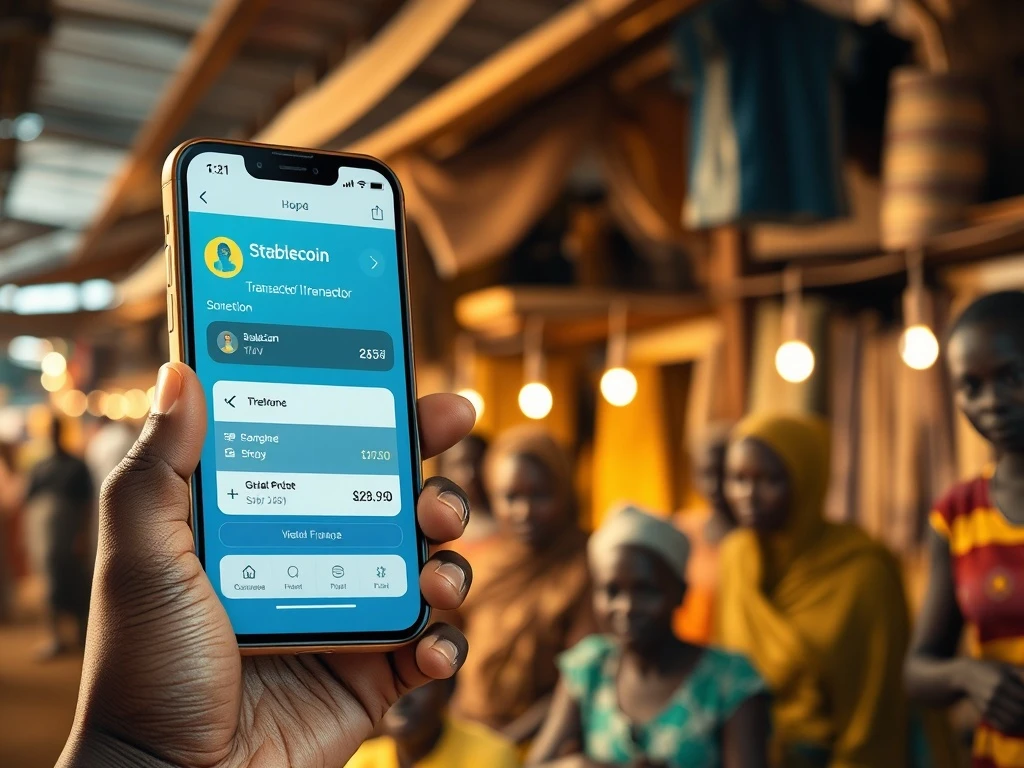
Stablecoins enabling financial inclusion and faster remittances across Africa

DAVOS, Switzerland – January 2025. A powerful shift is underway in Africa’s financial landscape, where digital currency transfers are rapidly becoming more vital than conventional aid. Economist Vera Songwe recently highlighted this transformation at the World Economic Forum, emphasizing how stablecoins now provide a critical lifeline for millions. These digital assets are slashing costs and accelerating cross-border payments, fundamentally changing how value moves across the continent.

Stablecoins Reshape African Remittance Economics

Traditional money transfer services have long burdened African economies with high fees. For every $100 sent, approximately $6 vanishes in transaction costs. This system creates a significant drain on vital funds sent home by the diaspora. Consequently, stablecoins present a compelling alternative by dramatically reducing these expenses. They enable settlements in minutes instead of days, offering tangible relief for individuals and small businesses.

Vera Songwe, a former UN under-secretary-general, articulated this reality clearly. She stated that remittances have evolved to become “more important than aid” for many African nations. This statement underscores a broader trend of financial self-reliance driven by technological innovation. The efficiency of blockchain-based transfers directly puts more money into the hands of recipients, maximizing the impact of every dollar sent.

The Inflation Hedge Driving Adoption

Beyond remittances, a severe need for inflation protection fuels stablecoin use. Since the COVID-19 pandemic, over a dozen African countries have experienced inflation rates exceeding 20%. National currencies in these regions can rapidly lose purchasing power, eroding savings and financial security. Stablecoins, typically pegged to stable assets like the US dollar, provide a digital safe haven.

“With a smartphone you have access to stablecoins, so you can save in a currency that is not exposed to fluctuations of inflation,” Songwe explained. This functionality is crucial in a region where an estimated 650 million people lack access to a traditional bank account. Digital wallets on mobile devices bypass the need for physical banking infrastructure, delivering financial tools directly to the population.

Regional Hotspots and Regulatory Responses

Adoption is not uniform but concentrates in nations facing specific economic pressures. Songwe identified Egypt, Nigeria, Ethiopia, and South Africa as leaders in stablecoin usage. These countries commonly grapple with high inflation or strict capital controls that limit foreign currency access. Small- and medium-sized enterprises (SMEs) are reportedly the primary drivers of transactions, indicating stablecoins’ role as a broad-based tool for commerce and inclusion.

This growth is supported by compelling data. A Chainalysis report from September revealed Sub-Saharan Africa as one of the world’s fastest-growing crypto adoption regions. From July 2024 to June 2025, the region received over $205 billion in on-chain value, marking a 52% year-over-year increase.

Sub-Saharan Africa On-Chain Value Received (July 2022 – June 2025)
PeriodEstimated ValueYear-over-Year Growth
July 2022 – June 2023~$135 BillionBase Period
July 2023 – June 2024~$160 Billion~18.5%
July 2024 – June 2025~$205 Billion~52%

National governments are responding to this surge with diverse regulatory strategies:

  • Ghana: Took a formalizing approach in December, legalizing cryptocurrency trading through the Virtual Asset Service Providers bill. Bank of Ghana Governor Johnson Asiama stated the law enables activity while providing regulatory risk management tools.
  • Nigeria: Implemented new rules in January requiring crypto service providers to link transactions to user tax identification numbers (TINs). This move aims to integrate crypto into the tax system via identity reporting, reducing the need for direct blockchain surveillance.
  • South Africa: The national bank has adopted a more cautious stance, recently flagging crypto assets and stablecoins as an emerging financial stability risk amidst growing local adoption.

The Broader Context of Financial Inclusion

The rise of stablecoins intersects with a global push for greater financial inclusion. In Africa, the challenge is particularly acute due to vast unbanked populations and underdeveloped physical banking networks. Digital currency platforms running on mobile internet can leapfrog these traditional barriers. They deliver essential services like savings, payments, and remittances directly to a user’s phone.

This technological leapfrogging mirrors the continent’s experience with mobile telephony, which bypassed landline infrastructure. The core value proposition extends beyond mere convenience. For SMEs, stablecoins facilitate cheaper and faster cross-border trade payments. For families, they ensure more remittance money arrives intact. For savers, they offer a shield against local currency devaluation.

Expert Insight and Future Trajectory

Vera Songwe’s analysis carries significant weight due to her extensive background. As chair of the Liquidity and Sustainability Facility and a nonresident senior fellow at the Brookings Institution, her perspective is grounded in deep economic expertise. Her prior roles with the UN Economic Commission for Africa provide firsthand insight into the continent’s financial challenges.

The trend she identifies is part of a larger movement. Major financial players are also increasing their focus on the region. For instance, Visa recently announced a strengthened partnership to expand stablecoin and digital currency capabilities across Europe, the Middle East, and Africa. This corporate interest signals a maturation of the infrastructure supporting these digital assets.

Conclusion

The narrative around finance in Africa is fundamentally changing. Stablecoins are no longer a niche technological experiment but a practical solution to long-standing problems of cost, speed, and stability in money transfer. As remittances funded by diaspora workers grow in importance relative to traditional aid, the efficiency of these digital channels becomes paramount. The rapid adoption across key African economies, coupled with evolving regulatory frameworks, suggests this transformation is both deep and enduring. Ultimately, the integration of stablecoins represents a powerful step toward greater financial inclusion and resilience for millions across the continent.

FAQs

Q1: What are stablecoins and how do they differ from cryptocurrencies like Bitcoin?
Stablecoins are a type of digital currency designed to maintain a stable value, typically by being pegged to a reserve asset like the US dollar or a basket of goods. Unlike volatile cryptocurrencies such as Bitcoin, their value is meant to be steady, making them more suitable for everyday transactions and savings.

Q2: Why are stablecoins particularly useful for remittances to Africa?
They drastically reduce the cost and time required for cross-border transfers. Traditional services can charge fees up to 6% and take days to settle, while stablecoin transactions can cost pennies and clear in minutes, ensuring more money reaches the recipient faster.

Q3: How do stablecoins help Africans hedge against inflation?
Many African national currencies suffer from high inflation, eroding savings. By holding value in a stablecoin pegged to a stronger foreign currency, individuals and businesses can protect their purchasing power from local economic volatility.

Q4: Which African countries are leading in stablecoin adoption?
According to economist Vera Songwe, Egypt, Nigeria, Ethiopia, and South Africa are current hotspots. Adoption is driven in these nations by factors like high inflation, capital controls, and large, digitally-connected populations.

Q5: Are stablecoins legal and regulated in Africa?
The regulatory landscape is evolving rapidly and varies by country. Ghana has formally legalized and regulated crypto trading. Nigeria is integrating crypto into its tax system. South Africa’s central bank is monitoring risks. There is no continent-wide rule, so legality depends on the specific nation.