Square Bitcoin Payments Go Live Nationwide as Whale Bets $53 Million Against BTC
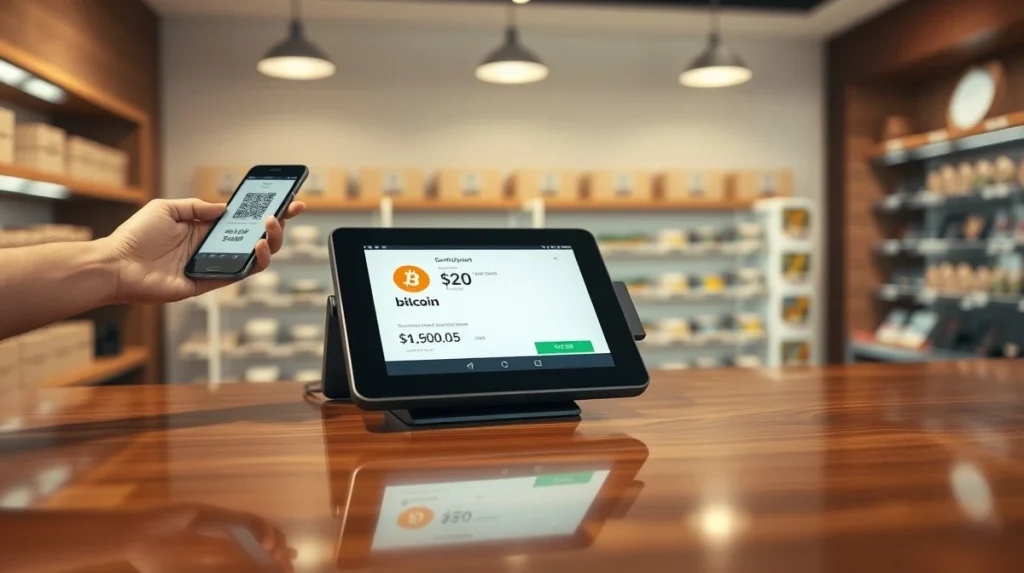
Square, the financial services arm of Block Inc., has launched Bitcoin payments for its point-of-sale systems across the United States. The move, announced on March 28, 2026, allows millions of merchants using Square hardware to accept the cryptocurrency directly. This expansion arrives as on-chain data reveals a major trader, or ‘whale,’ on the Hyperliquid derivatives platform opened a massive $53 million short position against Bitcoin just 13 hours before the Square news broke, signaling a stark divergence in market sentiment.
Square’s Strategic Push Into Crypto Commerce
According to a company statement, the new functionality is integrated directly into Square’s standard Register, Terminal, and Stand hardware. Merchants can now opt to accept Bitcoin alongside traditional payment methods. When a customer pays with Bitcoin, the transaction is settled instantly into the merchant’s Square balance in U.S. dollars, shielding the business from crypto volatility. Square charges its standard processing fee for these transactions, which industry analysts note is a key revenue driver.
Also read: Bitcoin Spot ETFs Shatter Positive Streak With $296 Million Outflow
This is not Block’s first foray into Bitcoin. The company’s Cash App has offered Bitcoin buying and selling for years, and its corporate treasury holds Bitcoin on its balance sheet. However, enabling direct merchant acceptance represents a significant operational shift. Data from Block’s Q4 2025 earnings report shows Bitcoin revenue from Cash App totaled $2.1 billion for the full year. The new POS service directly targets the other side of its ecosystem: business clients.
Key features of the rollout include:
Also read: Bitcoin Strategy Divide: GameStop's 4,710 BTC Hold Contrasts With Nation's Massive Sell-Off
- Integration with existing Square POS hardware and software.
- Instant conversion to fiat currency for the merchant.
- Customer payment via any compatible Bitcoin wallet using a displayed QR code.
- Availability to all U.S.-based Square sellers effective immediately.
The $53 Million Whale Short: A Contrarian Signal
As Square bet on broader Bitcoin utility, a large trader on the Hyperliquid perpetual futures exchange took the opposite view. Blockchain analytics firms reported a single short position worth approximately $53 million in notional value opened on the evening of March 27, 2026. A short position is a bet that an asset’s price will fall.
This trade is notable for its size and timing. “A short of this magnitude from a single entity on a platform like Hyperliquid is a clear statement of conviction,” said a market analyst from CryptoQuant, a blockchain data firm. “It often indicates a belief that a local price top is in place or that negative macro factors are being underappreciated by the market.” The position was reportedly opened when Bitcoin was trading near $71,500.
The juxtaposition is striking. One major financial technology company is building infrastructure for Bitcoin’s use as a medium of exchange. Simultaneously, a sophisticated actor is making a large, leveraged bet that its price will decline in the near term. This suggests a market grappling with Bitcoin’s dual identity as both a transactional network and a speculative asset.
Market Impact and Merchant Adoption Hurdles
Square’s move could influence Bitcoin’s adoption curve. According to a 2025 survey by Deloitte, nearly 75% of U.S. retailers planned to accept crypto payments within two years, but cited price volatility and integration complexity as primary barriers. Square’s model directly addresses both by handling the conversion. Industry watchers note that if even a fraction of Square’s millions of sellers enable the option, it would represent one of the largest single expansions of Bitcoin payment rails.
But challenges remain. Regulatory clarity for crypto as payment is still evolving at the state and federal levels. Furthermore, consumer adoption for everyday purchases has been slow, with Bitcoin often used more as a store of value. “The success metric won’t be immediate volume,” notes a payments consultant cited in a recent Nilson Report. “It will be whether this feature stays enabled in stores six months from now. If it does, it means it’s finding real, utility-driven use.”
Block’s Broader Crypto Strategy
Square’s parent company, Block, has been a vocal Bitcoin proponent. CEO Jack Dorsey has long advocated for Bitcoin becoming the “native currency of the internet.” The company has invested in Bitcoin development, including the decentralized social protocol Nostr and a project to build a dedicated Bitcoin mining system.
The POS rollout fits a larger pattern. Block appears to be building a comprehensive Bitcoin ecosystem: consumer access (Cash App), developer tools, mining infrastructure, and now merchant acceptance. This vertical integration could give Block a unique position if cryptocurrency payments gain mainstream traction. Financial filings show that Block’s total net revenue for 2025 exceeded $21 billion, with services like Square for merchants being a core component.
What This Means for Bitcoin’s Price and Perception
The conflicting signals—institutional infrastructure build-out versus a massive speculative short—highlight Bitcoin’s ongoing evolution. On one hand, real-world utility is increasing. On the other, it remains a highly volatile asset traded heavily on derivatives markets.
For investors, the Square news is a long-term positive, suggesting growing acceptance and usability. The whale short, however, is a short-term tactical bet. These can be quickly closed or liquidated if the market moves against them. The more enduring story may be the gradual normalization of Bitcoin within established payment systems. This could, over time, affect its price correlation with traditional tech stocks and its overall volatility profile.
Market data from CoinMetrics shows that Bitcoin’s 30-day volatility, while high compared to traditional assets, has decreased significantly from its early years. Infrastructure developments like Square’s are often cited as a factor in this gradual stabilization.
Conclusion
Square’s nationwide launch of Bitcoin POS payments marks a key step in bridging cryptocurrency with mainstream commerce. By simplifying acceptance for merchants, Block is testing whether real transactional demand exists. The concurrent $53 million short position underscores that Bitcoin’s price discovery remains a complex, multi-factor process dominated by both long-term believers and short-term traders. The coming months will reveal whether merchant adoption grows and if the whale’s bearish bet pays off, providing clearer signals about Bitcoin’s immediate trajectory and its evolving role in the financial system.
FAQs
Q1: How do Square Bitcoin payments work for the merchant?
The merchant receives payment in U.S. dollars directly into their Square balance. Square handles the Bitcoin conversion instantly at the time of sale, so the business does not hold the cryptocurrency or face its price fluctuations.
Q2: What is a $53 million short position?
It is a leveraged bet placed on a derivatives exchange where a trader borrows an asset (in this case, Bitcoin via a futures contract) to sell it, hoping to buy it back later at a lower price to repay the loan and pocket the difference. The $53 million refers to the total value of the Bitcoin being bet against.
Q3: Does the customer need a specific wallet to pay with Bitcoin at Square?
Customers can use any Bitcoin wallet that allows them to scan a QR code and send a payment. This includes software wallets like BlueWallet, hardware wallets like Ledger, or exchange-linked wallets.
Q4: Why would a trader short Bitcoin right as a company like Square expands its use?
Traders may believe the positive news is already reflected in the price (“buy the rumor, sell the news”), or they may be betting on unrelated negative factors like broader economic conditions, regulatory news, or technical price indicators suggesting an overheated market.
Q5: Are there fees for merchants to accept Bitcoin with Square?
Yes. Square charges its standard processing fee for the transaction, which is the same rate applied to credit or debit card payments. The exact fee varies based on the merchant’s Square pricing plan.

This article was produced with AI assistance and reviewed by our editorial team for accuracy and quality.