Spot Gold Shatters Records, Surpasses $5,100 in Unprecedented Surge
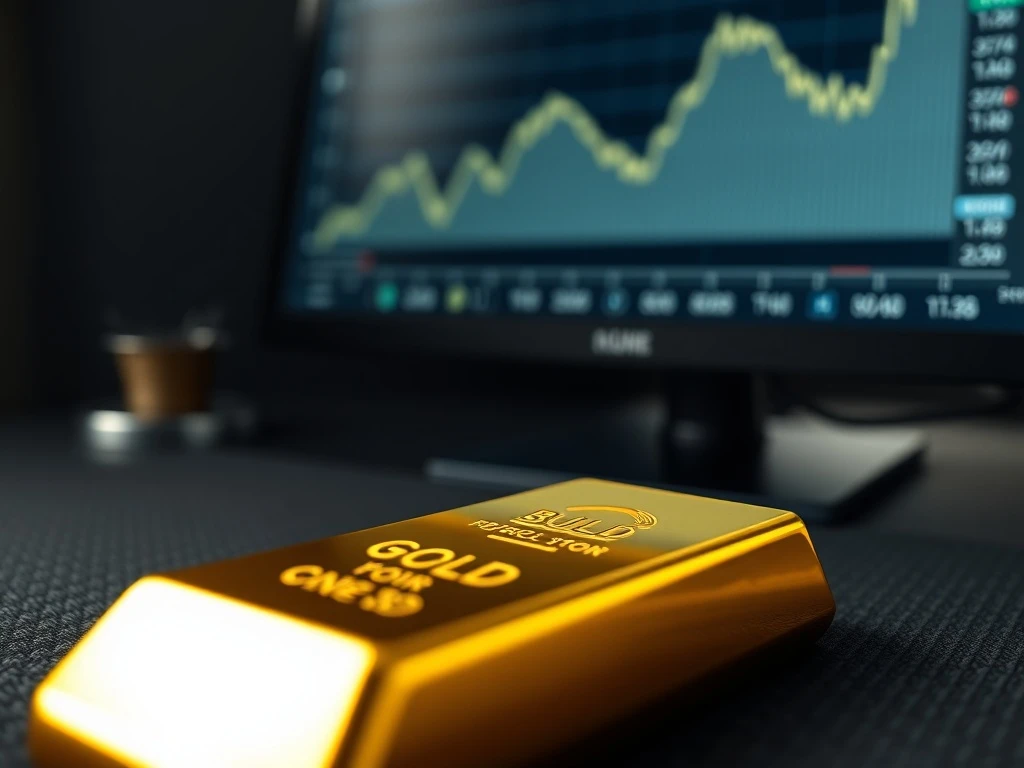
London, April 2025: The global financial markets witnessed a historic moment today as the spot gold price decisively broke through the $5,100 per ounce barrier, establishing a new all-time high. This surge represents a significant acceleration in the precious metal’s multi-year bull run, capturing the attention of investors, central banks, and economists worldwide. The move past this psychological milestone underscores deep-seated shifts in the global economic landscape and reinforces gold’s enduring role as a cornerstone of financial security.
Spot Gold Price Reaches Uncharted Territory
Spot gold, representing the current price for immediate delivery of the metal, traded firmly above $5,100 per ounce during the European trading session. This record eclipses the previous peak set just weeks prior, confirming a powerful and sustained upward trend. Trading volumes across major exchanges like the COMEX and the London Bullion Market Association (LBMA) have spiked significantly, indicating broad-based participation from both institutional and retail investors. The price action was not an isolated spike but a consolidated move, with strong buying support emerging on any minor pullbacks throughout the day. Analysts point to a confluence of macroeconomic factors driving this relentless ascent, transforming gold from a mere commodity into a critical barometer of global financial stress and monetary policy divergence.
Key Drivers Behind the Record Gold Price
Several interconnected factors have converged to propel gold to these unprecedented levels. Understanding these drivers provides crucial context for the current market dynamics.
- Persistent Inflationary Pressures: Despite efforts by central banks, core inflation in major economies remains stubbornly above long-term targets. Gold has historically served as a proven hedge against the erosion of purchasing power, and sustained inflation continues to fuel demand.
- Geopolitical Uncertainty: Ongoing regional conflicts and heightened global tensions have amplified the traditional ‘safe-haven’ demand for gold. Investors seek assets perceived as stable and detached from the fortunes of any single nation or currency.
- Central Bank Accumulation: For over a decade, central banks, particularly in emerging markets, have been consistent net buyers of gold. This institutional demand provides a solid, non-speculative floor for prices and signals a strategic move towards diversifying foreign reserves away from traditional fiat currencies.
- Weakening Global Growth Outlook: Forecasts for sluggish economic growth in several major regions have increased the appeal of defensive assets. Gold’s low correlation with equities makes it an attractive portfolio diversifier during periods of economic uncertainty.
Historical Context and Price Trajectory
To appreciate the magnitude of the move to $5,100, a brief historical review is essential. For decades, the $2,000 level was seen as a distant ceiling. That barrier was first decisively broken in the wake of the 2020 global pandemic. The subsequent years saw a stair-step pattern of consolidation and breakout.
| Period | Key Gold Price Milestone | Primary Catalysts |
|---|---|---|
| 2011 | ~$1,900 (Previous High) | Post-2008 Financial Crisis, Eurozone Debt Crisis |
| 2020 | Breach of $2,000 | Global Pandemic, Unprecedented Monetary Stimulus |
| 2023-2024 | Consolidation between $1,800-$2,100 | Aggressive Interest Rate Hikes by Central Banks |
| Late 2024 – 2025 | Accelerated Rally to $5,100+ | Sticky Inflation, Geopolitical Risks, Central Bank Buying |
This timeline illustrates that the current rally is not a speculative bubble but the latest phase in a long-term repricing of gold within a transformed global monetary system. The pace of the ascent from the $2,000s to over $5,000 has been remarkable, reflecting the intensity of the current macroeconomic climate.
Market Implications and Investor Sentiment
The breach of $5,100 sends a powerful signal across all asset classes. In currency markets, the price of gold denominated in other major currencies, such as euros and yen, has also hit record highs, indicating a broad-based phenomenon beyond just U.S. dollar weakness. For equity investors, the performance of gold mining stocks is being closely watched, as these companies typically exhibit leveraged exposure to the underlying metal price. However, analysts caution that mining equities also carry operational and geopolitical risks not present in physical gold or major exchange-traded funds (ETFs) like GLD. The record price is also impacting physical markets, with reports of strong retail demand for coins and small bars, alongside rising premiums in certain regions. This suggests the rally is supported by both ‘paper’ market trading and tangible, physical demand.
Expert Analysis on Sustainability
Market strategists are divided on the near-term trajectory but largely agree on the supportive long-term fundamentals. Some technical analysts warn that the Relative Strength Index (RSI) and other momentum indicators are flashing overbought signals, suggesting a period of consolidation or correction may be due. Conversely, fundamental analysts argue that as long as the core drivers of inflation, uncertainty, and central bank demand remain in place, the bull market has a firm foundation. They note that investor positioning, while elevated, is not at extreme speculative levels seen at past market tops. The key watchpoint, according to most experts, will be the trajectory of real interest rates—the nominal rate minus inflation. A sustained decline in real rates, whether from falling nominal rates or rising inflation, has historically been the most reliable predictor of strong gold performance.
Conclusion
The spot gold price achieving a new all-time high above $5,100 per ounce is a landmark event with profound implications. It is not merely a number on a screen but a reflection of deep-seated concerns about inflation, currency stability, and geopolitical risk. This milestone validates gold’s enduring status as a premier safe-haven asset and a critical component of a diversified investment portfolio. While volatility is inherent to all markets, the fundamental case for gold appears robust, supported by structural shifts in global finance that are unlikely to reverse quickly. As markets digest this historic move, all eyes will be on how this new price level consolidates and what it signals for the broader economic environment in the months ahead.
FAQs
Q1: What does ‘spot gold’ mean?
A1: Spot gold refers to the current market price for immediate delivery and payment of physical gold bullion. It is the benchmark price quoted in financial markets, as opposed to futures contracts which specify delivery at a future date.
Q2: Why is gold hitting an all-time high now?
A2: The primary drivers include persistent global inflation, which erodes the value of cash; significant geopolitical tensions increasing safe-haven demand; and sustained, large-scale buying by central banks worldwide to diversify their reserves.
Q3: How does a strong gold price affect the average person?
A3: For most people, the direct effect is minimal unless they own gold jewelry, coins, or investments. Indirectly, it signals broader economic concerns like inflation, which can impact the cost of living, savings, and investment returns across the board.
Q4: Is it too late to invest in gold at $5,100?
A4: Investment decisions depend on individual goals and risk tolerance. Financial advisors typically recommend gold as a long-term portfolio diversifier (5-10% allocation) rather than a short-term trade. While the price is at a record, the fundamental reasons for holding it may remain valid.
Q5: What is the difference between gold price in USD and in other currencies?
A5: Gold priced in U.S. dollars is the global benchmark. When converted to other currencies like the euro or yen, the local price reflects both the dollar gold price and the exchange rate. Currently, gold is also at or near record highs in many major currencies, indicating a global phenomenon.
This article was produced with AI assistance and reviewed by our editorial team for accuracy and quality.