Solana Validator Count Plummets 68%: The Alarming Squeeze on Network Decentralization
In a significant development for one of cryptocurrency’s leading layer-1 blockchains, the Solana validator count has collapsed by 68% since its 2023 peak, triggering urgent discussions about the network’s long-term decentralization and economic sustainability for node operators worldwide as of May 2025.
Solana Validator Count Faces Dramatic Decline
Data from blockchain analytics platform Solanacompass reveals a stark trend. The number of active Solana validators has plummeted to approximately 795, representing a dramatic drop from the March 2023 high of 2,560 validator nodes. This substantial reduction directly impacts the blockchain’s security model and distributed consensus mechanism. Validators perform the critical function of proposing new blocks and verifying transactions, forming the backbone of the proof-of-stake network. Consequently, their declining numbers present a fundamental challenge to the network’s operational integrity.
Also read: Zero-Knowledge Proofs Guide: Hoskinson's Free 337-Page GitHub Release Empowers Developers
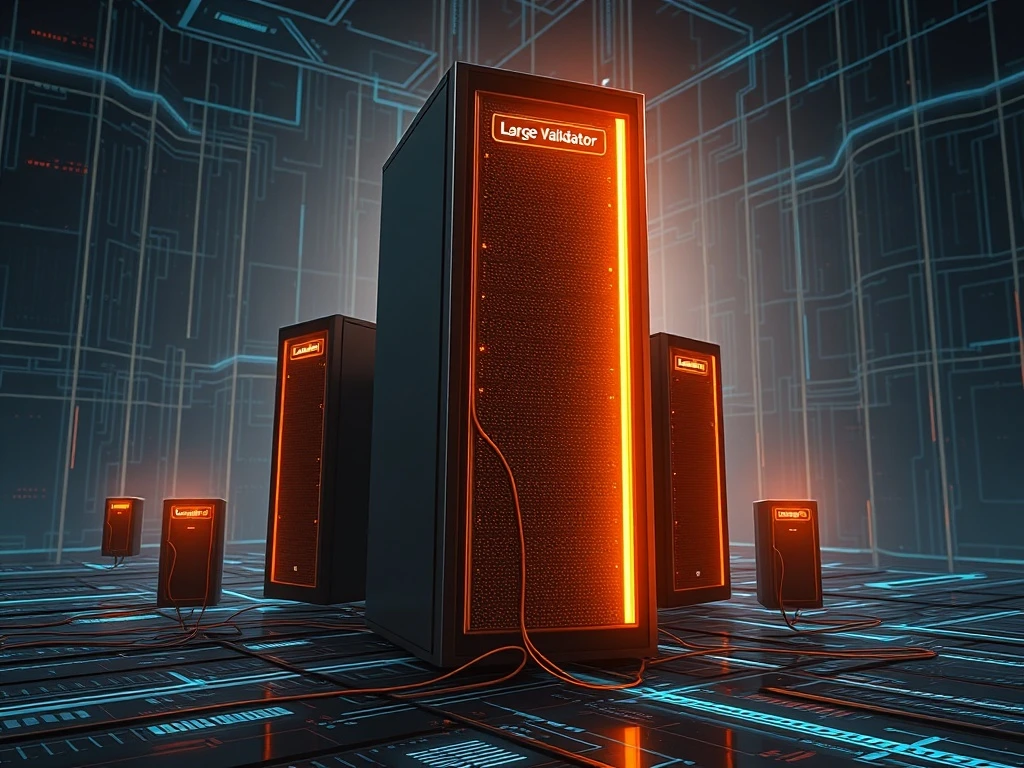
Industry analysts immediately noted this trend reflects more than simple network optimization. While some reduction stems from the removal of inactive or non-performing “zombie” nodes, the primary driver appears deeply economic. Rising operational expenses, coupled with intense fee competition, are creating an environment where smaller, independent validators can no longer participate profitably. This economic pressure risks transforming the validator field from a diverse, distributed ecosystem into one dominated by large, well-capitalized entities.
The Economic Squeeze on Small Node Operators
The financial barriers to running a Solana validator node have escalated sharply alongside the appreciation of the SOL token. According to technical documentation from validator client Agave, the core cost stems from mandatory participation in protocol consensus. Validators must send a vote transaction for each block they validate, a process that can consume up to 1.1 SOL daily. When annualized, this creates a significant and non-negotiable cost of doing business.
Also read: Crypto Liquidations Surge Past $450M as Options Expiry and Oil Shock Fuel Market Panic
An independent operator, known publicly as Moo, articulated the dilemma on social media platform X. “Many small validators are actively considering shutting down,” Moo stated, emphasizing that the decision stems from broken economics, not lost faith in Solana’s technology. The operator highlighted a critical market distortion: large validators offering 0% commission fees. This practice eliminates fee revenue for smaller competitors, making node operation economically unviable. “We started validating to support decentralization,” Moo explained. “But without economic viability, decentralization becomes charity.” This sentiment echoes across community forums, where other operators report similar financial strains.
Analyzing the Rising Cost Barrier
A detailed breakdown of validator costs reveals the scale of the challenge. Excluding initial hardware and ongoing server expenses, an operator requires a substantial stake in SOL tokens. Estimates suggest a minimum initial investment of $49,000 in SOL is necessary for the first year, primarily to cover the 401 SOL needed for annual voting fees. This high capital requirement automatically excludes many retail participants and smaller entities. The table below summarizes the key cost components for running a Solana validator node.
| Cost Component | Estimated Requirement | Purpose |
|---|---|---|
| Voting Fees (Annual) | ~401 SOL | Mandatory for consensus participation |
| Initial SOL Stake | Variable, but significant | To attract delegators and earn rewards |
| Hardware & Server | High-performance setup | To meet network technical requirements |
| Technical Maintenance | Ongoing time & expertise | For node uptime and software updates |
This financial reality signals a important shift. The era when retail validators could sustainably contribute to securing the network may be ending. The trend indicates that Solana’s node infrastructure will increasingly rely on large operators, potentially altering the network’s fundamental character and resilience.
Nakamoto Coefficient Decline Signals Centralization Risk
Parallel to the falling validator count, a key decentralization metric has also worsened. Solana’s Nakamoto Coefficient has declined by 35%, dropping to 20 from 31 in March 2023. This coefficient is a critical measure developed to quantify blockchain decentralization. It identifies the minimum number of independent entities required to compromise the network’s consensus. A lower coefficient indicates greater vulnerability to collusion or attack.
The simultaneous drop in both total validator count and the Nakamoto Coefficient presents a coherent, worrying picture. It suggests the staked SOL supply is becoming less distributed, concentrating influence among fewer entities. In a proof-of-stake system like Solana’s, stake distribution is synonymous with power distribution. Increased concentration, therefore, raises legitimate concerns about the network’s censorship resistance and its alignment with core Web3 principles of permissionless participation and anti-fragility.
Blockchain architects often cite a high Nakamoto Coefficient as a defense against regional failures, regulatory pressure, or coordinated attacks. The declining metric suggests Solana’s defense-in-depth may be weakening, a point of discussion for institutional stakeholders and decentralized application developers who choose platforms based on security guarantees.
The Broader Context of Blockchain Scaling Economics
Solana’s challenge is not entirely unique but represents an acute case of a common tension in blockchain trilemma solutions. The network is renowned for its high throughput and low transaction costs, achieved partly through demanding hardware requirements and a sophisticated consensus mechanism. However, this performance optimization inherently raises the bar for participation. The situation mirrors early debates in other proof-of-stake networks, where the cost of validation became a centralizing force.
Comparatively, other chains employ different mechanisms to encourage small validators, such as:
- Pooled staking protocols that lower entry barriers.
- Minimum commission rate floors to prevent predatory zero-fee models.
- Subsidized hardware programs or cloud credits for new operators.
- Two-tiered validator systems with different requirements for consensus and non-consensus nodes.
Solana’s community and foundation now face a strategic decision: whether to intervene in validator economics or allow market forces to dictate network structure. The outcome will significantly influence developer and investor perception of the chain’s decentralization—a key marketing and security attribute.
Potential Impacts and Network Implications
The continued attrition of small validators carries several concrete risks for the Solana ecosystem. First, reduced validator diversity can decrease network resilience. A geographically and jurisdictionally concentrated set of operators is more susceptible to simultaneous failure from local events or legal actions. Second, it may impact governance. Fewer independent voices in the validator set could skew decision-making toward the interests of a few large entities, potentially affecting protocol upgrade directions and fee market designs.
Furthermore, the perception of increasing centralization could affect Solana’s competitive positioning. Decentralization is a non-negotiable criterion for many decentralized finance (DeFi) protocols, non-fungible token (NFT) projects, and institutional users. A network perceived as overly centralized may struggle to attract the next wave of innovative applications that prioritize censorship-resistant environments.
The situation also has immediate human impact. Individuals and small teams who invested time, capital, and belief in operating nodes find their contributions becoming financially unsustainable. This loss of grassroots participation can damage community morale and reduce the organic, distributed advocacy that has fueled Solana’s growth.
Conclusion
The 68% decline in the Solana validator count represents a critical inflection point for the network. While driven by understandable economic forces—rising SOL-denominated costs and intense fee competition—the trend threatens a core tenet of blockchain technology: decentralized participation. The accompanying 35% drop in the Nakamoto Coefficient quantifies this growing centralization risk. For Solana to maintain its position as a leading, high-performance layer-1 blockchain, addressing the economic viability of small and medium validators will be essential. The network’s long-term health, security, and philosophical alignment with Web3 ideals may depend on finding a sustainable balance between performance efficiency and permissionless access. The global crypto community will watch closely as the Solana ecosystem navigates this fundamental challenge to its decentralized architecture.
FAQs
Q1: What is a Solana validator, and what do they do?
A Solana validator is a network participant responsible for running software that processes transactions and creates new blocks on the blockchain. Validators stake SOL tokens, participate in consensus by voting on block validity, and, in return, earn rewards for securing the network.
Q2: Why is the declining Solana validator count a problem?
A lower validator count reduces network decentralization, which can increase vulnerability to collusion, censorship, or coordinated failure. It concentrates influence and control among fewer entities, contradicting a key value proposition of blockchain technology.
Q3: What is the Nakamoto Coefficient?
The Nakamoto Coefficient is a metric that measures blockchain decentralization. It is defined as the minimum number of entities (like validators or miners) required to compromise the network’s consensus. A higher number indicates greater decentralization and resilience.
Q4: Can Solana function properly with fewer validators?
Technically, yes. The network can operate with a smaller set of high-performance validators. However, this comes at the cost of increased centralization, which introduces risks related to security, censorship resistance, and community trust that are vital for a public blockchain.
Q5: What can be done to reverse the decline in Solana validators?
Potential solutions include protocol changes to reduce voting costs, community-led initiatives to subsidize small operators, implementing minimum commission rates to prevent zero-fee competition, or creating lighter-weight validator roles to lower the barrier to entry.

This article was produced with AI assistance and reviewed by our editorial team for accuracy and quality.