Solana’s Strategic Surge: Why Traders Flock to Blockchain Resilience as Government Shutdown Fears Intensify
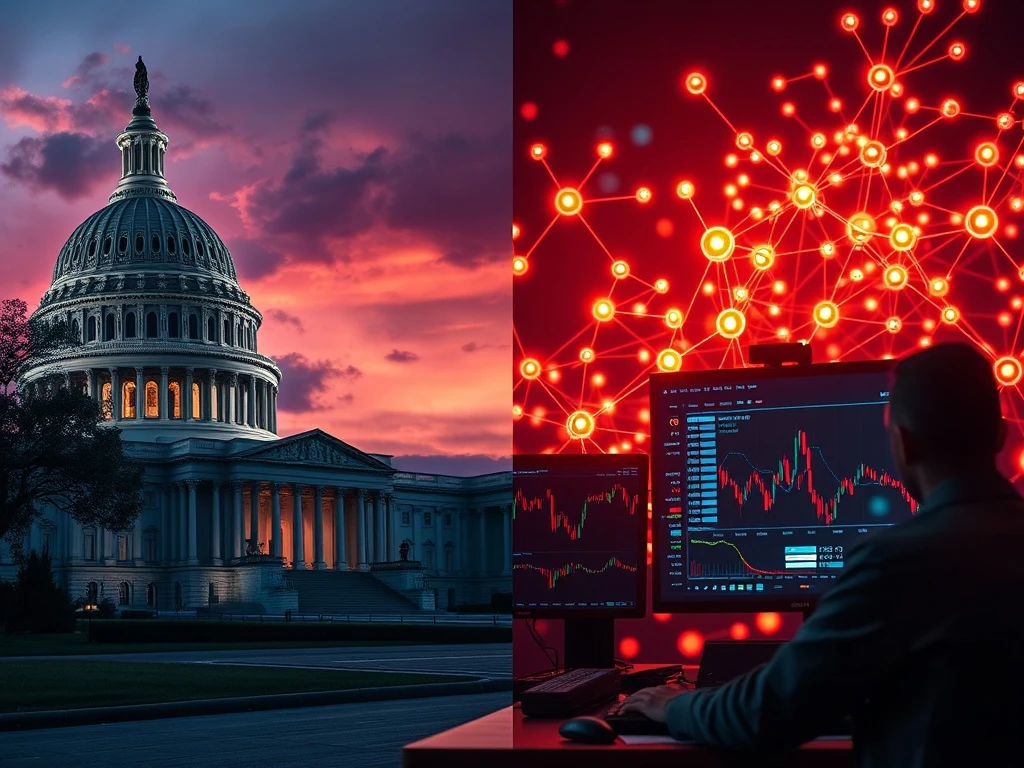
As Washington, D.C. faces another potential government shutdown deadline on January 31, 2026, cryptocurrency traders are making a calculated pivot toward Solana, demonstrating how blockchain networks can exhibit surprising resilience during traditional financial uncertainty. Recent data reveals a remarkable divergence between political instability and specific crypto ecosystem strength, with Solana’s metrics showing unusual growth despite broader market concerns.
Solana’s Network Activity Reaches Record Levels
On-chain analytics provider Santiment reports extraordinary network growth for Solana since the beginning of 2026. Active addresses have nearly doubled from 2.5 million to 4.8 million, representing one of the most significant user adoption surges in the blockchain’s history. This growth pattern suggests fundamental network utility expansion rather than speculative trading alone.
Also read: Ethereum's $2,500 Challenge: Market Data and the Rise of Pepeto
Network analysts emphasize several key factors driving this activity:
- DeFi Protocol Expansion: Solana’s decentralized finance ecosystem continues adding innovative applications
- NFT Marketplace Growth: Digital collectible trading maintains consistent volume despite market conditions
- Developer Activity: New project deployments increased by 42% quarter-over-quarter
- Transaction Efficiency: The network maintains sub-second finality with costs below $0.01 per transaction
This organic growth creates a foundation for sustainable value that traders recognize as fundamentally different from previous crypto cycles. Consequently, network participants demonstrate increased confidence in Solana’s underlying technology stack.
Also read: Crypto Listing Scams: Binance CEO Changpeng Zhao Issues Critical Warning to Investors
Institutional Positioning Accelerates Amid Uncertainty
Derivatives market data reveals sophisticated capital flowing into Solana positions despite macroeconomic headwinds. SOL’s total Open Interest surged by more than $34 million within 24 hours, according to derivatives tracking platforms. This movement represents significant institutional positioning that typically precedes substantial market movements.
Financial analysts identify three primary institutional motivations:
| Institutional Factor | Impact on Solana | Historical Precedent |
|---|---|---|
| Portfolio Diversification | Reduced correlation with traditional assets during government instability | Similar patterns observed during 2023 debt ceiling debates |
| Technological Conviction | Confidence in Solana’s scalability solutions | Institutional adoption following successful network upgrades |
| Regulatory Positioning | Strategic allocation ahead of potential crypto policy changes | Institutions anticipating regulatory clarity often position early |
Market structure specialists note that rising Open Interest combined with improving network fundamentals typically indicates stronger market conviction. This pattern suggests that sophisticated traders view Solana’s technological advantages as outweighing short-term macroeconomic noise.
Government Shutdown Mechanics and Market Impact
The potential U.S. government shutdown stems from congressional budget negotiations that failed to reach resolution by January 27, 2026. Prediction market platform Polymarket currently assigns an 81% probability to a shutdown occurring by January 31. Historical analysis reveals that such events create specific market conditions that crypto assets address differently than traditional securities.
Previous government shutdowns in 2013, 2018, and 2023 produced varied crypto market responses:
- 2013 Shutdown: Bitcoin gained 32% during the 16-day period as alternative asset narratives strengthened
- 2018 Shutdown: Major cryptocurrencies showed mixed performance with increased volatility
- 2023 Shutdown Threat: Crypto markets demonstrated reduced correlation with equity markets
Financial historians note that cryptocurrency markets increasingly decouple from traditional risk assets during government instability events. This decoupling phenomenon appears particularly pronounced for networks with strong fundamental metrics and growing adoption.
Solana’s Technical Infrastructure Advantages
Solana’s architecture provides specific benefits during periods of financial uncertainty. The network’s high throughput capability—processing up to 65,000 transactions per second—ensures continued functionality regardless of traditional market conditions. This reliability becomes increasingly valuable when conventional financial systems face potential disruption.
Network engineers highlight several technical factors contributing to Solana’s resilience:
- Proof-of-History Consensus: Creates temporal certainty without traditional timestamp dependencies
- Horizontal Scaling: Network capacity expands with validator participation increases
- Low Latency: 400-millisecond block times ensure rapid transaction confirmation
- Cost Efficiency: Minimal transaction fees maintain accessibility during volatile periods
These technical characteristics create a compelling value proposition when traditional financial infrastructure faces uncertainty. Consequently, both retail and institutional participants increasingly view Solana as a strategic allocation during government instability.
Comparative Blockchain Performance Analysis
Data analytics firms have begun tracking how different blockchain networks perform during government-related market stress. Preliminary January 2026 data reveals distinct patterns across major protocols. Solana demonstrates particularly strong relative performance in three key metrics: daily active addresses, developer activity, and institutional flow indicators.
Network researchers attribute this outperformance to several ecosystem factors. First, Solana’s application ecosystem continues expanding despite broader market conditions. Second, the network maintains technical reliability that institutional allocators prioritize. Third, community development initiatives sustain momentum through various market environments.
Risk Assessment and Market Dynamics
While Solana’s metrics show strength, traders must consider several risk factors. Elevated use in derivatives markets introduces potential volatility if positions unwind rapidly. Additionally, broader cryptocurrency market sentiment remains susceptible to macroeconomic developments despite individual network strength.
Risk management specialists emphasize several considerations:
- Employ Ratios: Current derivatives positioning suggests increased sensitivity to price movements
- Liquidity Conditions: Market depth varies across trading venues and time zones
- Regulatory Developments: Potential policy changes could impact all crypto assets
- Technical Factors: Network performance must maintain consistency during peak usage
Market participants balancing these factors increasingly view Solana’s fundamental metrics as providing relative stability compared to other risk assets. This perception drives the strategic allocation trends observed in recent weeks.
Conclusion
Solana’s remarkable network growth and institutional positioning during government shutdown concerns demonstrate how specific blockchain ecosystems can exhibit resilience amid traditional financial uncertainty. The combination of doubling active addresses and surging Open Interest reveals sophisticated capital allocation toward networks with strong fundamentals. While macroeconomic factors create headwinds for risk assets generally, Solana’s technical advantages and growing adoption create a compelling case for strategic positioning. Traders monitoring these developments recognize that blockchain networks with proven utility and scalability may increasingly serve as diversification tools during periods of government instability and traditional market stress.
FAQs
Q1: How does a U.S. government shutdown specifically affect cryptocurrency markets?
Government shutdowns typically increase market uncertainty, which can elevate volatility across all risk assets. However, cryptocurrencies often demonstrate reduced correlation with traditional markets during such events, as they operate on decentralized networks unaffected by government operations.
Q2: What metrics indicate genuine Solana network growth versus speculative activity?
Analysts distinguish organic growth through several indicators: sustained increases in daily active addresses, growing developer activity, expanding DeFi total value locked, and consistent NFT trading volume. Speculative activity typically shows in derivatives metrics without corresponding fundamental growth.
Q3: Why are institutions showing increased interest in Solana specifically?
Institutions prioritize networks with proven scalability, reliability, and growing ecosystems. Solana’s high throughput, low transaction costs, and expanding application field provide the technical foundation that institutional allocators require for substantial capital deployment.
Q4: How does Solana’s performance compare to other major blockchains during market stress?
Recent data shows Solana maintaining stronger network activity metrics than several competitors during periods of macroeconomic uncertainty. This relative strength stems from its technical architecture and continued ecosystem development despite broader market conditions.
Q5: What risks should traders consider when allocating to Solana during government instability?
Traders should monitor employ levels in derivatives markets, potential regulatory developments, network performance during peak usage, and broader cryptocurrency market sentiment. While Solana shows strong fundamentals, all crypto assets face volatility during periods of traditional financial stress.

This article was produced with AI assistance and reviewed by our editorial team for accuracy and quality.