STKESOL Launch: SOL Strategies’ Revolutionary Liquid Staking Token Transforms Solana DeFi Landscape
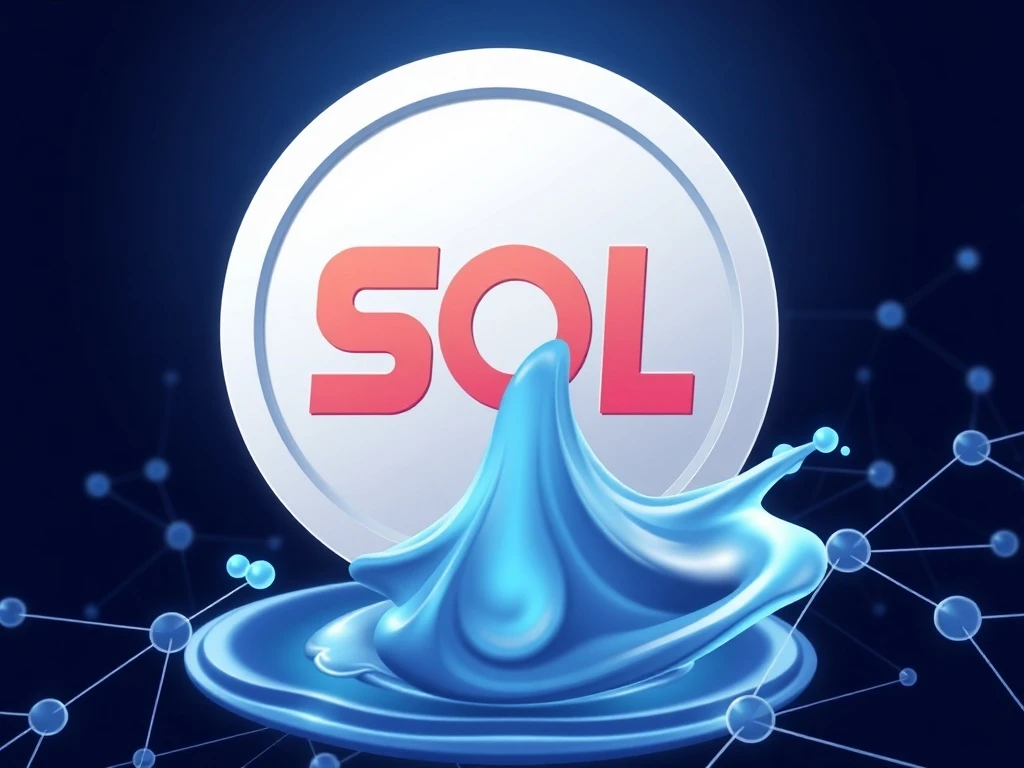
In a significant development for the Solana ecosystem, SOL Strategies has officially launched STKESOL, its innovative liquid staking token that promises to reshape how investors interact with Solana’s proof-of-stake network. This strategic move, reported by The Block in early 2025, represents a major advancement in decentralized finance infrastructure, allowing SOL holders to participate in network security while maintaining crucial liquidity. The launch comes at a pivotal moment as institutional and retail investors increasingly seek flexible staking solutions that don’t lock up capital for extended periods.
STKESOL: Bridging Staking Rewards and DeFi Liquidity
SOL Strategies’ new STKESOL token fundamentally transforms the traditional staking experience on Solana. Unlike conventional staking methods that require users to lock their SOL tokens for specific periods, STKESOL provides immediate liquidity through a derivative token that represents staked SOL positions. This innovative approach addresses one of the most persistent challenges in proof-of-stake networks: the liquidity-staking trade-off that has historically forced investors to choose between network participation and capital flexibility.
The mechanics are elegantly simple yet powerful. When users stake SOL through SOL Strategies’ platform, they receive STKESOL tokens in a 1:1 ratio relative to their staked SOL value. These derivative tokens then become freely tradable on various Solana-based decentralized exchanges, effectively unlocking the value of staked assets. Meanwhile, the underlying SOL continues to earn staking rewards from the network, with those rewards automatically compounding and reflecting in the value of STKESOL tokens over time.
This dual functionality creates unprecedented opportunities for DeFi participation. STKESOL holders can simultaneously earn staking yields while using their tokens as collateral for lending, liquidity provision, or other financial activities across the Solana ecosystem. The token’s design incorporates sophisticated smart contract architecture that ensures proper reward distribution and maintains a transparent relationship between STKESOL and the underlying staked SOL.
Strategic Positioning and Market Integration
SOL Strategies has strategically positioned STKESOL for immediate market adoption through partnerships with leading Solana DeFi platforms. The token is currently available for trading on Orca, one of Solana’s most popular decentralized exchanges, as well as Squads, Kamino, and Loopscale. This multi-platform approach ensures broad accessibility and liquidity from launch, addressing common adoption barriers that new DeFi tokens typically face.
The company’s substantial SOL holdings provide significant credibility to this launch. According to fourth-quarter 2024 reports, SOL Strategies managed approximately 524,000 SOL, representing a substantial position within the Solana ecosystem. This considerable reserve not only demonstrates the firm’s commitment to the network but also provides a strong foundation for STKESOL’s initial liquidity and stability. The company’s reserve strategy focuses on maintaining adequate backing for all issued STKESOL tokens, ensuring proper collateralization and risk management.
Market analysts note that SOL Strategies’ timing aligns with broader industry trends toward liquid staking solutions. The total value locked in liquid staking protocols across all blockchain networks has grown exponentially since 2023, with Solana-based solutions capturing increasing market share. This growth reflects evolving investor preferences for flexible staking arrangements that don’t sacrifice participation in other DeFi opportunities.
Comparative Analysis: STKESOL Versus Traditional Staking
The introduction of STKESOL creates clear differentiation from traditional staking methods. Conventional Solana staking requires direct delegation to validators with specific unbonding periods, typically ranging from several days to weeks. During these periods, staked SOL remains completely illiquid, unable to participate in market opportunities or respond to changing investment conditions.
In contrast, STKESOL eliminates these liquidity constraints entirely. The token’s immediate tradability means investors can adjust their positions according to market conditions while continuing to earn staking rewards. This flexibility is particularly valuable in volatile market environments where capital mobility can significantly impact investment outcomes. Additionally, STKESOL simplifies the staking process by removing technical complexities associated with validator selection and delegation management.
The table below illustrates key differences between traditional SOL staking and the STKESOL approach:
| Feature | Traditional SOL Staking | STKESOL Liquid Staking |
|---|---|---|
| Liquidity | Locked during unbonding period | Immediately available via token trading |
| DeFi Integration | Limited while staked | Full participation possible |
| Reward Mechanism | Direct to staking wallet | Compounded in token value |
| Technical Complexity | Validator selection required | Simplified through platform |
| Capital Efficiency | Lower due to lock-up periods | Higher through liquidity utility |
Ecosystem Impact and Future Developments
The launch of STKESOL carries significant implications for the broader Solana ecosystem. By providing enhanced liquidity for staked assets, the token potentially increases overall network security through greater staking participation. Investors who previously avoided staking due to liquidity concerns may now participate more actively, thereby strengthening the network’s validator decentralization and resilience.
Furthermore, STKESOL’s integration with major DeFi platforms creates new composability opportunities within Solana’s financial ecosystem. Developers can build applications that leverage STKESOL’s unique properties, creating innovative financial products that combine staking yields with other DeFi functionalities. This composability could drive the next wave of innovation on Solana, similar to how liquid staking tokens have fueled development on other smart contract platforms.
Industry observers are particularly interested in how STKESOL might influence Solana’s validator economics. While the token doesn’t directly change validator operations, it could affect delegation patterns and staking yields as more SOL enters liquid staking arrangements. The long-term impact on network security and validator competitiveness remains an important area for ongoing analysis as adoption grows.
SOL Strategies has indicated that STKESOL represents just the beginning of their product roadmap. The company plans to introduce additional features and integrations throughout 2025, potentially including cross-chain functionality, institutional-grade custody solutions, and advanced risk management tools. These developments would further solidify STKESOL’s position within the evolving landscape of decentralized finance.
Risk Considerations and Security Framework
While STKESOL offers compelling advantages, informed investors should understand the associated risks and security measures. Like all DeFi products, smart contract risk represents a primary concern, though SOL Strategies has implemented multiple security protocols. The company conducted extensive smart contract audits before launch and maintains ongoing security monitoring to identify potential vulnerabilities.
The token’s value depends fundamentally on SOL Strategies’ ability to properly manage the underlying staked SOL. The company’s substantial reserves provide initial confidence, but long-term success requires consistent operational excellence in validator management and reward distribution. Investors should monitor several key metrics:
- Collateralization ratio: The relationship between issued STKESOL and backing SOL
- Validator performance: Staking rewards generated by selected validators
- Platform security: Ongoing audit results and security incident reports
- Market liquidity: Trading volume and depth across supported exchanges
Regulatory considerations also warrant attention as global authorities increase scrutiny of staking products and derivative tokens. SOL Strategies has designed STKESOL with compliance considerations, but regulatory landscapes continue evolving across jurisdictions. The company maintains transparent communication regarding any regulatory developments affecting the token or its underlying operations.
Conclusion
The launch of STKESOL by SOL Strategies marks a transformative moment for Solana’s DeFi ecosystem. This innovative liquid staking token successfully addresses the fundamental tension between network participation and capital flexibility that has long challenged proof-of-stake investors. By enabling simultaneous staking rewards and DeFi liquidity, STKESOL creates new possibilities for capital efficiency and financial innovation on one of blockchain’s most promising networks.
With immediate availability on major Solana platforms and backing from substantial SOL reserves, STKESOL enters the market with strong foundations for adoption and growth. As the liquid staking sector continues expanding across blockchain networks, SOL Strategies’ solution positions Solana competitively within this crucial DeFi vertical. The token’s success will ultimately depend on sustained operational excellence, security maintenance, and continued ecosystem integration throughout 2025 and beyond.
FAQs
Q1: What exactly is STKESOL and how does it work?
STKESOL is a liquid staking token issued by SOL Strategies that represents staked SOL positions. When users stake SOL through the platform, they receive STKESOL tokens that can be traded while the underlying SOL continues earning staking rewards.
Q2: Where can I trade STKESOL tokens?
The token is available on several major Solana-based DeFi platforms including Orca, Squads, Kamino, and Loopscale. These platforms provide liquidity pools and trading pairs for STKESOL.
Q3: How does STKESOL differ from simply staking SOL directly?
Traditional SOL staking requires locking tokens with validators for specific periods, making them illiquid. STKESOL provides immediate liquidity through a tradable token while maintaining staking reward accumulation.
Q4: What risks are associated with using STKESOL?
Primary risks include smart contract vulnerabilities, validator underperformance affecting rewards, and potential regulatory changes. SOL Strategies implements security measures including audits and reserve management to mitigate these risks.
Q5: How does SOL Strategies ensure STKESOL maintains its value relative to staked SOL?
The company maintains substantial SOL reserves (524,000 SOL as of Q4 2024) and implements transparent collateralization mechanisms. Staking rewards automatically compound and reflect in STKESOL’s value over time.