Silver Price Shatters Records, Hitting a Staggering $100 Per Ounce
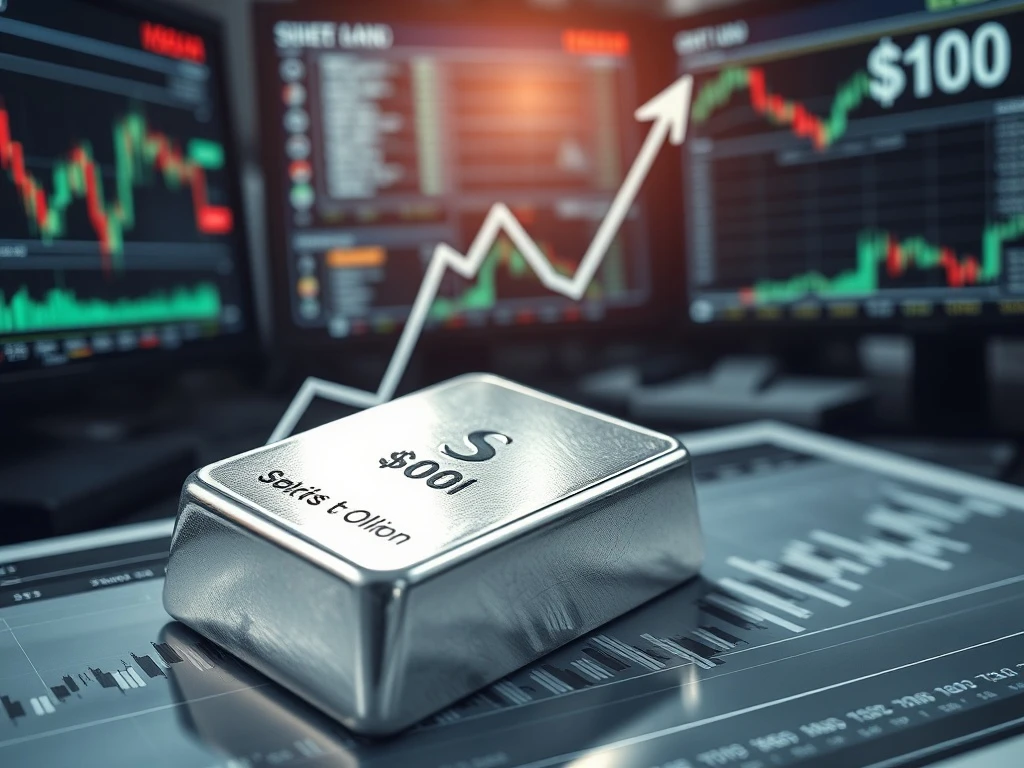
In a landmark event for global commodity markets, the international spot price for silver has surged to an unprecedented $100 per ounce. This staggering milestone, recorded on major exchanges worldwide, represents a tectonic shift for the precious metal long considered ‘poor man’s gold.’ Consequently, analysts and industrial users are scrambling to assess the profound implications of this new price paradigm.
Silver Price Reaches Uncharted Territory at $100
The London Bullion Market Association (LBMA) and COMEX confirmed the $100 per ounce benchmark was breached during Asian trading hours. This price represents a monumental increase from historical averages. For context, silver traded below $30 per ounce for most of the early 2020s. The journey to triple digits has been fueled by a powerful convergence of macroeconomic and sector-specific factors. Market data reveals exceptionally high trading volumes accompanied this breakthrough.
Furthermore, the gold-to-silver ratio—a key metric watched by precious metals investors—has collapsed to historic lows. This indicates silver is outperforming its more expensive counterpart on a relative basis. Trading desks reported frenetic activity as algorithmic and institutional buyers executed large orders. The volatility index for silver futures also spiked significantly, reflecting the market’s intense reaction.
Key Drivers Behind the Historic Surge
Several interconnected forces propelled silver to its current zenith. Primarily, sustained industrial demand has collided with constrained supply. Silver is a critical component in photovoltaic panels for solar energy, a sector experiencing explosive global growth. The global push for electrification and green technology has created insatiable demand for this conductive metal. Simultaneously, supply chains have faced persistent disruptions.
- Industrial Demand: Solar panel manufacturing, electronics, and 5G infrastructure.
- Monetary Factors: Currency devaluation fears and central bank policy shifts.
- Investment Demand: Record inflows into silver ETFs and physical bullion.
- Supply Constraints: Mining output lagging and recycling rates unable to keep pace.
Moreover, monetary policy and currency markets have played a crucial role. A prolonged period of high inflation in major economies eroded confidence in fiat currencies. Investors, therefore, have increasingly sought tangible assets like silver as a store of value. This monetary demand has compounded the already intense pressure from industrial users.
Expert Analysis on Market Sustainability
Dr. Anya Sharma, Chief Commodities Strategist at Global Markets Insight, provided critical context. “The $100 price is a symptom of a fundamental market imbalance,” she stated. “Our models show industrial consumption has exceeded new mine supply for eight consecutive quarters. While speculative activity amplifies price moves, the core driver is a physical deficit. Inventory levels at registered warehouses have drawn down to multi-decade lows.”
Historical data supports this analysis. The following table compares key silver market metrics from the past decade to the present situation:
| Metric | 2015-2020 Average | Current (at $100/oz) |
|---|---|---|
| Annual Mine Production | ~850 million oz | ~810 million oz |
| Industrial Demand | ~500 million oz | ~650 million oz |
| Global Above-Ground Stock | ~2.5 billion oz | ~1.8 billion oz |
| ETF Holdings | ~700 million oz | ~1.2 billion oz |
Additionally, geopolitical tensions have spurred strategic stockpiling by several nations, further tightening the available market supply. This activity has removed large quantities of physical silver from the liquid market.
Immediate Impacts on Industry and Consumers
The immediate repercussions of the $100 silver price are sweeping across the global economy. Manufacturers of electronics, automotive components, and jewelry face severe margin compression. Many are activating force majeure clauses in supply contracts or urgently seeking substitution materials. However, substitution is often difficult due to silver’s unique conductive and antimicrobial properties.
Conversely, the renewable energy sector faces a significant cost crisis. Solar panel producers are re-evaluating project economics and technology roadmaps. Some are accelerating research into silver-thrifting technologies or alternative conductive materials like copper. Nevertheless, industry experts warn that a rapid transition away from silver could slow the pace of solar adoption.
For consumers, the effects are already materializing. Retail prices for silver jewelry, silverware, and certain high-end electronics have increased sharply. Furthermore, the numismatic and collectibles market for silver coins has seen unprecedented activity. Mints worldwide report sold-out conditions for new bullion products within minutes of release.
Historical Context and Price Trajectory
To fully grasp the significance of $100 silver, one must examine its price history. Silver’s previous all-time high, adjusted for inflation, was approximately $50 per ounce in 1980. The current price therefore represents a real, inflation-adjusted doubling of that peak. The metal spent decades in a broad consolidation pattern between $15 and $30 before its ascent began.
The breakout above $50 in late 2024 acted as a major technical catalyst, triggering a wave of momentum buying. Chart analysts note the absence of major resistance levels above the old highs, which allowed the parabolic move to $100 to develop. Market sentiment, as measured by the Silver Institute’s surveys, has reached extreme bullish levels, which some contrarians view as a cautionary signal.
The Mining Sector’s Response and Challenges
High prices typically incentivize increased production, but the silver mining sector faces unique hurdles. Lead times for bringing new primary silver mines online often exceed seven years. Many existing mines are grappling with declining ore grades and higher operational costs. Environmental, Social, and Governance (ESG) considerations also complicate large-scale expansion projects.
Consequently, most immediate supply increases will likely come from by-product silver. Approximately 70% of silver supply originates as a by-product of mining for copper, zinc, lead, and gold. Therefore, silver production remains somewhat inelastic and dependent on the economics of these other metals. This structural reality suggests supply may remain constrained despite record prices.
Conclusion
The silver price hitting $100 per ounce is a historic event with deep-rooted causes and far-reaching consequences. It reflects a perfect storm of relentless industrial demand, monetary anxiety, and critical supply limitations. While volatility may continue in the short term, the fundamental market deficit provides a strong floor under prices. The global economy must now adapt to a new era of expensive silver, impacting everything from green energy to consumer electronics. This milestone underscores the metal’s enduring dual role as both a vital industrial commodity and a sought-after monetary asset.
FAQs
Q1: What does ‘spot price’ mean?
The spot price is the current market price for immediate delivery and payment of a commodity, like silver. It is the benchmark price for raw metal before fabrication costs.
Q2: How does this affect the average consumer?
Consumers will see higher prices for products containing silver, including some electronics, jewelry, and solar panel installations. It may also increase the cost of certain medical devices and batteries.
Q3: Is silver a good investment at $100?
Investment suitability depends on individual financial goals and risk tolerance. While high prices reflect strong fundamentals, they also increase potential for volatility. Consulting a qualified financial advisor is essential.
Q4: What is the main industrial use for silver?
Silver’s primary industrial use is in electronics and electrical applications due to its unmatched conductivity. Its use in photovoltaic cells for solar energy is the fastest-growing demand segment.
Q5: Can other metals replace silver?
Substitution is possible in some applications (e.g., copper in some wiring), but silver’s unique combination of conductivity, malleability, and chemical properties makes it irreplaceable in many high-tech and medical applications.