Crypto Market Structure Bill: Senate Banking Confirms Crucial Talks with SEC Chair Paul Atkins
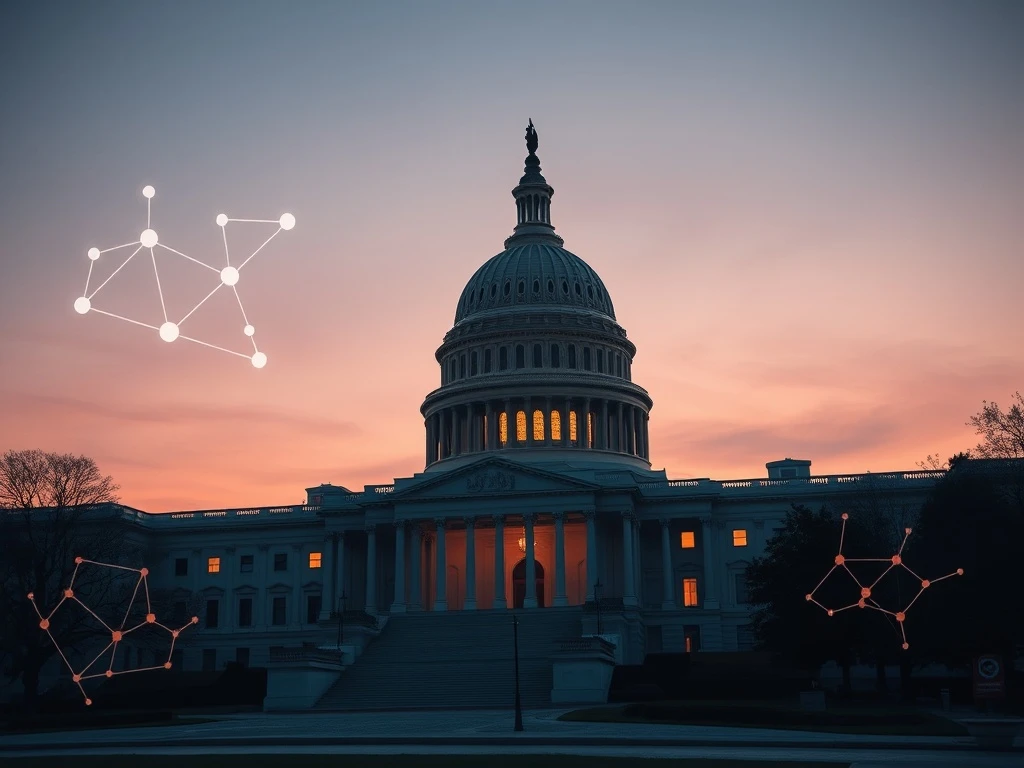
WASHINGTON, D.C., March 2025 – The U.S. Senate Banking Committee has confirmed it is actively coordinating with Securities and Exchange Commission Chair Paul Atkins on drafting a comprehensive crypto market structure bill, marking a significant step toward establishing clear federal digital asset rules. This development follows years of regulatory uncertainty that has challenged both innovators and investors in the cryptocurrency space. Lawmakers emphasize that these discussions specifically focus on creating definitive regulatory frameworks for digital assets, potentially reshaping the entire American financial landscape.
Crypto Market Structure Bill Takes Center Stage
The Senate Banking Committee’s confirmation of ongoing discussions represents a pivotal moment for cryptocurrency regulation. Consequently, market participants have long awaited legislative clarity. The proposed crypto market structure bill aims to define jurisdictional boundaries between regulatory agencies. Moreover, it seeks to establish consistent standards for digital asset classification. Historically, regulatory approaches have varied significantly across different government bodies. For instance, the SEC has typically focused on securities law applications. Meanwhile, the Commodity Futures Trading Commission has emphasized commodity aspects. This fragmented approach has created compliance challenges for blockchain companies.
Chair Paul Atkins brings substantial regulatory experience to these negotiations. Previously, he served as an SEC commissioner from 2002 to 2008. His background includes extensive work on market structure issues. Therefore, his involvement signals serious consideration of technical complexities. The discussions reportedly address several critical areas. These include:
- Token classification frameworks – Establishing clear criteria for determining when digital assets constitute securities
- Exchange registration requirements – Defining which platforms must register with which agencies
- Custody and consumer protection standards – Creating safeguards for digital asset storage and transactions
- Market surveillance protocols – Developing monitoring systems for decentralized finance activities
Historical Context of Digital Asset Regulation
Digital asset regulation has evolved significantly since Bitcoin’s emergence in 2009. Initially, regulators adopted a cautious, reactive stance. However, market growth necessitated more structured approaches. The 2017 ICO boom highlighted regulatory gaps dramatically. Subsequently, the SEC issued numerous enforcement actions. These actions clarified that many tokens qualified as securities. Meanwhile, Congress introduced multiple legislative proposals. None achieved sufficient consensus for passage. Consequently, regulatory uncertainty persisted.
The current legislative effort builds upon previous proposals. Notably, the Lummis-Gillibrand Responsible Financial Innovation Act provided foundational concepts. Similarly, the Digital Commodities Consumer Protection Act addressed commodity aspects. The Senate Banking Committee’s current discussions synthesize these approaches. They aim to create cohesive legislation. This legislation would reconcile competing regulatory philosophies. The table below illustrates key regulatory milestones:
| Year | Regulatory Development | Significance |
|---|---|---|
| 2013 | FinCEN issues first crypto guidance | Established money transmitter requirements |
| 2017 | SEC DAO Report | Applied securities laws to token sales |
| 2020 | OCC crypto custody letter | Allowed banks to custody digital assets |
| 2023 | Multiple court rulings on crypto cases | Created conflicting precedents |
| 2024 | SEC approves spot Bitcoin ETFs | Legitimized crypto as institutional asset class |
Expert Perspectives on Regulatory Progress
Financial regulation experts emphasize the importance of these discussions. Dr. Sarah Chen, former CFTC commissioner, notes that “coordinated legislation is essential for market stability.” She explains that current regulatory overlaps create compliance burdens. Additionally, she highlights international competition concerns. Other jurisdictions have advanced comprehensive frameworks. The European Union implemented MiCA in 2024. Similarly, the United Kingdom established its crypto asset regime. Consequently, the United States risks falling behind.
Blockchain industry representatives express cautious optimism. Michael Torres, CEO of Apex Digital Assets, states that “clear rules enable responsible innovation.” He emphasizes that entrepreneurs need predictable environments. Furthermore, institutional investors require regulatory certainty. Currently, many traditional financial firms remain hesitant. They cite regulatory ambiguity as their primary concern. Therefore, legislation could unlock substantial capital inflows.
Potential Impacts of Federal Digital Asset Rules
The proposed crypto market structure bill could transform multiple sectors. First, cryptocurrency exchanges would face new compliance requirements. However, they would gain regulatory certainty. Second, decentralized finance protocols might encounter registration obligations. This development could reshape their operational models. Third, traditional financial institutions would receive clearer guidance. Consequently, they might expand digital asset services.
Consumer protection represents another critical consideration. The legislation would likely establish disclosure standards. Additionally, it might create custody requirements. These measures would enhance investor safety. Meanwhile, market integrity provisions would address manipulation concerns. They would also improve surveillance capabilities. Overall, comprehensive rules would benefit legitimate market participants. Simultaneously, they would disadvantage bad actors.
International implications warrant attention as well. The United States maintains significant global financial influence. Therefore, its regulatory approach affects other jurisdictions. Harmonized standards could emerge across major economies. This alignment would reduce cross-border compliance complexities. Alternatively, divergent approaches might create regulatory arbitrage opportunities. Market participants could relocate to favorable jurisdictions.
Legislative Process and Timeline Considerations
The Senate Banking Committee’s discussions represent an early legislative stage. Typically, bill drafting requires extensive negotiation. Committee members must reconcile diverse perspectives. Subsequently, the committee would vote on legislation. If approved, the bill would proceed to the full Senate. Meanwhile, the House of Representatives would consider companion legislation. Ultimately, both chambers must pass identical versions. Then, the President would need to sign the bill.
This process often spans multiple sessions. However, bipartisan interest might accelerate progress. Several factors suggest potential momentum. First, regulatory clarity enjoys broad industry support. Second, consumer protection concerns resonate across party lines. Third, international competition provides additional motivation. Therefore, observers anticipate meaningful progress within the current Congress.
Stakeholder engagement will continue throughout this process. Industry groups will likely provide technical feedback. Consumer advocates will emphasize protection measures. Regulatory agencies will offer implementation perspectives. This collaborative approach should produce balanced legislation. It would address multiple stakeholder concerns effectively.
Conclusion
The Senate Banking Committee’s confirmation of crypto market structure bill discussions with SEC Chair Paul Atkins represents a watershed moment for digital asset regulation. These coordinated efforts aim to establish clear federal rules that balance innovation with investor protection. Consequently, market participants can anticipate reduced regulatory uncertainty. The proposed legislation would likely define jurisdictional boundaries, create consistent standards, and enhance market integrity. As these discussions progress, stakeholders should monitor developments closely. Ultimately, comprehensive crypto market structure legislation could position the United States as a global leader in responsible digital asset innovation while protecting American investors and maintaining financial stability.
FAQs
Q1: What is the main goal of the crypto market structure bill discussions?
The primary objective is to establish clear federal regulatory frameworks for digital assets, defining jurisdictional boundaries between agencies and creating consistent standards for cryptocurrency classification and oversight.
Q2: Why is SEC Chair Paul Atkins’ involvement significant?
Chair Atkins brings extensive regulatory experience and technical expertise to the discussions, having previously served as an SEC commissioner and worked extensively on market structure issues during his earlier tenure at the commission.
Q3: How might this legislation affect cryptocurrency exchanges?
Exchanges would likely face new registration and compliance requirements but would gain regulatory certainty that could facilitate banking relationships and institutional participation in digital asset markets.
Q4: What historical context informs these regulatory discussions?
The discussions build upon years of regulatory evolution, including SEC enforcement actions, previous legislative proposals, court rulings, and international regulatory developments that have highlighted the need for comprehensive federal legislation.
Q5: How could this legislation impact international cryptocurrency markets?
U.S. regulatory approaches significantly influence global standards, so comprehensive legislation could promote international regulatory harmonization or alternatively create regulatory arbitrage opportunities if approaches diverge significantly from other jurisdictions.
This article was produced with AI assistance and reviewed by our editorial team for accuracy and quality.