Tokenized Stocks Inevitable: Robinhood CEO Reveals Revolutionary Fix for Trading Freezes
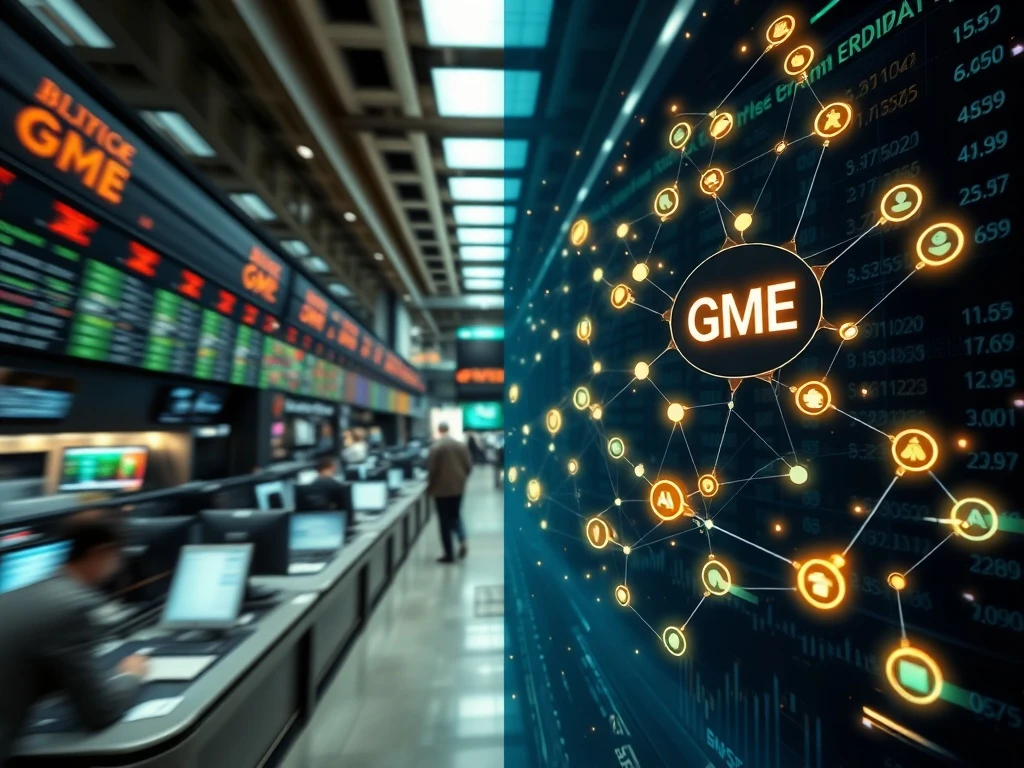
In a significant declaration that could reshape the future of equity markets, Robinhood CEO Vlad Tenev has labeled the widespread adoption of tokenized stocks as ‘inevitable,’ positioning them as the definitive solution to prevent disruptive trading freezes like the 2021 GameStop saga. Speaking from a context of evolving U.S. financial regulation in early 2025, Tenev’s analysis targets the core inefficiencies of legacy settlement systems, advocating for a blockchain-powered overhaul to achieve real-time, frictionless trading.
Tokenized Stocks as the Antidote to Market Failure
Vlad Tenev’s recent commentary provides a stark post-mortem of the January 2021 meme stock frenzy, which he describes as one of the most visible equity market failures in recent history. The crisis, which saw brokerages like Robinhood restrict buying in volatile stocks like GameStop and AMC, stemmed not from malice but from structural fragility. Specifically, the two-day settlement period (T+2) forced clearinghouses to demand massive collateral from brokers to cover risk, creating a liquidity crunch. Consequently, Tenev argues that moving equities on-chain in tokenized form directly addresses this flaw. Blockchain technology enables instantaneous settlement (T+0), thereby eliminating the multi-day window that necessitates huge cash deposits and creates systemic pressure points.
Also read: Zero-Knowledge Proofs Guide: Hoskinson's Free 337-Page GitHub Release Empowers Developers
The Crippling Cost of Slow Settlement
While the standard settlement cycle in the U.S. has since accelerated to one day (T+1), Tenev contends this is still insufficient. He illustrates a critical weakness: a trade executed on a Friday still faces a three-day settlement lag, extending to four days over a long weekend. This delay is not merely an inconvenience; it is a fundamental risk multiplier. During the 2021 volatility, Robinhood was required to post billions in collateral with the Depository Trust & Clearing Corporation (DTCC), leading to the infamous trading halt. Tokenization, by contrast, would allow ownership to transfer and settle in seconds, dramatically reducing counterparty risk and freeing up capital currently locked in the settlement process. This shift would alleviate capital pressure on both clearinghouses and brokerages, creating a more resilient system.
A Timeline of Settlement Evolution and Disruption
The push for tokenization is the latest step in a long evolution of trade settlement. For decades, markets operated on a T+5 cycle, manually processing physical certificates. The shift to T+3 in 1995 and then T+2 in 2017 were major technological leaps. The move to T+1 in May 2024 was hailed as a milestone, yet innovators like Tenev see it as a half-measure. The real endgame is T+0, or real-time settlement, a feat that legacy systems—built on layers of intermediaries—struggle to achieve cost-effectively. Tokenized securities, representing ownership on a distributed ledger, are engineered for this purpose from the ground up. Major institutions like the New York Stock Exchange (NYSE) are already exploring this space, launching pilot platforms for tokenized assets, signaling institutional recognition of the technology’s potential.
Also read: Crypto Liquidations Surge Past $450M as Options Expiry and Oil Shock Fuel Market Panic
Regulatory Clarity: The Key to Unlocking Adoption
Tenev identifies the current regulatory space as a ‘timely opportunity’ for progress. He points to the Securities and Exchange Commission’s (SEC) experimental approach to tokenized securities and legislative efforts in Congress, notably the proposed CLARITY Act. This act aims to establish clear rules for digital asset markets and could provide the necessary framework for equity tokenization. The CEO’s argument is pragmatic: sensible guidelines will protect investors while encouraging innovation. By working within a regulated framework, the industry can build systems that prevent the need for trading restrictions, ensuring retail investors are never again locked out of markets during periods of high demand. The goal is a harmonious integration where blockchain’s efficiency gains are matched by resilient investor protections.
Broader Impacts on Market Structure and Accessibility
The implications of widespread equity tokenization extend far beyond preventing halts. This technology could fundamentally democratize market access and increase efficiency.
- 24/7 Trading: Blockchain networks operate continuously, potentially enabling trading outside traditional market hours.
- Fractional Ownership: Tokenization makes dividing assets into tiny fractions inherently easier, lowering barriers to entry.
- Reduced Costs: Automating settlement and custody through smart contracts could significantly lower fees for brokers and end-investors.
- Enhanced Transparency: A permissioned ledger could provide regulators with a real-time, immutable audit trail of all transactions.
However, challenges remain, including integrating with existing tax systems, ensuring interoperability between different blockchain platforms, and maintaining market integrity during the transition. The path forward requires collaboration between fintech firms, traditional exchanges, regulators, and clearinghouses.
Conclusion
Vlad Tenev’s advocacy for tokenized stocks highlights a important crossroads for global finance. The 2021 trading freezes exposed a critical vulnerability in market infrastructure tied to archaic settlement timelines. Tokenization, powered by blockchain, presents a technically viable path to real-time settlement, promising greater stability, reduced risk, and enhanced accessibility. As regulatory discussions advance through initiatives like the CLARITY Act, the vision of an ‘inevitable’ transition to on-chain equities moves closer to reality. This shift promises not just to prevent past failures but to build a more resilient, efficient, and inclusive financial market for the future.
FAQs
Q1: What are tokenized stocks?
Tokenized stocks are digital representations of traditional equity shares issued and recorded on a blockchain or distributed ledger. Each token is a digital security that confers ownership rights, just like a traditional stock certificate, but with the potential for instantaneous settlement and transfer.
Q2: How would tokenized stocks prevent trading freezes?
They would eliminate the settlement delay (currently T+1). With real-time (T+0) settlement, the need for brokers to post enormous collateral with clearinghouses disappears. This removes the liquidity crunch that forced brokerages like Robinhood to restrict trading during the 2021 meme stock volatility.
Q3: Is the technology for tokenized stocks ready?
The underlying blockchain technology is mature and being tested by major institutions like the NYSE. The primary hurdles are not technological but regulatory and relate to integrating new systems with existing market infrastructure, defining clear legal frameworks, and ensuring compliance with securities laws.
Q4: What is the CLARITY Act mentioned by the Robinhood CEO?
The CLARITY Act is proposed U.S. legislation aimed at providing a comprehensive regulatory framework for digital assets, including cryptocurrencies and tokenized securities. It seeks to clarify the roles of regulators like the SEC and CFTC, which is seen as essential for the safe and widespread adoption of equity tokenization.
Q5: Would tokenized stocks be more volatile?
Not inherently. Volatility is driven by supply, demand, and market sentiment. Tokenization is a settlement and ownership mechanism, not a direct driver of price action. In fact, by allowing continuous liquidity transfer and reducing structural friction, it could potentially help markets absorb large volume swings more smoothly.

This article was produced with AI assistance and reviewed by our editorial team for accuracy and quality.