Ripple’s Revolutionary Treasury Platform Transforms Corporate Finance with Blockchain Integration
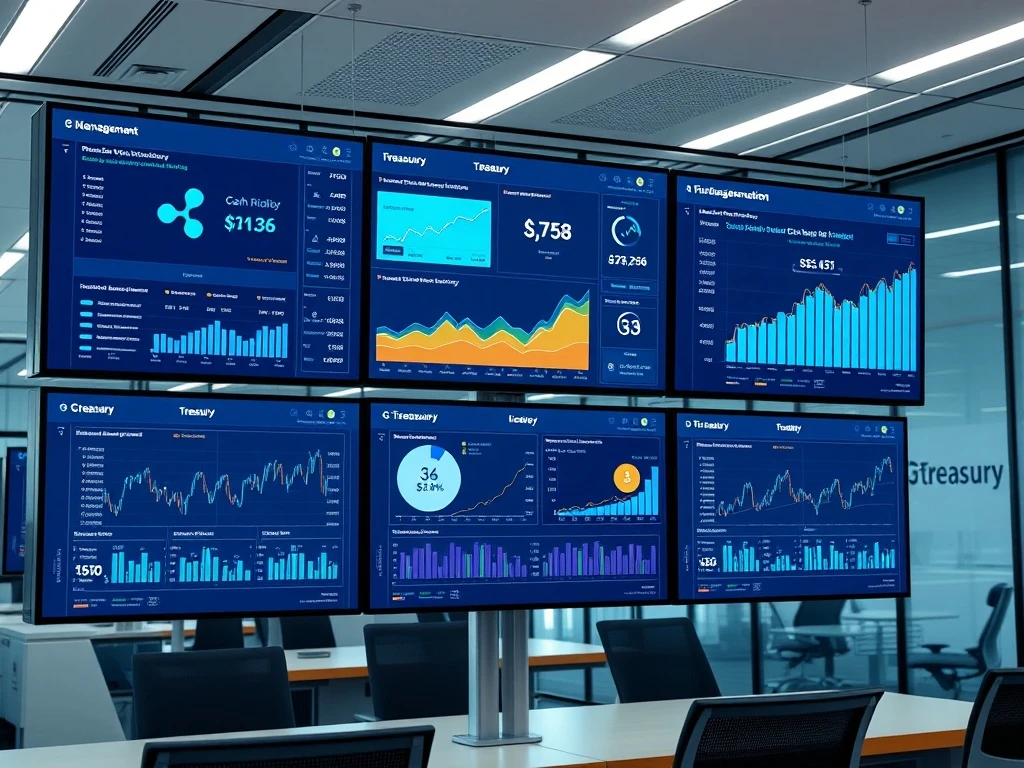
In a significant move that bridges traditional finance with blockchain innovation, Ripple has launched a comprehensive corporate treasury platform designed to transform back-office operations for enterprises worldwide. This original development, announced on Tuesday, integrates Ripple’s blockchain infrastructure with GTreasury’s established treasury management software, creating a unified system for managing cash, digital assets, and liquidity. The platform directly addresses longstanding inefficiencies in corporate finance while capitalizing on the growing institutional adoption of digital assets.
Ripple’s Treasury Platform Integrates Traditional and Digital Finance
Ripple’s new platform represents a strategic evolution in enterprise blockchain applications. Built upon the foundation of Ripple’s $1 billion acquisition of GTreasury in October, the system combines conventional cash management tools with digital asset infrastructure. Consequently, companies can now manage their entire treasury operations from a single interface while maintaining existing controls and workflows. The platform specifically targets common treasury pain points including multi-day settlement cycles and limited visibility across accounts.
Also read: Zcash Analysis: Grayscale's Bold Claim on Private Money's Future and ZEC's Value
Furthermore, the solution leverages blockchain technology to dramatically shorten settlement times and reduce cross-border payment friction. By using stablecoins for settlement, the platform minimizes foreign exchange exposure while providing real-time transaction visibility. Renaat Ver Eecke, CEO of GTreasury, emphasized this integration during a Wednesday presentation, stating, “One of the key things to removing friction is making sure the world between digital assets and traditional fiat has 100% visibility, in a single platform.”
Addressing Corporate Treasury Inefficiencies
The platform introduces several innovative features designed to optimize corporate treasury management:
- Unified Cash and Digital Asset Management: Companies can oversee traditional bank accounts alongside digital asset holdings through a single dashboard
- Accelerated Settlement: Blockchain infrastructure reduces transaction settlement from days to minutes
- Enhanced Liquidity Management: Real-time visibility across all accounts improves cash forecasting and allocation
- Yield Generation Opportunities: Idle corporate cash can earn returns outside traditional banking hours
Ver Eecke highlighted the platform’s potential to mobilize dormant corporate capital, noting, “There’s a huge amount of cash sitting with our corporate clients that doesn’t move nights and weekends. If settlement times shrink to minutes, that non-active cash can start to work for you.” This capability becomes particularly valuable as digital assets gain acceptance on corporate balance sheets.
Strategic Positioning in the Tokenization Revolution
Ripple’s platform launch coincides with accelerating institutional adoption of blockchain technology across traditional finance. Major financial institutions are increasingly exploring asset tokenization and extended trading hours. In December, the U.S. Securities and Exchange Commission issued a no-action letter to a Depository Trust & Clearing Corporation subsidiary, permitting the launch of a securities tokenization service. This regulatory development signals growing acceptance of blockchain applications in mainstream finance.
SEC Chair Paul Atkins recently commented on social media platform X about this trend, stating, “U.S. financial markets are ready to move on-chain,” while adding that the agency is “prioritizing innovation and embracing new technologies to enable this on-chain future.” The DTCC’s initiative will initially focus on tokenized U.S. Treasuries on the Canton Network, with potential expansion to broader securities over time. Notably, the clearinghouse processed approximately $3.7 quadrillion in securities transactions during 2024.
| Institution | Initiative | Timeline |
|---|---|---|
| Depository Trust & Clearing Corporation | Tokenization service for securities | Initial launch in 2025 |
| Nasdaq | Tokenized versions of exchange-listed stocks | Development phase |
| New York Stock Exchange | Platform for tokenized stocks and ETFs | Under development |
| Ripple/GTreasury | Integrated treasury management platform | Launched February 2025 |
Ripple’s Stablecoin Integration and Market Position
The platform incorporates Ripple USD (RLUSD), Ripple’s U.S. dollar-denominated stablecoin, which currently maintains a market capitalization of $1.42 billion according to DefiLlama data. This integration provides a regulated digital asset for settlement within the treasury ecosystem. The stablecoin functionality enables smooth conversion between traditional and digital assets while maintaining price stability through dollar backing.
Matt Savarese, Nasdaq’s head of digital assets strategy, has identified securing SEC approval for tokenized versions of exchange-listed stocks as a top priority. Similarly, the New York Stock Exchange is developing its own platform for trading tokenized stocks and exchange-traded funds, featuring 24/7 trading and blockchain-based settlement. These parallel developments indicate a broader industry shift toward blockchain integration in traditional financial markets.
Technical Architecture and Enterprise Implementation
Ripple’s platform architecture combines several technological components to create a comprehensive treasury solution. The system integrates GTreasury’s established treasury management software with Ripple’s blockchain infrastructure and stablecoin payment rails. This combination allows enterprises to maintain their existing risk controls and investment policies while accessing new digital asset capabilities. The platform supports various treasury functions including cash positioning, payments processing, liquidity management, and risk assessment.
Implementation typically involves connecting the platform to existing enterprise resource planning systems and banking relationships. The system then provides consolidated reporting across all connected accounts and assets. Security features include multi-signature authorization, transaction monitoring, and compliance tools designed to meet regulatory requirements across jurisdictions. Additionally, the platform offers application programming interfaces for custom integration with other corporate systems.
Market Context and Competitive Environment
The corporate treasury management software market has experienced steady growth as companies seek to optimize their financial operations. Traditional providers like SAP, Oracle, and Kyriba dominate the established market segment. However, Ripple’s platform represents the first major integration of blockchain technology with comprehensive treasury management capabilities. This positions Ripple uniquely at the intersection of traditional enterprise software and emerging blockchain applications.
Several factors are driving enterprise interest in blockchain-based treasury solutions. These include the growing acceptance of digital assets on corporate balance sheets, increasing cross-border transaction volumes, and demand for real-time financial visibility. Moreover, regulatory developments are creating clearer pathways for institutional blockchain adoption. The platform’s ability to address these needs while maintaining compatibility with existing systems provides a compelling value proposition for corporate treasurers.
Conclusion
Ripple’s new treasury platform represents a significant milestone in the integration of blockchain technology with traditional corporate finance. By combining GTreasury’s established treasury management capabilities with Ripple’s blockchain infrastructure and stablecoin rails, the platform addresses fundamental inefficiencies in corporate treasury operations. The solution enables faster settlement, improved visibility, and enhanced liquidity management while supporting the growing institutional adoption of digital assets. As financial markets continue their gradual transition toward blockchain-based systems, Ripple’s platform positions the company in the lead of enterprise blockchain applications. This development underscores the expanding role of blockchain technology beyond cryptocurrency trading into core business operations, potentially transforming how corporations manage their financial resources in an increasingly digital economy.
FAQs
Q1: What specific problems does Ripple’s treasury platform solve for corporations?
The platform addresses multiple corporate treasury challenges including multi-day settlement cycles, limited visibility across accounts, inefficient cross-border payments, and idle cash management. It uses blockchain technology to accelerate settlements to minutes while providing unified management of traditional and digital assets.
Q2: How does the platform integrate with existing corporate systems?
The platform connects with existing enterprise resource planning systems, banking relationships, and accounting software through standardized interfaces and APIs. This allows companies to maintain their current workflows while adding blockchain capabilities without requiring complete system overhauls.
Q3: What role does Ripple USD (RLUSD) play in the platform?
Ripple USD serves as the primary stablecoin for settlement within the platform, providing price stability through its U.S. dollar backing. It enables fluid conversion between traditional and digital assets while facilitating faster cross-border transactions with reduced foreign exchange exposure.
Q4: How does this platform relate to broader trends in financial market tokenization?
The platform aligns with accelerating institutional adoption of blockchain technology, particularly the tokenization of traditional assets. It complements initiatives by major exchanges and clearinghouses to move securities trading on-chain while providing the treasury management infrastructure needed for corporate participation in tokenized markets.
Q5: What security measures protect corporate assets on the platform?
The platform incorporates multiple security layers including multi-signature authorization, real-time transaction monitoring, regulatory compliance tools, and enterprise-grade encryption. These features are designed to meet corporate security standards while maintaining necessary controls for treasury operations.

This article was produced with AI assistance and reviewed by our editorial team for accuracy and quality.