Exclusive: Ripple Executive Reveals XRP as Blockchain Finance ‘Glue’ in 2026 Vision
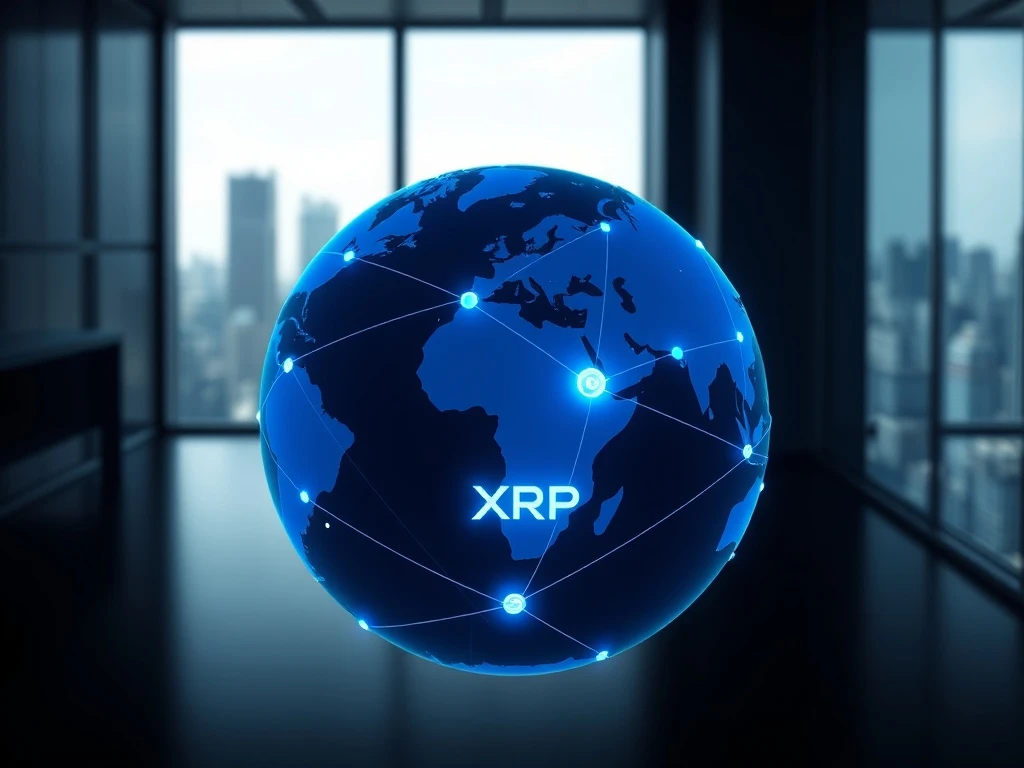
ZURICH, SWITZERLAND — February 15, 2026: A senior Ripple executive today revealed that the company’s digital asset, XRP, could become the fundamental connective tissue of global blockchain finance. During an exclusive interview at the Crypto Valley Conference, Ripple’s Head of Institutional Markets, Monica Long, described XRP’s evolving role as potential “financial glue” for cross-border settlements. Her statement arrives amid accelerating adoption of blockchain infrastructure by traditional financial institutions. The comments immediately sparked analysis about XRP’s utility beyond speculative trading. Significantly, Long made these remarks just days before the anticipated conclusion of Ripple’s long-running legal dispute with the U.S. Securities and Exchange Commission.
Ripple Executive Positions XRP as Critical Financial Infrastructure
Monica Long articulated a vision where XRP functions not merely as a digital currency but as essential middleware for financial systems. “We’re seeing XRP evolve from a payments-focused asset to something more foundational,” Long stated during our thirty-minute conversation. “Its speed, cost efficiency, and growing institutional adoption position it uniquely to connect disparate financial networks.” She specifically referenced Ripple’s On-Demand Liquidity service, which processed over $15 billion in cross-border transactions during 2025 according to company quarterly reports. This represents a 40% year-over-year increase from 2024 volumes.
Also read: Ethereum's $2,500 Challenge: Market Data and the Rise of Pepeto
Industry analysts immediately contextualized Long’s “glue” metaphor within broader blockchain interoperability challenges. Dr. Sarah Chen, a financial technology researcher at the University of Zurich, noted, “The fundamental problem in blockchain finance remains fragmentation. Different networks—Ethereum, Solana, various CBDC platforms—cannot communicate seamlessly. A neutral, high-speed asset like XRP could theoretically bridge these islands.” Chen’s research on cross-chain settlement mechanisms will publish in the Journal of Digital Finance next month. Her preliminary findings suggest assets with sub-4-second settlement times and transaction costs below $0.01 possess optimal characteristics for interoperability layers.
The Technical and Market Implications of XRP’s ‘Glue’ Function
Long’s statement carries immediate implications for financial institutions, developers, and regulators. If XRP assumes this connective role, its utility value could decouple from pure price speculation. Three specific impacts emerge from technical analysis. First, transaction volume metrics would become more significant than price volatility for assessing network health. Second, integration with central bank digital currency (CBDC) platforms would accelerate. Third, regulatory classification might shift toward utility token frameworks in multiple jurisdictions.
Also read: Crypto Listing Scams: Binance CEO Changpeng Zhao Issues Critical Warning to Investors
- Increased Institutional Integration: Major payment processors and correspondent banks would likely deepen technical integration with the XRP Ledger, treating it as plumbing rather than an investment vehicle.
- Developer Ecosystem Expansion: The “glue” function requires robust tooling for smart contracts, oracles, and cross-chain bridges, potentially attracting developer talent away from competing platforms.
- Regulatory Scrutiny Evolution: Financial authorities in the EU, UK, and Singapore might accelerate work on utility token frameworks, using XRP’s evolving use case as a reference model.
Expert Analysis: From Metaphor to Technical Reality
Dr. Marcus Thielen, Head of Research at CryptoQuant, provided data-driven context. “The ‘glue’ concept isn’t just marketing,” Thielen explained. “Our on-chain analytics show XRP’s average transaction value has increased 300% since 2023, while retail transaction counts have remained flat. This indicates growing institutional settlement activity.” He referenced CryptoQuant’s February 10 report showing XRP Ledger settling $4.2 billion in non-speculative transfers last month. Thielen contrasted this with Ethereum, where DeFi and NFT transactions still dominate. “XRP is developing a fundamentally different usage profile,” he concluded. Separately, the Bank for International Settlements (BIS) mentioned XRP in its 2025 annual report on “interoperability in tokenized finance,” though without endorsing any specific asset.
Comparative Analysis: XRP Versus Other Interoperability Solutions
XRP enters a crowded field of interoperability solutions, each with distinct technical approaches and trade-offs. The table below compares key contenders based on transaction speed, cost, decentralization, and primary use case focus as of Q1 2026 data.
| Platform/Asset | Settlement Time | Avg. Cost | Primary Interop Method | Current Focus |
|---|---|---|---|---|
| XRP Ledger | 3-5 seconds | $0.0002 | Native asset bridge | Cross-border payments |
| Polkadot (DOT) | 12-60 seconds | $0.05-$0.50 | Parachain architecture | Multi-chain applications |
| Cosmos (ATOM) | 6-7 seconds | $0.01-$0.10 | IBC protocol | Blockchain internet |
| Chainlink (LINK) | Varies | Oracle fees | Decentralized oracles | Data interoperability |
| Quant (QNT) | Varies by chain | Network fees | Overledger technology | Enterprise multi-chain |
XRP’s competitive advantage appears in settlement speed and cost for high-value transfers, while other solutions offer broader smart contract functionality. Monica Long acknowledged this trade-off: “We’re optimizing for financial settlement efficiency first. Other chains optimize for programmability. Both are necessary, and we see complementary roles emerging.” This nuanced positioning suggests Ripple envisions XRP coexisting with, rather than replacing, other interoperability layers.
Forward Trajectory: Legal Clarity and Institutional Adoption
The “glue” vision’s realization depends heavily on two near-term developments. First, the resolution of Ripple’s SEC lawsuit, expected by Q2 2026, must provide regulatory clarity for U.S. institutions. Second, major financial infrastructure providers must formally integrate XRP into their settlement layers. SWIFT’s ongoing blockchain interoperability experiments, mentioned in their October 2025 whitepaper, represent a potential adoption vector. Additionally, the European Central Bank’s digital euro prototype, scheduled for testing with commercial banks in late 2026, could incorporate bridge assets for non-euro transactions.
Industry and Community Response to the ‘Glue’ Vision
Reactions within the cryptocurrency community revealed cautious optimism. David Schwartz, Ripple’s Chief Technology Officer, tweeted, “Infrastructure isn’t sexy, but it’s essential. The internet needed TCP/IP before it needed websites.” His analogy resonated with developers familiar with protocol-layer innovation. Conversely, some decentralized finance (DeFi) proponents expressed skepticism. “XRP’s ledger remains relatively closed for smart contract development,” noted Elena Morales, lead developer at a cross-chain DeFi aggregator. “True financial ‘glue’ needs composability across thousands of applications, not just fast payments.” This tension between optimized efficiency and open programmability will likely define the interoperability debate through 2026.
Conclusion
Monica Long’s characterization of XRP as potential “glue” for blockchain finance signals a strategic pivot toward infrastructure essentiality. The vision leverages XRP’s proven settlement advantages while addressing the critical industry challenge of fragmentation. Success depends on continued institutional adoption, favorable regulatory outcomes, and technical evolution that balances efficiency with interoperability. For investors and observers, the key metric shifts from short-term price movements to long-term transaction volume and network integration depth. As financial systems digitize, the demand for neutral, efficient settlement layers will only intensify, potentially positioning XRP precisely where Long envisions it—at the connective center of a blockchain-based financial future.
Frequently Asked Questions
Q1: What exactly did the Ripple executive mean by calling XRP “glue”?
Monica Long used the metaphor to describe XRP’s potential role as a connective layer between different blockchain networks and traditional financial systems, facilitating efficient cross-border and cross-chain value transfer rather than functioning primarily as a speculative asset.
Q2: How does XRP’s transaction capability compare to traditional systems like SWIFT?
The XRP Ledger settles transactions in 3-5 seconds at negligible cost, while SWIFT messages typically require 1-3 days for final settlement through correspondent banking networks, with higher fees and counterparty risks.
Q3: What are the main obstacles to XRP becoming this “financial glue”?
Key challenges include regulatory uncertainty (particularly the ongoing SEC case), competition from other interoperability solutions, need for broader smart contract functionality, and achieving critical mass adoption among global financial institutions.
Q4: Does this development make XRP a good investment?
Investment decisions should consider multiple factors. The “glue” concept emphasizes utility value over speculation, meaning success would correlate with transaction volume growth rather than pure price appreciation. Always conduct independent research and consider risk tolerance.
Q5: How does this relate to central bank digital currencies (CBDCs)?
Several CBDC prototypes, including the European digital euro and UK’s digital pound, are exploring interoperability with existing digital assets. XRP could potentially serve as a bridge currency between different CBDCs and between CBDCs and traditional currencies.
Q6: What should observers watch for in the coming months?
Monitor the resolution of Ripple’s SEC case, announcements of new institutional partnerships using On-Demand Liquidity, technical upgrades to the XRP Ledger (particularly around smart contracts), and mentions in regulatory frameworks from major financial jurisdictions.

This article was produced with AI assistance and reviewed by our editorial team for accuracy and quality.