Ripio’s Strategic Pivot: Argentine Exchange Bets on Peso Stablecoins for Latin America’s Tokenization Revolution
BUENOS AIRES, January 2026 – In a bold strategic shift, Argentine cryptocurrency exchange Ripio is positioning local currency stablecoins and tokenized sovereign bonds as the cornerstone of its growth strategy. This move comes as CEO Sebastián Serrano anticipates what he describes as a “lateralized” or potentially declining year for broader cryptocurrency markets in 2026. However, Serrano simultaneously predicts a decade-long expansion for stablecoin adoption across Latin America. The exchange’s pivot represents a significant development in the region’s financial technology field, particularly as Argentina navigates economic reforms under President Javier Milei’s administration.
Ripio’s Evolution from Retail Exchange to B2B Infrastructure Provider
Founded in 2013, Ripio has undergone a fundamental transformation in recent years. The company originally operated as a pure retail cryptocurrency exchange serving individual investors across Latin America. However, strategic decisions have shifted Ripio toward becoming a business-to-business infrastructure provider. Today, the company serves banks, fintech companies, and major platforms including Mercado Libre, often described as Latin America’s equivalent to Amazon. This strategic repositioning allows Ripio to avoid direct competition with numerous retail applications while establishing itself as the underlying provider for multiple platforms.
Also read: Arthur Hayes Makes Major $1.1M HYPE Purchase, Signaling Renewed Confidence as ETF Hype Intensifies
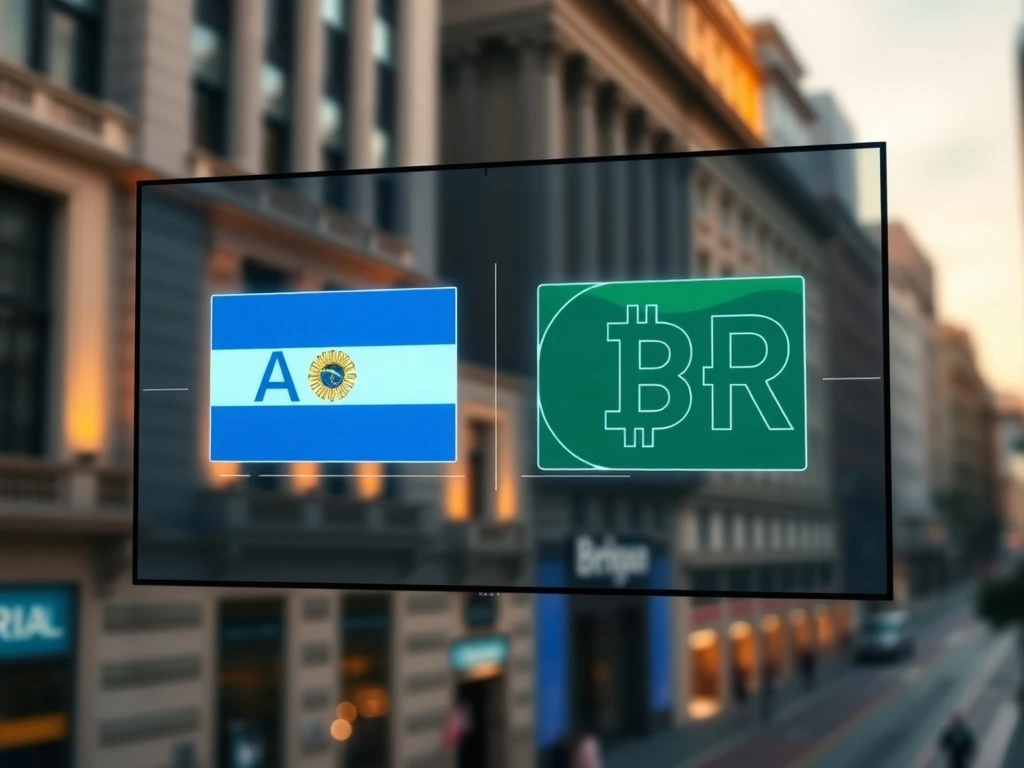
The exchange now offers its proprietary dollar stablecoin, Criptodólar (UXD), alongside a new suite of local fiat-backed stablecoins. These include the Argentine peso-pegged wARS, Brazilian real-pegged wBRL, and Mexican peso-pegged wMXN. Additionally, Ripio has tokenized Argentina’s most-traded sovereign bond, AL30. Serrano reported that this tokenized bond traded “more than a million units” during the Sunday of Argentina’s October 2025 presidential election. This activity demonstrates significant market interest in tokenized traditional assets during periods of political and economic uncertainty.
The Tokenization Thesis: Liquid Assets Lead the Way
Sebastián Serrano articulates a clear vision for asset tokenization. “The most liquid assets are going to be the ones that get tokenized first,” he explained to Crypto News Insights. He views the tokenization of the US dollar through stablecoins as merely the initial step in a broader movement. The ultimate goal involves bringing substantial portions of the real economy onto blockchain networks. This includes diverse assets ranging from commodities like horses to real estate properties. The process begins with highly liquid financial instruments because they present fewer technical and regulatory hurdles while demonstrating clear utility and market demand.
Also read: Crypto Clarity Act Gains Significant Backing as Armstrong Shifts Stance, Pressuring Congress
Technical Implementation and Early Traction Metrics
Ripio’s local currency stablecoins currently operate on multiple blockchain networks. These include the Ethereum mainnet, Base, and World Chain. The World App has integrated most deeply with Ripio’s offerings thus far. Initial transaction volume data reveals promising early adoption. The wARS stablecoin generated approximately $200,000 in transaction volume during its launch month of December 2025. Furthermore, it recorded about $160,000 in volume during the first weeks of January 2026. Serrano characterizes this initial traction as “very promising” while acknowledging the ambitious scale of Ripio’s targets.
The company aims to achieve “at least $100 million in assets under management (AUM) by the end of the year” for its local currency stablecoin suite. This model strategically pairs local stablecoins with virtual local bank accounts. Serrano designed this approach to address what he identifies as a “crappy” user experience in many non-custodial wallets. Traditional workflows often force users through cumbersome “buy” processes and impose immediate foreign exchange losses when converting into dollar-denominated stablecoins. Ripio’s system enables users to convert local currency directly into local stablecoins at a one-to-one rate, eliminating upfront foreign exchange costs and simplifying the initial onboarding experience.
| Stablecoin | Pegged Currency | Primary Blockchain | Launch Date |
|---|---|---|---|
| wARS | Argentine Peso (ARS) | Ethereum, Base, World Chain | December 2025 |
| wBRL | Brazilian Real (BRL) | Ethereum, Base | December 2025 |
| wMXN | Mexican Peso (MXN) | Ethereum | December 2025 |
| Criptodólar (UXD) | US Dollar (USD) | Multiple Networks | 2023 |
The Critical Role of Local Stablecoins in DeFi Lending
Looking toward longer-term applications, Serrano identifies decentralized finance lending as a primary use case for local currency stablecoins. In countries like Argentina and Brazil, it creates logical inconsistencies for locally salaried workers to borrow in US dollars. Most existing DeFi protocols currently “force you to borrow in USDC or USDT,” according to Serrano. This practice introduces significant foreign exchange risk for borrowers whose income streams remain denominated in pesos or reais, currencies that can experience rapid depreciation. Moreover, “most of the economy is denominated in the local currency,” Serrano emphasizes. He argues convincingly that borrowing practices should align with this economic reality.
Local currency stablecoins represent the essential “building block” required for this fundamental shift in DeFi lending. They enable the creation of lending pools and credit instruments that match borrowers’ currency needs with their income sources. This alignment reduces currency mismatch risks and makes decentralized financial services more practical for everyday users in emerging economies. The development could potentially unlock significant latent demand for credit in regions where traditional banking services remain inaccessible or prohibitively expensive for large population segments.
Managing Argentina’s Complex Economic and Regulatory Market
Ripio’s strategic developments unfold against Argentina’s turbulent economic backdrop. President Javier Milei’s administration has implemented substantial macroeconomic reforms since taking office. Serrano credits Milei with performing “great on the macro economy” regarding inflation control and fiscal adjustments. However, he notes the president’s apparent “tunnel vision” leaves limited space for cryptocurrency policy development despite ideological overlaps with libertarian principles. This regulatory ambiguity creates both challenges and opportunities for domestic crypto enterprises.
Coinbase’s recent decision to pause Argentine peso fiat rails highlights the localization challenges in financial services. Serrano observes that maintaining local operations involves significant licensing and compliance costs. As regulatory frameworks advance globally, international exchanges must continually evaluate the economic viability of servicing specific national markets. This dynamic creates openings for regionally focused players like Ripio who possess deeper understanding of local regulatory environments, banking relationships, and user behavior patterns.
The Decade of Stablecoins: Data and Market Context
Ripio’s strategic emphasis on stablecoins aligns with broader global trends. Industry reports indicate stablecoins processed approximately $33 trillion in on-chain transactions during 2025. This staggering volume underscores their growing role as settlement layers and value transfer mechanisms within blockchain ecosystems. Serrano confidently asserts, “It’s going to be the decade of stablecoins.” His prediction reflects both current adoption metrics and the fundamental utility these instruments provide in bridging traditional finance with blockchain networks.
The stablecoin market continues evolving beyond simple dollar-pegged instruments. Key developments include:
- Multi-currency expansion: Beyond major reserve currencies, local currency stablecoins address specific regional needs
- Regulatory clarity: Jurisdictions worldwide are developing clearer frameworks for stablecoin issuance and operation
- Institutional adoption: Traditional financial institutions increasingly utilize stablecoins for settlement and treasury management
- Technological innovation: New blockchain architectures improve stablecoin efficiency, security, and interoperability
Conclusion
Argentine exchange Ripio represents a compelling case study in cryptocurrency business adaptation and regional market specialization. The company’s strategic pivot toward local currency stablecoins and tokenized bonds addresses genuine user experience problems while capitalizing on Latin America’s unique financial needs. Despite anticipating potential market headwinds in 2026, Ripio’s leadership maintains strong conviction about the long-term trajectory for stablecoin adoption. The exchange’s evolution from retail platform to B2B infrastructure provider demonstrates strategic flexibility in a rapidly changing industry. As tokenization expands from sovereign bonds to broader real-world assets, Ripio’s early focus on local currency instruments positions it advantageously within Latin America’s developing digital asset ecosystem. The coming years will test whether local currency stablecoins can indeed become the missing “building block” for decentralized finance in emerging economies.
FAQs
Q1: What are local currency stablecoins and how do they differ from US dollar stablecoins?
A1: Local currency stablecoins are digital assets pegged to national currencies like the Argentine peso or Brazilian real, unlike dollar-pegged stablecoins (USDC, USDT). They enable users to hold and transfer digital value without immediate foreign exchange conversion, reducing FX risk for users whose income and expenses are in local currencies.
Q2: Why is Ripio focusing on B2B infrastructure instead of retail trading?
A2: Ripio shifted to B2B to avoid direct competition with numerous retail crypto apps and instead become the underlying technology provider for banks, fintechs, and major platforms. This strategy leverages their technical expertise while creating more stable revenue streams through enterprise partnerships.
Q3: How does tokenizing sovereign bonds like Argentina’s AL30 work?
A3: Tokenization involves creating blockchain-based digital tokens that represent ownership of traditional sovereign bonds. Each token corresponds to a unit of the bond, enabling fractional ownership, 24/7 trading, and settlement on blockchain networks while maintaining the underlying bond’s economic characteristics.
Q4: What challenges do local currency stablecoins face in countries with high inflation?
A4: High-inflation environments create challenges for maintaining stablecoin pegs, requiring solid reserve management and potentially algorithmic mechanisms. However, these stablecoins can still provide utility as digital payment rails and DeFi building blocks even if they reflect local currency depreciation.
Q5: How does Ripio’s strategy relate to broader trends in cryptocurrency adoption?
A5: Ripio’s focus on local currency solutions reflects the broader industry trend toward practical, region-specific applications of blockchain technology. Rather than pursuing universal one-size-fits-all solutions, successful crypto businesses increasingly tailor their offerings to address specific market needs and regulatory environments.

This article was produced with AI assistance and reviewed by our editorial team for accuracy and quality.