Jerome Powell Downplays Gold Price Surge: Critical Fed Stance on Asset Monitoring Revealed
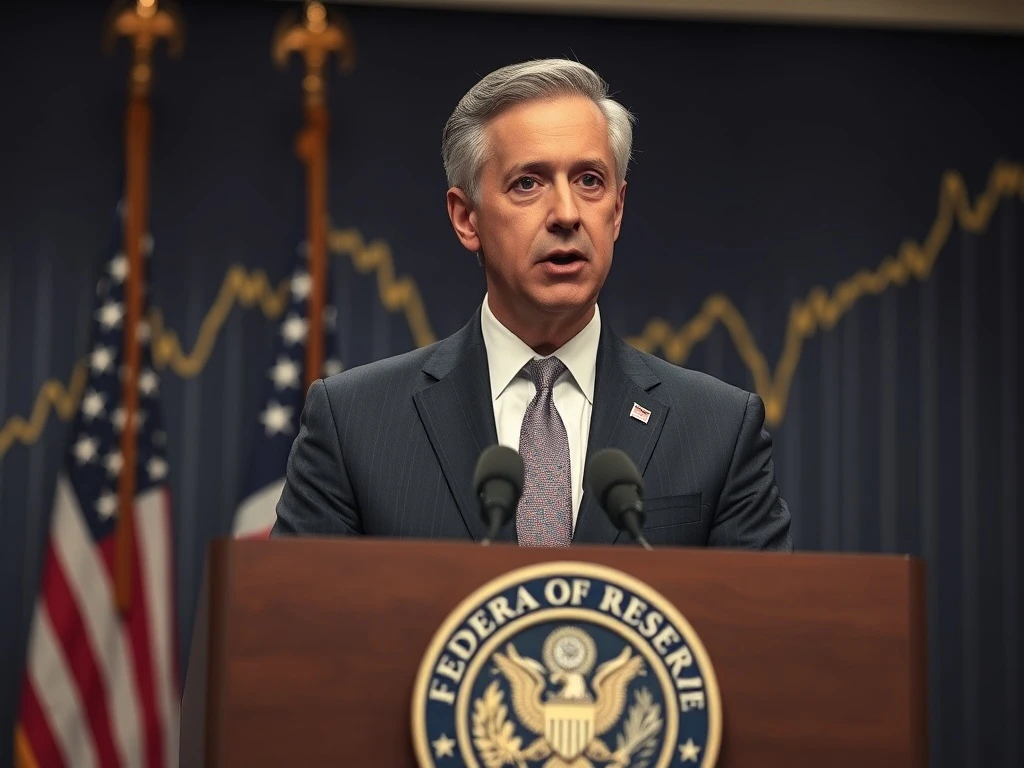
WASHINGTON, D.C. – March 2025: Federal Reserve Chair Jerome Powell delivered a measured response to questions about the recent surge in gold prices, stating the central bank does not attribute significant meaning to individual asset movements while confirming ongoing monitoring protocols. This nuanced position emerges during a period of notable market volatility and provides critical insight into the Fed’s current analytical framework for financial stability assessment.
Powell’s Gold Price Assessment and Federal Reserve Policy
During his semi-annual monetary policy testimony before Congress, Chair Powell addressed direct inquiries about gold’s remarkable price appreciation. Specifically, he emphasized that the Federal Reserve maintains a broad perspective on financial markets. Consequently, the institution avoids overinterpreting fluctuations in single commodities or assets. However, Powell clarified that the Fed’s monitoring systems continuously track such developments as part of comprehensive financial stability oversight.
Also read: Bitcoin Spot ETFs Shatter Positive Streak With $296 Million Outflow
This statement carries substantial weight for several reasons. First, gold has historically served as a barometer for inflation expectations and geopolitical uncertainty. Second, the precious metal’s recent performance coincides with shifting global monetary policies. Third, Powell’s comments reflect the Fed’s disciplined approach to data interpretation. Therefore, market participants should understand that gold movements alone will not dictate monetary policy decisions.
Historical Context of Gold and Central Bank Communication
Gold markets have demonstrated particular sensitivity to central bank communications throughout modern financial history. For instance, the 2008 financial crisis triggered significant gold accumulation. Similarly, the COVID-19 pandemic response saw rare monetary expansion that boosted gold prices. Currently, the economic sector features several parallel developments:
Also read: Bitcoin Strategy Divide: GameStop's 4,710 BTC Hold Contrasts With Nation's Massive Sell-Off
- Geopolitical tensions influencing safe-haven asset flows
- Persistent inflation concerns despite moderating headline numbers
- Dollar strength fluctuations affecting commodity pricing globally
- Central bank diversification activities in reserve management
Powell’s remarks therefore align with the Fed’s established communication strategy. This approach prioritizes broad economic indicators over singular market signals. Moreover, it maintains consistency with previous guidance about the Fed’s reaction function.
Federal Reserve Monitoring Framework Explained
The Federal Reserve employs a sophisticated, multi-layered system for financial market surveillance. While Powell downplayed the specific significance of gold’s movement, he reinforced that all major asset classes receive systematic review. This monitoring occurs through several dedicated channels within the Federal Reserve System.
First, the Division of Monetary Affairs analyzes commodity markets for inflationary signals. Second, the Financial Stability Group assesses interconnected market risks. Third, regional Federal Reserve banks contribute localized economic intelligence. This comprehensive approach ensures that no single data point receives disproportionate attention without broader contextual analysis.
| Monitoring Area | Primary Purpose | Relevance to Gold |
|---|---|---|
| Commodity Markets | Inflation expectation analysis | Direct price tracking |
| Financial Stability | Systemic risk assessment | Safe-haven flow analysis |
| International Markets | Global spillover effects | Dollar and alternative asset correlations |
| Banking System | Liquidity and use monitoring | Precious metal financing activities |
This structured methodology explains why Powell characterized gold’s movement as monitored but not fundamentally significant for policy. Essentially, the Fed requires sustained, broad-based evidence before adjusting its monetary policy stance. Isolated asset movements rarely meet this evidentiary threshold without corroborating economic data.
Market Reactions and Expert Analysis
Financial markets displayed limited immediate reaction to Powell’s gold comments, suggesting investors had already anticipated this measured Fed stance. However, several market analysts provided deeper interpretation of the implications. For example, former Fed economist Dr. Sarah Jennings noted that Powell’s comments reflect institutional discipline against market-driven policy.
“The Federal Reserve learned valuable lessons from previous cycles,” Jennings explained. “Reacting to individual asset prices creates policy volatility that ultimately undermines economic stability. Powell’s restrained response demonstrates institutional maturity.” This perspective finds support among many monetary policy observers who emphasize the dangers of overreacting to market noise.
Meanwhile, gold market specialists offered contrasting interpretations. Some analysts suggested that Powell’s comments might temporarily moderate speculative enthusiasm. Others argued that the very act of addressing gold prices acknowledges their elevated market attention. Consequently, the long-term impact on gold markets remains uncertain despite Powell’s attempted neutralization of the topic.
Comparative Central Bank Approaches
The Federal Reserve’s position contrasts somewhat with other major central banks regarding gold. For instance, several emerging market central banks have actively increased gold reserves in recent years. These institutions frequently cite diversification benefits and reduced dollar dependency as primary motivations. However, the Fed maintains substantial gold reserves without active management emphasis.
This divergence highlights different institutional priorities and economic contexts. The Fed’s global reserve currency status reduces traditional motivations for gold accumulation. Conversely, other central banks face different constraints and strategic considerations. Powell’s comments implicitly acknowledge these distinctions while reaffirming the Fed’s particular analytical framework.
Political Independence and Succession Guidance
In a notable segment of his testimony, Powell addressed questions about Federal Reserve leadership transition. When asked what advice he would offer a potential successor, Powell emphasized maintaining political independence. “Stay out of politics,” he stated unequivocally. This guidance carries particular resonance given ongoing debates about central bank autonomy.
Historical evidence strongly supports Powell’s position. Research consistently demonstrates that politically independent central banks achieve superior inflation outcomes. Furthermore, they maintain greater credibility during economic crises. Powell’s public reinforcement of this principle serves multiple purposes simultaneously.
First, it reinforces institutional norms during an election year. Second, it establishes clear expectations for future leadership. Third, it communicates stability to financial markets concerned about political interference. This aspect of Powell’s testimony may ultimately prove more significant than his gold market comments for long-term Fed functionality.
Conclusion
Federal Reserve Chair Jerome Powell’s measured response to gold price movements provides valuable insight into contemporary central bank thinking. While acknowledging monitoring activities, Powell deliberately avoided attributing policy significance to the gold price surge. This approach reflects institutional discipline and a comprehensive analytical framework that prioritizes broad economic indicators over individual asset fluctuations. The guidance on political independence further reinforces fundamental central banking principles that transcend market cycles. Consequently, Powell’s testimony offers both immediate market guidance and enduring institutional perspective.
FAQs
Q1: What exactly did Jerome Powell say about gold prices?
Chair Powell stated that the Federal Reserve does not place significant meaning on the price movements of specific assets like gold, though the institution continuously monitors such changes as part of broader financial market surveillance.
Q2: Why would the Federal Reserve monitor gold prices if they’re not significant?
The Fed monitors all major asset classes for financial stability assessment, inflationary signals, and systemic risk analysis. Monitoring doesn’t imply policy significance but rather comprehensive market oversight.
Q3: How have gold prices performed recently?
Gold has experienced a notable price surge in recent months, reaching multi-year highs amid geopolitical uncertainty, inflation concerns, and shifting global monetary policy expectations.
Q4: What did Powell advise his potential successor?
Powell emphasized that future Fed chairs should “stay out of politics,” reinforcing the critical importance of central bank independence from political influence.
Q5: How do other central banks view gold compared to the Federal Reserve?
Several central banks, particularly in emerging markets, have actively increased gold reserves for diversification. The Fed maintains substantial reserves but doesn’t emphasize active gold accumulation in its current strategy.

This article was produced with AI assistance and reviewed by our editorial team for accuracy and quality.