NYSE 24/7 Trading Launch: Revolutionary On-Chain Tokenization Plan Unveiled
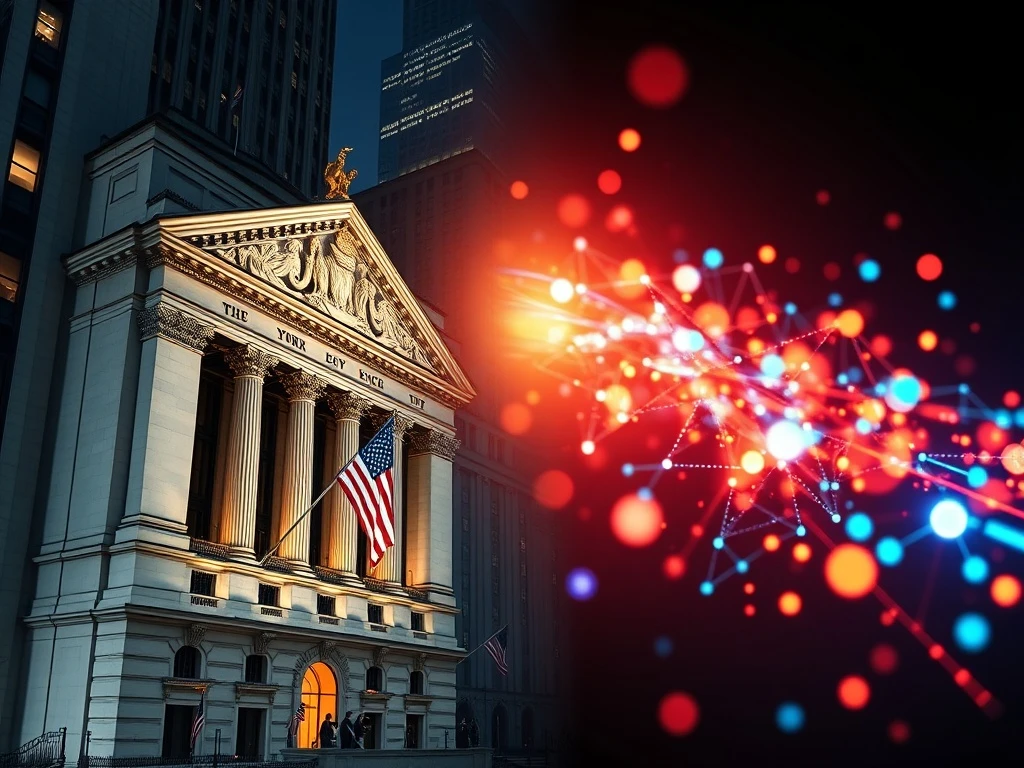
In a landmark announcement set to redefine global finance, the New York Stock Exchange (NYSE) has confirmed plans to introduce 24/7 trading of U.S. equities through a new on-chain tokenization platform. This strategic move, first reported by Watcher.Guru, signals the most significant structural shift in stock market operations in decades, potentially merging traditional market rigor with blockchain’s perpetual efficiency. Consequently, the initiative could dismantle long-standing temporal barriers to trading, fundamentally altering how investors worldwide interact with American markets.
NYSE 24/7 Trading Enters a New Digital Era
The New York Stock Exchange’s proposal centers on creating a parallel, blockchain-based trading venue. This platform will tokenize shares of listed companies, representing ownership on a distributed ledger. Therefore, investors can buy and sell these digital tokens at any hour, on any day, moving beyond the confines of the traditional 9:30 AM to 4:00 PM ET trading window. This model directly addresses the demands of a globalized, digitally-native investor base accustomed to constant access. Moreover, it responds to the growing institutional interest in digital asset infrastructure. The exchange’s parent company, Intercontinental Exchange (ICE), has extensive experience with digital assets, providing a foundation of technical expertise for this ambitious project.
The Mechanics of On-Chain Tokenization
Tokenization converts a physical or financial asset into a digital token on a blockchain. For the NYSE, this involves creating a digital twin of a stock certificate. Each token is cryptographically secured and represents a direct claim on the underlying equity. Importantly, regulatory compliance and investor protection remain paramount. The platform will likely operate under existing SEC frameworks for alternative trading systems (ATS). Furthermore, it will integrate sturdy know-your-customer (KYC) and anti-money laundering (AML) protocols from day one. This careful design aims to ensure the system’s integrity matches its innovation.
Understanding the Driving Forces Behind the Move
Several converging trends make this initiative timely. First, investor behavior has evolved. Retail and institutional participants now expect continuous market access, mirroring cryptocurrency and foreign exchange markets. Second, blockchain technology has matured. Enterprise-grade solutions now offer the security, scalability, and settlement finality required for mainstream finance. Third, competitive pressure is mounting. Other global exchanges and private fintech firms are actively exploring similar models. The NYSE’s move can be seen as a proactive effort to maintain its dominant market position. Finally, operational efficiency is a key driver. Blockchain can streamline post-trade settlement, reducing costs and counterparty risk through near-instantaneous clearing.
Also read: Bitcoin Treasury Companies Face New Pressure as US-Iran Tensions Shift
Key benefits of the proposed system include:
- Global Accessibility: Investors in any time zone gain equal access to U.S. markets.
- Enhanced Liquidity: Continuous trading can deepen market liquidity pools.
- Reduced Settlement Risk: T+0 or near-instant settlement becomes feasible.
- Operational Transparency: Blockchain provides an immutable audit trail for all transactions.
Regulatory Sector and Implementation Timeline
The path to launch hinges on regulatory engagement. The SEC will scrutinize the proposal for investor protection, market fairness, and systemic risk. Industry experts anticipate a phased rollout, beginning with a limited pilot program involving highly liquid, large-cap stocks. This cautious approach allows for real-world testing and regulatory feedback. A full public launch likely targets late 2025 or 2026, contingent on approvals. The NYSE will also need to establish clear rules for corporate actions like dividends and stock splits on the tokenized platform. Collaboration with regulators will be continuous and critical for success.
Comparative Analysis: Traditional vs. Tokenized Trading
The following table outlines core differences between the current NYSE model and the proposed tokenized system:
| Feature | Traditional NYSE Trading | Proposed On-Chain Tokenization |
|---|---|---|
| Trading Hours | Weekdays, 9:30 AM – 4:00 PM ET | 24 hours a day, 7 days a week |
| Settlement Cycle | T+2 (Trade date plus two days) | Potential for T+0 or near-instant |
| Infrastructure | Centralized clearinghouses & databases | Distributed ledger technology (Blockchain) |
| Asset Form | Electronic book-entry shares | Digital tokens on a blockchain |
| Market Participants | Brokers, market makers, institutions | Same, plus potentially digital asset wallets |
Potential Impacts on Investors and Global Markets
This innovation carries profound implications. For retail investors, it offers remarkable flexibility to react to news or manage portfolios outside standard hours. However, it also requires greater personal discipline against impulsive trading. For institutions, it enables more sophisticated global portfolio management and hedging strategies. Market volatility patterns may change, as price discovery becomes a continuous process. Additionally, global markets may face increased interconnectedness, as events in other regions can immediately impact tokenized U.S. stock prices. This could lead to a more efficient, albeit more complex, global pricing mechanism for equities.
Expert Perspectives on the Strategic Shift
Financial analysts view this as an inevitable evolution. “The digitization of assets is the next logical step for mature markets,” notes a fintech strategist at a major bank. “The NYSE isn’t just adopting a new technology; it’s future-proofing its business model.” Legal experts emphasize the regulatory bridge-building required. “The key challenge is creating a framework that protects investors without stifling innovation,” states a former SEC advisor. “This project will be a benchmark for traditional finance adopting blockchain.” These perspectives underscore the move’s significance as both a technical and regulatory milestone.
Conclusion
The NYSE’s plan for 24/7 trading via on-chain tokenization represents a decisive moment in financial history. It bridges the trusted world of regulated equities with the innovative potential of blockchain technology. This initiative promises greater accessibility, efficiency, and liquidity for the global investing public. Successfully implemented, the NYSE 24/7 trading platform could set a new global standard, compelling other exchanges to follow suit and accelerating the broader tokenization of real-world assets. The journey will require careful navigation of technical and regulatory hurdles, but the destination points toward a more integrated and accessible financial future.
FAQs
Q1: What does “on-chain tokenization” mean for stocks?
A1: It means creating a digital token on a blockchain that represents ownership of a real stock. You trade the token, which is securely linked to the actual company share, enabling faster, 24/7 trading.
Q2: Will this replace the normal NYSE stock market?
A2: No, it is designed as a complementary, parallel trading venue. Traditional daytime trading on the NYSE floor and electronic systems will continue to operate as usual.
Q3: Is trading tokenized stocks riskier?
A3: The NYSE aims to implement the same level of regulatory oversight and investor protection. The core risk of stock investing remains, but the platform itself is being built with high security standards to mitigate new technological risks.
Q4: How will dividends work with tokenized stocks?
A4: The system will be programmed to automatically distribute dividend payments to the digital wallets holding the tokenized shares at the record date, mirroring the traditional process.
Q5: Can international investors easily use this platform?
A5: Yes, one of the primary goals is global access. However, international users will still need to comply with their local securities regulations and the platform’s KYC/AML requirements.

This article was produced with AI assistance and reviewed by our editorial team for accuracy and quality.