Natural Gas Storage Market Soars Toward $17 Billion by 2031 as Nations Prioritize Critical Energy Security
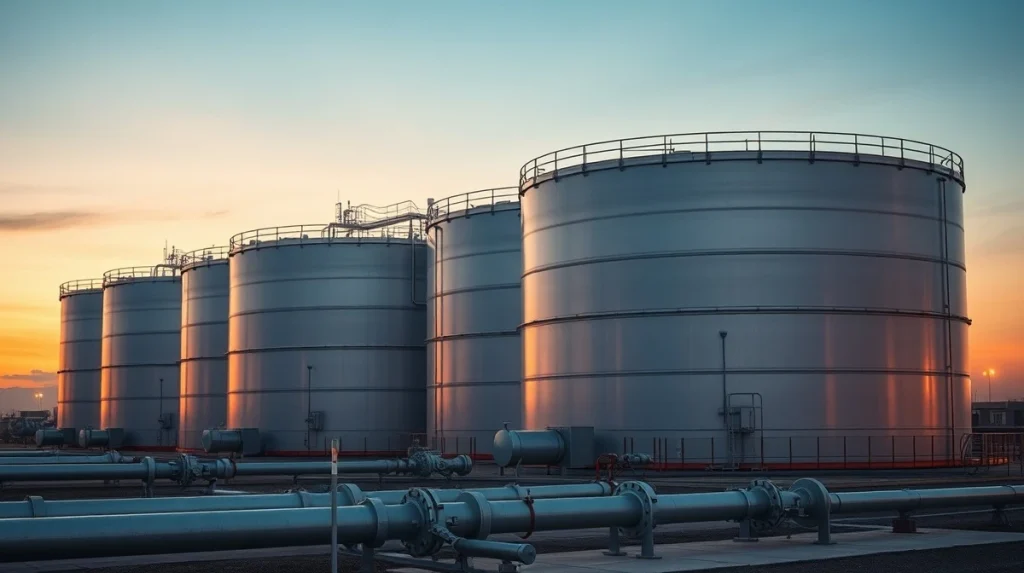
Global energy security concerns are driving exceptional investment in natural gas storage infrastructure, with the market projected to reach USD 17.04 billion by 2031 according to new analysis from Mordor Intelligence. This strategic expansion responds directly to geopolitical tensions and supply chain vulnerabilities exposed in recent years.
Natural Gas Storage Market Fundamentals and Current Sector
The natural gas storage sector serves as a critical buffer between production and consumption. Furthermore, storage facilities ensure supply reliability during peak demand periods. Currently, underground storage dominates the market through three primary methods. Depleted gas reservoirs offer the largest capacity globally. Meanwhile, salt caverns provide excellent deliverability rates. Aquifers represent the third major storage type with significant potential.
Also read: M Series ANC Token Presale Launches with Detailed Vesting
Regional dynamics show substantial variation across markets. North America maintains the most developed storage infrastructure globally. Europe has accelerated investments following recent supply disruptions. Asia-Pacific represents the fastest growing region for new storage capacity. Additionally, Middle Eastern countries are developing strategic reserves despite production advantages.
Energy Security Policies Driving Market Expansion
Government mandates represent the primary growth driver for storage infrastructure. Many nations now require minimum storage levels as strategic reserves. The European Union’s revised storage regulations mandate 90% capacity filling before winter. Similarly, Japan maintains strategic LNG reserves equivalent to months of consumption. China’s latest five-year plan emphasizes storage as national security infrastructure.
Also read: Pepeto Presale Attracts Investor Interest Amid Meme Coin Rally
Geopolitical factors have fundamentally altered storage economics. Recent conflicts disrupted traditional supply routes dramatically. Consequently, countries prioritize domestic storage over import dependence. This strategic shift creates sustained demand for new facilities. Storage also enables greater renewable energy integration by balancing intermittent generation.
Infrastructure Investment and Technological Advancements
Capital expenditure patterns reveal shifting priorities within the sector. Traditional above-ground LNG storage continues receiving substantial investment. However, underground storage projects attract increasing funding due to scalability advantages. Technological innovations improve storage efficiency and safety simultaneously. Advanced monitoring systems utilize IoT sensors for real-time integrity assessment. Additionally, AI-powered predictive maintenance reduces operational risks significantly.
The table below illustrates key regional storage capacity developments:
| Region | Primary Storage Type | Notable Recent Projects |
|---|---|---|
| North America | Depleted Reservoirs | Multiple expansion projects in Alberta and Texas |
| Europe | Salt Caverns | German strategic reserve expansions |
| Asia-Pacific | LNG Terminals | Japanese and South Korean strategic reserves |
Market Challenges and Regulatory Considerations
Despite strong growth projections, the storage sector faces significant hurdles. Environmental regulations increasingly impact facility development timelines. Community opposition sometimes delays critical projects unnecessarily. Additionally, substantial capital requirements limit smaller market participants. Technical challenges include maintaining reservoir integrity over decades. Furthermore, seasonal demand fluctuations complicate economic optimization.
Regulatory frameworks continue evolving across jurisdictions. Safety standards have tightened following several high-profile incidents. Environmental monitoring requirements now include methane leakage detection. Meanwhile, market design reforms aim to properly value storage services. These developments collectively shape investment decisions throughout the industry.
Competitive Sector and Key Players
The market features several established infrastructure operators. Major energy companies typically maintain substantial storage portfolios. Additionally, specialized midstream operators focus exclusively on storage assets. Recent trends show increasing institutional investor participation through infrastructure funds. This financialization reflects storage’s stable return characteristics.
Key competitive strategies include:
- Geographic diversification to mitigate regional risks
- Technological partnerships with engineering firms
- Long-term contracts with utilities and distributors
- Portfolio optimization across different storage types
Future Outlook and Strategic Implications
The natural gas storage market trajectory reflects broader energy transition realities. While renewable energy adoption accelerates globally, natural gas remains key for grid stability. Consequently, storage infrastructure supports both traditional and emerging energy systems. The projected growth to USD 17.04 billion by 2031 appears achievable given current policy momentum.
Several emerging trends warrant close monitoring. Hydrogen storage represents a potential growth avenue as decarbonization advances. Additionally, digitalization continues transforming operational management practices. Market design innovations may create new revenue streams for storage operators. International cooperation on storage standards could help cross-border capacity sharing.
Conclusion
The natural gas storage market stands at an inflection point driven by energy security imperatives. Mordor Intelligence’s projection of USD 17.04 billion by 2031 reflects substantial infrastructure investment requirements globally. This expansion supports national security objectives while enabling cleaner energy transitions. Ultimately, storage capacity represents strategic insurance against supply disruptions in an interconnected world.
FAQs
Q1: What is driving growth in the natural gas storage market?
Energy security policies represent the primary growth driver, with governments mandating strategic reserves following supply disruptions. Additionally, storage supports renewable energy integration by balancing intermittent generation.
Q2: Which regions show the strongest natural gas storage growth?
Europe and Asia-Pacific demonstrate particularly strong growth as they reduce import dependence. North America continues expanding its already substantial storage capacity to support export capabilities.
Q3: What are the main types of natural gas storage facilities?
The three primary storage types include depleted gas reservoirs (largest capacity), salt caverns (best deliverability), and aquifers. Above-ground LNG storage also represents significant capacity globally.
Q4: How does natural gas storage support energy security?
Storage facilities buffer supply disruptions, manage seasonal demand fluctuations, and provide strategic reserves during emergencies. They reduce dependence on continuous pipeline flows or LNG deliveries.
Q5: What challenges does the storage sector face?
Substantial capital requirements, environmental regulations, technical complexities, and community opposition present significant challenges. Additionally, market design must properly value storage services to ensure economic viability.

This article was produced with AI assistance and reviewed by our editorial team for accuracy and quality.