MetaMask Tron Support: A Strategic Expansion Unlocks New Web3 Possibilities
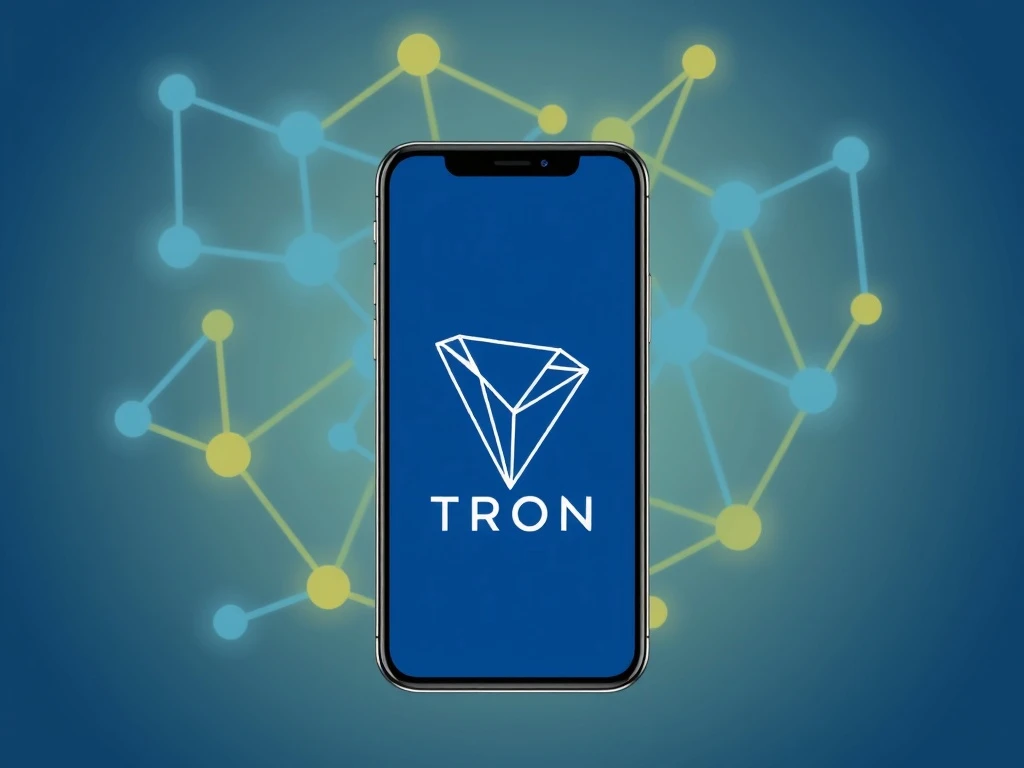
In a significant move for blockchain interoperability, MetaMask has officially integrated support for the Tron network into its popular mobile application and browser extension. This development, first reported by The Block, fundamentally expands the utility of one of the world’s most widely used non-custodial wallets. Consequently, millions of users can now manage Tron-based assets like TRX and interact with the Tron decentralized application ecosystem directly from their existing MetaMask interface. This integration fulfills a partnership announcement made between MetaMask’s parent company, ConsenSys, and the Tron DAO in August of the previous year.
MetaMask Tron Support: Technical Implementation and User Impact
The technical integration allows the MetaMask wallet to interface seamlessly with the Tron blockchain. Users can now add the Tron network to their wallet manually or through trusted community lists. Following this addition, they can send and receive TRX and other TRC-standard tokens. Furthermore, the integration enables direct interaction with Tron-based decentralized applications, including those in decentralized finance and gaming. This move significantly reduces friction for users who previously needed separate wallets for Ethereum Virtual Machine and Tron-based activities. The development team at ConsenSys executed the integration by incorporating Tron’s unique account model and transaction signing process into MetaMask’s architecture.
Also read: Bitcoin Capital Rotation Triggers Critical Signal, Points to $41,400 Price Floor
Background and Strategic Partnership Timeline
The path to this integration began with a formal partnership announcement in August. ConsenSys, the software development company behind MetaMask, and the Tron DAO revealed their collaboration to bring native Tron support to the wallet. This partnership followed a period of growing user demand for multi-chain wallet solutions. The Tron network, known for its high throughput and low transaction fees, has cultivated a substantial ecosystem of dApps and users. Historically, accessing this ecosystem required dedicated Tron wallets like TronLink. MetaMask’s expansion therefore bridges a major interoperability gap in the Web3 environment. The successful rollout on both mobile and extension platforms demonstrates a completed development cycle from announcement to full deployment.
Analyzing the Broader Web3 Wallet Environment
MetaMask’s addition of Tron support is not an isolated event. Instead, it reflects a broader industry trend toward wallet aggregation and chain-agnostic design. Leading non-custodial wallets are increasingly transforming into multi-chain hubs. This evolution responds directly to the fragmented nature of the blockchain ecosystem, where different networks host unique applications and assets. For the average user, managing multiple wallets and seed phrases presents a significant security and usability hurdle. By consolidating access, MetaMask enhances user experience and security. The table below illustrates the expanding network support of major non-custodial wallets as of early 2025:
| Wallet | Primary Network | Key Supported Networks | Notable Feature |
|---|---|---|---|
| MetaMask | Ethereum | EVM chains, now including Tron | Browser extension & mobile app |
| Phantom | Solana | Solana, Ethereum, Polygon | NFT-focused interface |
| Trust Wallet | Multi-chain | Over 70 blockchains | Built-in DEX aggregation |
| Coinbase Wallet | Multi-chain | EVM chains, Solana, Bitcoin | Connection to Coinbase exchange |
This competitive environment pressures wallet providers to continuously expand functionality. MetaMask’s integration strategically incorporates a network with a large, active user base. Tron consistently reports high daily transaction volumes, often surpassing those of Ethereum. Capturing a segment of this activity is a clear business objective. Moreover, the integration is technically noteworthy because Tron does not use the Ethereum Virtual Machine natively. The engineering work required to adapt MetaMask’s EVM-centric system to Tron’s different protocol highlights ConsenSys’s technical expertise.
Implications for Developers and the Tron Ecosystem
The integration carries profound implications for decentralized application developers on the Tron network. Suddenly, their potential user base includes the entire MetaMask community, which boasts over 30 million monthly active users. Developers can now design their dApps with the assumption that users may access them via a familiar MetaMask interface. This could accelerate development and adoption on Tron. However, developers must also ensure their applications are compatible with MetaMask’s injection provider API. The Tron DAO will likely provide updated documentation and tools to make possible this transition. From an ecosystem perspective, increased accessibility could drive more liquidity and activity into Tron-based DeFi protocols, marketplaces, and gaming platforms.
Security Considerations and User Guidance
With new functionality comes a renewed need for security awareness. Users adding the Tron network to MetaMask must follow best practices to protect their assets. They should only add network details from official MetaMask or Tron DAO sources to avoid phishing scams. The integration does not compromise MetaMask’s core security model; private keys remain stored locally on the user’s device. Nonetheless, interacting with new dApps on any network requires caution. Users are advised to:
- Verify contract addresses independently before approving transactions.
- Start with small test transactions when using new dApps or protocols.
- Review transaction details carefully, as Tron uses energy and bandwidth models for fees, not just gas.
- Keep software updated to the latest version of MetaMask for security patches.
ConsenSys has integrated these network-specific fee mechanics into the wallet’s confirmation screens. This provides clear information before users sign transactions. The company’s approach maintains its commitment to a self-custody model while expanding network options.
Expert Analysis on Market and Adoption Trends
Industry analysts view this integration as a logical step in the maturation of Web3 infrastructure. Sarah Chen, a blockchain analyst at Digital Asset Research, noted in a recent report, ‘Wallet interoperability is becoming a critical metric for network success. MetaMask’s support serves as a major onboarding ramp for Tron, potentially increasing its decentralized application traffic and token utility.’ Data from DappRadar indicates that cross-chain wallet integrations often lead to a 15-30% increase in unique active wallets on the integrated network within the first quarter. The move also pressures other large, single-chain ecosystems to seek similar integrations with dominant wallet providers. The trend underscores a shift from maximalist narratives to a more interconnected, multi-chain future where user choice and accessibility are paramount.
Conclusion
The integration of Tron support into MetaMask marks a key advancement for user experience and blockchain interoperability. This strategic expansion allows a vast user base to seamlessly access the Tron network’s assets and applications. It reflects the evolving demand for consolidated, multi-chain wallet solutions in the Web3 space. The successful technical implementation following the announced partnership demonstrates effective execution from both ConsenSys and the Tron DAO. Ultimately, this development lowers barriers to entry, fosters greater ecosystem connectivity, and underscores the ongoing trend of infrastructure aggregation. As the digital asset arena grows, such integrations will likely become standard, driving further innovation and adoption across the entire sector.
FAQs
Q1: How do I add the Tron network to my existing MetaMask wallet?
You can add it manually by entering the Tron network’s RPC details (Mainnet details are widely published by the Tron DAO) into the network settings within MetaMask. Alternatively, many community-maintained chain lists will offer a one-click addition option, but always verify the source’s authenticity.
Q2: Can I now store TRX and TRC-20 tokens in the same MetaMask wallet as my ETH and ERC-20 tokens?
Yes. The integration allows a single MetaMask wallet address to hold and manage assets from both the Ethereum and Tron networks simultaneously. Your public address will be the same, but the networks are separate and must be selected within the wallet interface.
Q3: Does this integration mean Tron is now an Ethereum Virtual Machine chain?
No. Tron has its own distinct architecture and consensus mechanism. The integration required MetaMask to adapt its interface to communicate with Tron’s different protocol, which is a significant technical achievement but does not change Tron’s underlying technology.
Q4: Are transaction fees on Tron handled the same way as Ethereum gas fees in MetaMask?
Not exactly. Tron uses a system of ‘Energy’ and ‘Bandwidth’ for resource management, which differs from Ethereum’s gas model. MetaMask’s updated interface now correctly displays and calculates these Tron-specific resource requirements when you confirm a transaction.
Q5: Is my MetaMask seed phrase now used for both my Ethereum and Tron assets?
Yes. Your existing MetaMask seed phrase (or private key) derives the addresses used on both networks. This is a core feature of the integration, allowing unified control. It also means securing your seed phrase is critically important for all assets across all supported networks.

This article was produced with AI assistance and reviewed by our editorial team for accuracy and quality.