JustLend DAO Executes Monumental $21M JST Buyback, Bolstering DeFi Confidence
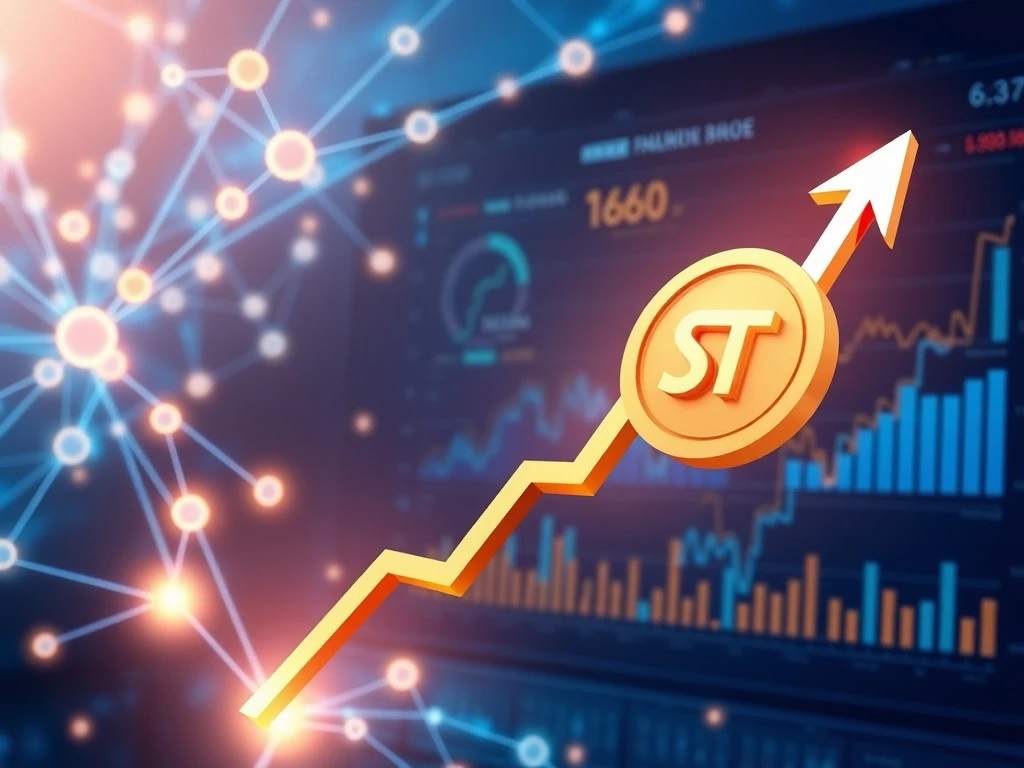
In a decisive move underscoring its financial strategy, the JustLend DAO decentralized autonomous organization has completed a substantial buyback of 525 million JST tokens, a transaction valued at approximately $21 million. This significant event, confirmed by the protocol’s governance mechanism, represents a major moment for one of the largest lending markets on the TRON blockchain. Consequently, market analysts and DeFi participants are closely examining the implications for tokenomics and ecosystem health. The action directly signals the DAO’s commitment to its native asset’s long-term value proposition.
Analyzing the JustLend DAO JST Buyback Mechanics
The JustLend DAO governance community formally authorized the capital allocation for this strategic initiative. The DAO executed the buyback using a portion of its treasury reserves, which are primarily funded by protocol revenue. This revenue is generated from loan interest and platform fees within the JustLend ecosystem. The purchased JST tokens were permanently removed from circulating supply, a process commonly known as burning or sending to a verifiable dead address.
This mechanism contrasts with a simple treasury acquisition where tokens are held for future use. By reducing the available supply, the DAO applies fundamental economic pressure, assuming steady or growing demand. The transaction was conducted transparently on-chain, allowing any user to verify the movement of funds and the final destination of the tokens. This level of transparency is a cornerstone of credible decentralized finance operations.
The Strategic Rationale Behind Major DeFi Buybacks
Token buybacks have become an established tool for crypto-native projects to manage their economic models. For a lending protocol like JustLend DAO, several strategic rationales typically drive such a decision. Primarily, it demonstrates a direct alignment between the protocol’s success and the value of its governance token. When the protocol earns more fees, it can allocate more capital to support the token.
Also read: Bitcoin Treasury Companies Face New Pressure as US-Iran Tensions Shift
Furthermore, a buyback can counteract the sell-side pressure from token emissions used to incentivize liquidity providers and borrowers. It also serves as a powerful signal of internal confidence. By choosing to burn tokens instead of hoarding cash, the DAO communicates a bullish long-term stance on JST to its community and the wider market. This action often follows a period of strong protocol performance and sustainable revenue generation.
Contextualizing the Move Within the Broader TRON Ecosystem
JustLend’s position as the flagship lending protocol on the TRON network adds another layer of significance to this buyback. TRON’s ecosystem, led by its founder Justin Sun, has aggressively pursued growth in Total Value Locked (TVL) and user adoption. JustLend is a critical infrastructure component, providing essential utilize and yield opportunities for users of TRON-based assets like TRX, USDT, and USDD.
A strong, valuable JST token enhances the security and governance of the JustLend protocol. This stability, in turn, benefits the entire TRON DeFi arena by providing a reliable money market. The $21 million buyback is one of the largest single tokenomic actions undertaken by a TRON-based DAO, setting a precedent for treasury management within the network. It reflects a maturation phase where leading protocols shift focus from pure growth to sustainable value accrual.
Immediate Market Impact and Historical Comparisons
Following the announcement, the JST token experienced notable trading volume increases. Market data from major exchanges showed a positive price reaction, though long-term effects depend on broader market conditions and continued protocol performance. Historically, similar buyback events in other DeFi sectors, such as those executed by projects like Maker (MKR) or Synthetix (SNX), have shown mixed short-term results but are generally viewed positively for long-term token health.
The table below compares recent notable DeFi token buybacks:
| Protocol | Token | Approx. Value | Year | Primary Reason |
|---|---|---|---|---|
| JustLend DAO | JST | $21 Million | 2025 | Treasury allocation, supply reduction |
| MakerDAO | MKR | $7 Million | 2023 | Surplus buffer management |
| Aave | AAVE | Varies (Ongoing) | 2022-2024 | Ecosystem grant funding |
Key differentiators for the JustLend DAO action include its sheer scale relative to the protocol’s size and its occurrence during a period of renewed institutional interest in layer-1 blockchain assets. The move also highlights a trend where DAOs are becoming more sophisticated in financial management, adopting strategies from traditional corporate finance but executing them in a decentralized, transparent manner.
Future Implications for JustLend and JST Holders
The completion of this buyback initiates a new chapter for JustLend DAO governance. Several future implications are now under consideration by stakeholders and analysts. First, the reduced token supply could potentially increase the voting power concentration among remaining holders, affecting future governance proposals. Second, the DAO must maintain its revenue streams to justify the capital expenditure and consider if further buybacks form part of a recurring strategy.
For JST token holders, the action provides a clearer value accrual mechanism. The token’s worth is now more explicitly tied to the protocol’s ability to generate fees. This creates a more direct feedback loop between user activity on JustLend and the token’s market valuation. Holders will likely monitor key performance indicators (KPIs) more closely, including:
- Protocol Revenue: The primary source of funds for future buybacks or dividends.
- Total Value Locked (TVL): A core metric of ecosystem health and usage.
- Governance Participation: Voting rates on proposals signal community engagement.
Ultimately, the buyback sets a benchmark for the DAO’s own performance, creating expectations for continued operational excellence and prudent financial stewardship.
Conclusion
The JustLend DAO JST buyback represents a landmark event in the evolution of decentralized finance on the TRON network. By strategically deploying $21 million to reduce its native token’s supply, the DAO has demonstrated a mature approach to value creation and treasury management. This action strengthens the intrinsic link between protocol utility and token value, providing a tangible model for other DeFi projects. While market conditions will always influence short-term price action, the structural shift towards sustainable tokenomics is a positive development for the entire JustLend ecosystem. The success of this initiative will be measured by the protocol’s ability to sustain growth and continue delivering value to its users and JST stakeholders.
FAQs
Q1: What is a token buyback in cryptocurrency?
A token buyback occurs when a project uses its treasury funds to purchase its own tokens from the open market. Often, these tokens are then permanently removed from circulation (‘burned’), reducing the total supply and potentially increasing the scarcity and value of remaining tokens.
Q2: Where did JustLend DAO get the $21 million for the JST buyback?
The funds originated from the JustLend DAO treasury, which is funded by protocol revenue. This revenue is generated from interest rate spreads on loans and various platform fees paid by users of the JustLend lending and borrowing services.
Q3: How does a buyback benefit JST token holders?
A buyback can benefit holders by reducing the selling pressure on the token and signaling strong financial health and confidence from the governing DAO. By lowering the circulating supply, it can create upward price pressure if demand remains constant or increases, potentially boosting the value of each holder’s stake.
Q4: Is the bought-back JST token supply permanently gone?
Based on standard practices for such operations and the goal of supply reduction, it is highly likely the 525 million JST tokens were sent to a burn address, making them permanently inaccessible and removing them from the circulating supply forever. This should be verifiable via on-chain transaction explorers.
Q5: Could JustLend DAO execute another JST buyback in the future?
Yes, future buybacks are possible. They would typically require a new governance proposal and vote by JST token holders. The decision would depend on the continued financial performance of the protocol, the state of the treasury, and the strategic priorities set by the DAO community at that time.

This article was produced with AI assistance and reviewed by our editorial team for accuracy and quality.