Iran’s Cryptocurrency Market Soars to $7.8 Billion as Citizens Seek Vital Refuge from Turmoil
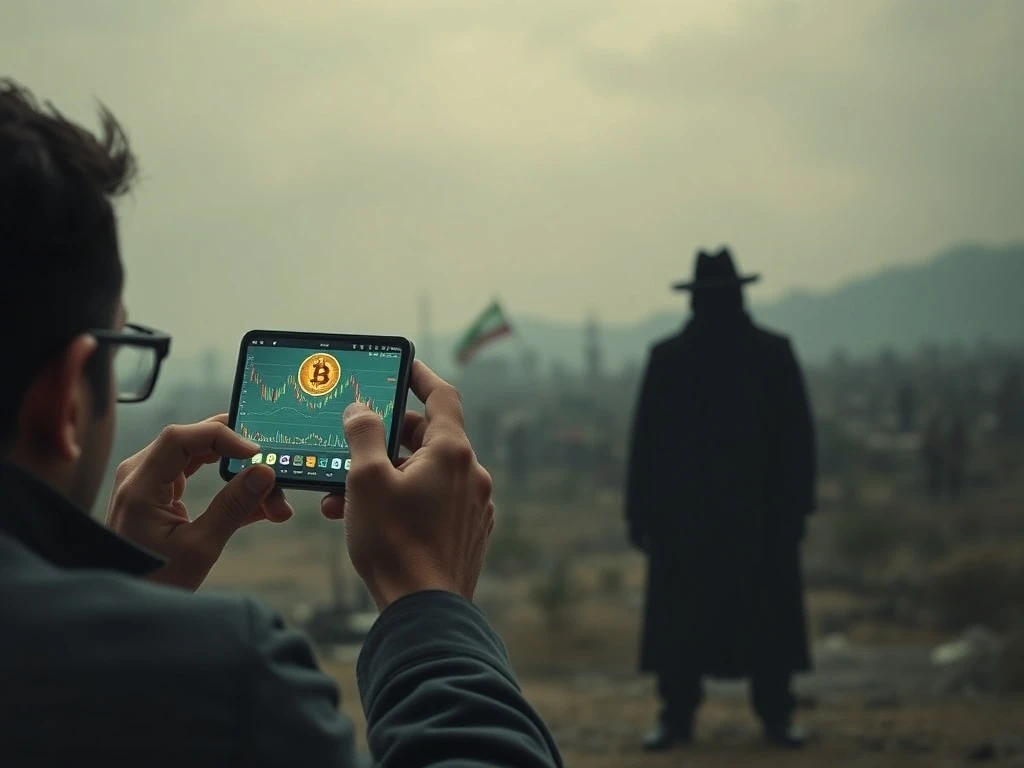
In a striking demonstration of digital finance’s geopolitical role, Iran’s cryptocurrency economy surged to an estimated $7.8 billion valuation last year, a period marked by widespread civil unrest and severe economic pressure. This substantial figure, reported by blockchain analytics firm Chainalysis, underscores a critical pivot within the nation as citizens and state actors alike turned to decentralized assets for fundamentally different, yet equally urgent, purposes. The data reveals a profound narrative of financial adaptation, where Bitcoin (BTC) emerged not merely as an investment but as a vital tool for preserving wealth and autonomy amidst internet blackouts, currency devaluation, and political instability.
Iran’s Cryptocurrency Market Becomes a $7.8 Billion Lifeline
The Chainalysis report provides a detailed quantitative snapshot of Iran’s crypto activity. The $7.8 billion valuation reflects the total volume of cryptocurrency transactions flowing through the country. Importantly, this activity spiked notably during the fourth quarter, coinciding with large-scale anti-government protests that began in September. Following these events and subsequent government-imposed internet shutdowns, on-chain data shows a significant surge in Bitcoin withdrawals from centralized exchanges. Analysts interpret this movement as a clear behavioral shift: users were moving their assets off platforms and into private wallets for safekeeping.
This trend highlights a core function of cryptocurrency in restrictive environments. For many Iranians, facing a rapidly devaluing national rial and strict capital controls, Bitcoin represented a censorship-resistant store of value. Unlike bank accounts, which authorities could freeze, or physical assets, which could be seized, a self-custodied Bitcoin wallet provided a degree of financial sovereignty. Consequently, the crypto market’s growth is intrinsically linked to the deterioration of traditional economic safeguards.
- Safe-Haven Asset: BTC was primarily used to protect savings from hyperinflation and potential asset seizures.
- Remittance Tool: Stablecoins like Tether (USDT) facilitated cross-border payments and daily commerce, bypassing the global banking system.
- Network Resilience: The Bitcoin network continued operating during internet blackouts, allowing transactions via satellite or mesh networks.
Contrasting Uses: Citizen Refuge Versus State Activity
A central finding from the study presents a stark dichotomy in cryptocurrency usage. While the public leveraged crypto for personal financial security, a substantial portion of the inflows served state-aligned interests. The report notes that blockchain addresses believed to be associated with the Islamic Revolutionary Guard Corps (IRGC) accounted for over 50% of all cryptocurrency entering Iran in Q4. This suggests a parallel, institutional adoption of digital assets, likely for circumventing international economic sanctions and financing.
Also read: Bitcoin Treasury Companies Face New Pressure as US-Iran Tensions Shift
This dual-use reality frames Iran’s crypto space as a complex battleground. On one front, it is a tool for individual empowerment and crisis response. On another, it is an instrument for state-level economic strategy. The coexistence of these flows within the same $7.8 billion market valuation reveals the neutral, yet potent, nature of blockchain technology. Its utility is defined entirely by the actor wielding it.
Expert Analysis on Economic Pressure and Adaptation
Financial analysts specializing in emerging markets and cryptocurrency point to Iran as a leading case study in forced monetary innovation. “When traditional systems fail or become oppressive, people innovate,” explains a researcher from the Cato Institute’s Center for Monetary and Financial Alternatives. “The data from Iran isn’t about speculative trading; it’s about fundamental financial utility. The surge in BTC withdrawals post-protests is a textbook example of treating crypto as digital gold—a portable, unforgeable asset held outside the traditional banking perimeter.”
Furthermore, the reliance on stablecoins for remittances addresses a critical pain point. With sanctions limiting access to global payment rails like SWIFT, millions of Iranians depend on money sent from abroad. Cryptocurrencies, particularly dollar-pegged stablecoins, offer a faster and cheaper alternative to informal hawala networks. This practical use case for daily survival fuels sustained market volume, irrespective of Bitcoin’s price volatility.
The Geopolitical and Regulatory Context of Crypto in Iran
Iran’s relationship with cryptocurrency is uniquely shaped by its geopolitical standing. The country has a semi-formalized crypto mining industry, licensed by the government, which uses subsidized energy to generate Bitcoin—some of which is reportedly used for importing sanctioned goods. However, public trading and use exist in a grey area, periodically facing restrictions from the Central Bank of Iran aimed at controlling capital flight.
This regulatory tension adds another layer of risk for ordinary users. While the state tolerates or even encourages mining for its own benefit, citizens using crypto to preserve wealth operate in a legally ambiguous space. The $7.8 billion market thus exists despite, not because of, a clear regulatory framework. It is a grassroots response to a perfect storm of inflation, censorship, and isolation from the global financial system. The timeline below outlines key events shaping this ecosystem:
| Period | Event | Impact on Crypto Market |
|---|---|---|
| 2019-2020 | Iran formally recognizes & licenses crypto mining. | Legitimizes industrial-scale mining for state revenue. |
| 2021-2022 | Severe rial devaluation; strengthening of US sanctions. | Drives retail adoption of stablecoins and BTC as hedges. |
| Q3 2022 | Nationwide protests begin following the death of Mahsa Amini. | Creates immediate demand for censorship-resistant transactions. |
| Q4 2022 | Government imposes intermittent internet shutdowns. | Triggers spike in BTC withdrawals to private wallets. |
| 2023 (Report) | Chainalysis publishes annual data. | Reveals $7.8B volume and dominant IRGC-linked inflows. |
Conclusion
The evolution of Iran’s cryptocurrency market into a $7.8 billion force is a powerful testament to the technology’s role in modern geopolitical and economic crises. It functions simultaneously as a lifeline for citizens seeking refuge from a collapsing currency and as a strategic bypass for a sanctioned state. The data from Chainalysis moves beyond mere transaction volume; it tells a story of adaptation, resilience, and the enduring human need for financial agency. As global economic uncertainties persist, Iran’s experience offers critical insights into how decentralized digital assets can reshape financial behavior under extreme pressure, making its cryptocurrency market a vital phenomenon to observe.
FAQs
Q1: Why did Bitcoin withdrawals increase in Iran after protests?
The increase signaled a “flight to safety.” Citizens moved BTC from exchanges, which authorities could potentially pressure, into private wallets they solely controlled. This secured their assets against censorship, seizure, or frozen accounts during internet blackouts and civil unrest.
Q2: What is the difference between how Iranians used Bitcoin versus stablecoins?
Iranians primarily used Bitcoin as a long-term store of value—a digital safe-haven asset to protect wealth from inflation. In contrast, they used stablecoins for practical transactions like cross-border remittances and daily payments, benefiting from their price stability tied to the US dollar.
Q3: What does the report mean by “IRGC-linked addresses” accounting for over 50% of inflows?
Blockchain analysis firms can cluster wallet addresses based on transaction patterns and known entities. The report suggests that wallets associated with the Islamic Revolutionary Guard Corps were responsible for most large-scale cryptocurrency entering Iran, likely to fund imports and circumvent international sanctions.
Q4: Is cryptocurrency legal in Iran?
The legal status is complex and shifting. The government has licensed cryptocurrency mining but has frequently restricted trading for the public to prevent capital flight. This creates a grey market where use is widespread but operates under legal uncertainty and periodic crackdowns.
Q5: How does Iran’s experience compare to other countries under economic sanctions?
Iran presents a mature case study. Similar patterns of crypto adoption for sanctions evasion and wealth preservation are visible in Russia, Venezuela, and Afghanistan. However, Iran’s unique combination of a semi-legal mining industry, severe inflation, and active state usage of crypto makes its market particularly large and analytically significant.

This article was produced with AI assistance and reviewed by our editorial team for accuracy and quality.