Iran’s Central Bank’s $507M Tether Gamble: A Desperate Bid to Salvage the Crumbling Rial
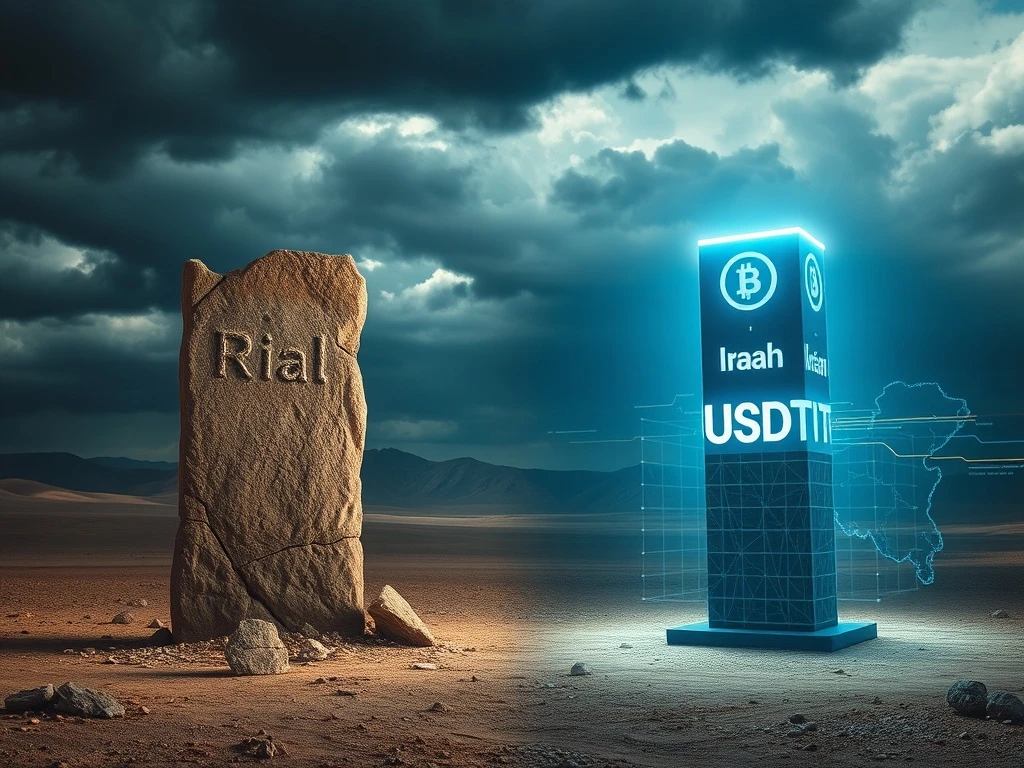
In a stunning revelation that underscores the evolving intersection of national finance and digital assets, blockchain analytics firm Elliptic reported in late June 2025 that the Central Bank of Iran (CBI) had secretly acquired over half a billion dollars in Tether’s USDt stablecoin. This unprecedented move by a sovereign nation’s monetary authority represents a pivotal moment in cryptocurrency adoption, driven by a desperate need to stabilize Iran’s rapidly depreciating rial amidst severe economic volatility and widespread social unrest.
Iran’s Central Bank Embraces Tether Amid Currency Collapse
According to the detailed analysis from Elliptic, the CBI’s accumulation of approximately $507 million in USDt began during a period of extreme economic distress. The value of the Iranian rial had plummeted by 50% in just eight months, reaching a historic low against the US dollar. Consequently, the central bank likely deployed these digital dollar reserves to purchase rials on the open market, specifically through the Iranian crypto exchange Nobitex. This strategy effectively allowed the CBI to conduct traditional open market operations—typically executed with foreign cash reserves—using cryptocurrency assets instead. The shift highlights a critical adaptation by a state financial institution to bypass traditional banking channels hampered by international sanctions.
The Mechanics of a Digital Bailout
Elliptic’s report provides a clear timeline of the CBI’s crypto strategy. Initially, the bank funneled its USDt holdings through Nobitex, one of Iran’s largest digital asset platforms. However, this arrangement faced a major disruption in June 2025 when Nobitex suffered a significant security breach. In response, the CBI demonstrated operational agility by moving its substantial stablecoin treasury. Analysts tracked the funds as they were sent through a cross-chain bridge service, transferring the USDt from the TRON blockchain to the Ethereum network. Following this move, the central bank exchanged portions of the assets and distributed them across various other blockchains and exchanges, a tactic likely aimed at obfuscation and risk diversification.
Sanctions, Stablecoins, and Sovereign Strategy
This development cannot be viewed in isolation. For years, Iran has faced crippling economic sanctions that severely restrict its access to the global US dollar system and conventional international banking networks, known as SWIFT. These sanctions have directly contributed to hyperinflation and the devaluation of the rial. In this context, dollar-pegged stablecoins like Tether’s USDt present a technologically novel, albeit risky, loophole. They offer a digital proxy for the US dollar that can, in theory, be transferred across borders without direct reliance on sanctioned banks. However, this strategy carries inherent dangers, primarily the centralized control Tether Limited maintains over its stablecoin.
Key Risks in Iran’s Crypto Strategy:
- Centralized Control: Tether retains the power to freeze wallets associated with its stablecoin, a power it exercised in June 2025 by blacklisting several wallets linked to the CBI, freezing about $37 million in USDt.
- Regulatory Scrutiny: Using a stablecoin under US company jurisdiction for state operations invites immense regulatory and political attention.
- Market and Security Risk: The volatility and technical vulnerabilities of the crypto ecosystem, as shown by the Nobitex hack, pose direct threats to national reserves.
Parallel Surge in Public Crypto Adoption
While the central bank executed its institutional strategy, the Iranian public was simultaneously turning to cryptocurrency en masse. Data from Chainalysis for 2025 indicates Iran’s total crypto ecosystem surged to over $7.8 billion. Faced with a collapsing currency and inflation, many citizens adopted digital assets like Bitcoin (BTC) as a store of value and a means for preserving wealth—a classic example of cryptocurrency fulfilling its role as a ‘safe haven’ asset in economically unstable regions. This grassroots adoption creates a complex dual-layer crypto economy: one driven by state necessity and another by individual survival.
The Global Precedent and Future Implications
Iran’s actions set a significant precedent for other nations under financial pressure. They demonstrate how sovereign states might leverage decentralized finance (DeFi) tools to achieve traditional monetary policy goals. This event will undoubtedly influence global regulatory discussions, particularly concerning the use of stablecoins in cross-border trade and finance by state actors. Furthermore, it raises profound questions about monetary sovereignty in the digital age and the potential for central bank digital currencies (CBDCs) to counteract such strategies.
| Period | Event | Significance |
|---|---|---|
| Late 2024 – Early 2025 | Rial loses 50% of value against USD. | Economic crisis triggers search for alternative tools. |
| Early – Mid 2025 | CBI accumulates $507M in USDt via Nobitex. | Institutional crypto strategy is deployed. |
| June 2025 | Nobitex security breach; Tether freezes $37M in CBI-linked wallets. | Risks of the strategy become materially evident. |
| June 2025 | CBI bridges funds from TRON to Ethereum, diversifies holdings. | Adaptation and obfuscation in response to setbacks. |
| 2025 | Chainalysis reports $7.8B Iranian crypto ecosystem. | Mass public adoption runs parallel to state activity. |
Conclusion
The revelation that Iran’s central bank turned to Tether’s USDt to prop up the rial is a landmark event at the confluence of geopolitics, traditional finance, and cryptocurrency. It highlights the extreme measures a sanctioned nation will take to achieve monetary stability and reveals the growing, albeit contentious, role of stablecoins in the global financial system. While this digital intervention provided a temporary tool for the CBI, it also exposed the profound vulnerabilities of relying on privately issued, centralized digital assets for national economic security. This case will serve as a critical reference point for economists, regulators, and crypto analysts worldwide as the boundaries between state finance and digital assets continue to blur.
FAQs
Q1: Why would Iran’s central bank use Tether instead of actual US dollars?
A1: Iran faces severe international sanctions that drastically limit its access to the global US dollar banking system (SWIFT) and physical dollar reserves. Tether’s USDt, a digital token pegged to the dollar, can be acquired and transferred on blockchain networks, potentially offering a workaround to these traditional financial barriers.
Q2: How did Elliptic discover the Central Bank of Iran’s Tether holdings?
A2: Elliptic, as a blockchain analytics platform, uses sophisticated software to track the movement of cryptocurrencies across public ledgers. By analyzing transaction patterns, wallet addresses, and flow of funds to and from known entities like the Nobitex exchange, their investigators were able to trace and attribute the large USDt accumulation to the CBI.
Q3: What are the main risks for Iran in using Tether for this purpose?
A3: The primary risks include: 1) Centralized Freeze Risk: Tether the company can freeze wallet addresses, which it did to $37 million of the CBI’s funds. 2) Regulatory Risk: Increased scrutiny from US regulators. 3) Counterparty Risk: Reliance on a private company’s stability. 4) Technical Risk: Exposure to exchange hacks and smart contract vulnerabilities.
Q4: How does this relate to everyday Iranians using cryptocurrency?
A4: This is a parallel trend. While the state used crypto for macro-economic stability, Iranian citizens have increasingly turned to assets like Bitcoin to protect their savings from hyperinflation and a collapsing rial. Chainalysis data shows a multi-billion dollar crypto economy in Iran, driven by individuals seeking a financial safe haven.
Q5: Could other countries facing sanctions adopt a similar strategy?
A5: Iran’s actions provide a clear blueprint, making it a distinct possibility. Other nations under financial pressure may explore using stablecoins or other cryptocurrencies for trade settlements or to support national currencies. However, Iran’s experience also showcases the significant risks, likely prompting any future adopters to proceed with extreme caution or develop their own sovereign digital currency alternatives.