Hang Seng Gold ETF Launches Revolutionary Tokenization Option for Modern Investors
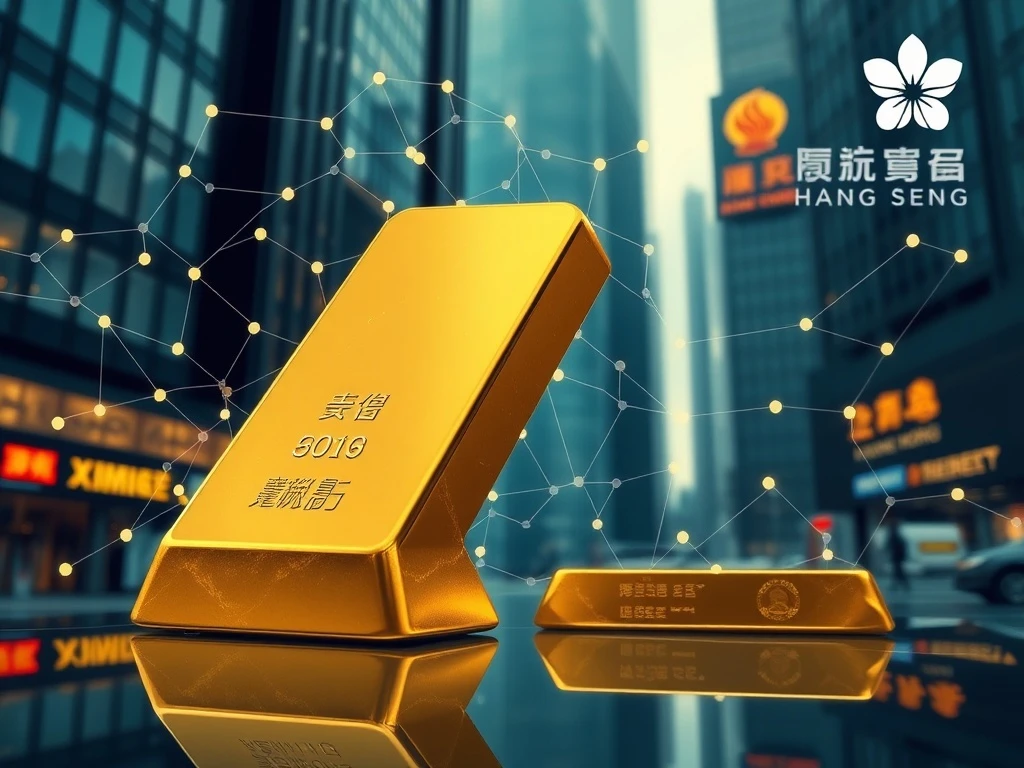
Hong Kong, April 2025 – Hang Seng Investment Management has launched a pioneering physically backed gold exchange-traded fund (ETF) that includes a forward-looking tokenization option, marking a significant convergence of traditional precious metals investment with blockchain technology. This development represents a strategic move within Hong Kong’s evolving financial field, where institutions increasingly explore digital asset integration. The Hang Seng Gold ETF began trading on the Hong Kong Stock Exchange under stock code 3170, providing investors with direct exposure to LBMA-standard gold while laying groundwork for future blockchain-based access.
Hang Seng Gold ETF Structure and Market Position
The newly launched ETF operates as a passive investment vehicle tracking the London Bullion Market Association Gold Price AM benchmark. Significantly, the fund holds physical gold bars meeting LBMA good delivery standards, with HSBC serving as the custodian for assets stored in Hong Kong vaults. This physical backing provides tangible asset security that distinguishes it from synthetic or futures-based gold products. The fund’s structure permits both in-cash and in-gold creation and redemption mechanisms for authorized participants, while retail investors trade units on secondary markets like conventional shares.
Also read: Zero-Knowledge Proofs Guide: Hoskinson's Free 337-Page GitHub Release Empowers Developers
Key specifications include a Hong Kong dollar trading denomination, a board lot size of 50 units, and an estimated ongoing charge of 0.40% annually. The fund projects an annual tracking difference of minus 0.50% and explicitly states no dividend distribution intentions. Consequently, investor returns depend entirely on gold price movements. This transparent structure aligns with growing investor demand for straightforward, cost-effective commodity exposure amid ongoing economic uncertainty.
Gold’s Resurgence as a Safe-Haven Asset
This launch coincides with remarkable gold market performance. Spot gold recently approached $5,530 per ounce, representing a 4% single-day surge that reflects sustained investor appetite for safe-haven assets. Multiple factors drive this demand, including geopolitical tensions, inflationary pressures, and currency volatility. Traditional financial institutions now recognize gold’s renewed relevance within diversified portfolios. Hang Seng’s product directly addresses this demand through a regulated, exchange-traded vehicle that simplifies gold access for Hong Kong and international investors.
Also read: Crypto Liquidations Surge Past $450M as Options Expiry and Oil Shock Fuel Market Panic
Tokenization Strategy and Blockchain Integration
Beyond the conventional ETF, Hang Seng outlines ambitious plans for tokenized unlisted units of the same fund. These digital tokens would represent ownership interests recorded on public blockchain infrastructure, though they remain subject to regulatory approval and won’t feature secondary market trading initially. HSBC will act as tokenization agent, issuing digital tokens corresponding to fund units or fractional units. Subscription and redemption transactions will record on blockchain ledgers, with Ethereum serving as the primary platform initially.
The prospectus indicates potential adoption of other public blockchains demonstrating comparable security and resiliency. This tokenization approach enables several advantages, including enhanced transparency, reduced administrative overhead, and potential fractional ownership opportunities. However, the initial phase restricts token transactions to approved distributors without secondary market trading, reflecting cautious regulatory compliance. This measured implementation demonstrates how traditional financial institutions approach blockchain integration with appropriate safeguards.
Institutional Tokenization Momentum Accelerates
Hang Seng’s announcement aligns with broader institutional tokenization trends. Recently, the New York Stock Exchange and Intercontinental Exchange revealed development of a blockchain-based platform for tokenized stocks and ETFs targeting 24/7 trading with near-instant settlement. Similarly, Sygnum’s recent analysis predicts tokenization reaching mainstream adoption by 2026, with major institutions potentially tokenizing up to 10% of new bond issuance at launch. These developments indicate accelerating convergence between traditional finance and distributed ledger technology across global markets.
Hong Kong’s Evolving Financial Ecosystem
Hong Kong continues strengthening its position as a digital asset hub through progressive regulatory frameworks and institutional innovation. The Hang Seng Gold ETF launch demonstrates how established financial players incorporate blockchain elements within regulated product structures. This approach balances innovation with investor protection, potentially serving as a model for other jurisdictions exploring asset tokenization. Hong Kong’s unique position bridging Eastern and Western financial markets provides an ideal testing ground for hybrid traditional-digital investment products.
Market observers note increasing competition among Asian financial centers to establish tokenization leadership. Singapore, Tokyo, and Seoul similarly develop digital asset frameworks, creating regional innovation dynamics. Hong Kong’s established gold trading infrastructure, combined with growing blockchain expertise, positions it favorably within this competition. The Hang Seng product represents both a specific investment vehicle and a strategic move within broader financial center positioning.
Comparative Analysis: Tokenized vs. Traditional Gold Products
| Feature | Traditional Gold ETF | Tokenized Gold Units |
|---|---|---|
| Settlement Time | T+2 standard settlement | Near-instant on blockchain |
| Accessibility | Market hours only | Potential 24/7 subscription |
| Transparency | Periodic reporting | Real-time blockchain verification |
| Fractional Ownership | Limited to share units | Potentially unlimited fractions |
| Custody | Centralized vaults | Hybrid physical/on-chain |
Regulatory Considerations and Implementation Timeline
The tokenization component remains subject to regulatory approvals, reflecting careful navigation of evolving digital asset regulations. Hong Kong authorities recently clarified frameworks for virtual asset service providers and tokenized securities, creating clearer pathways for institutional products. However, specific approvals for blockchain-recorded fund units require additional scrutiny regarding investor protection, anti-money laundering compliance, and technical security standards.
Industry experts anticipate gradual implementation, beginning with limited pilot programs before broader availability. This phased approach allows regulators and institutions to address potential challenges including:
- Cross-border compliance: Managing differing international regulations
- Technical integration: Ensuring reliable blockchain infrastructure
- Investor education: Communicating tokenization benefits and risks
- Market stability: Preventing fragmentation between traditional and tokenized units
Investor Implications and Market Impact
This development offers multiple implications for different investor categories. Institutional investors gain new avenues for gold exposure with potential operational efficiencies through tokenization. Retail investors access physically backed gold through familiar exchange-traded mechanisms while anticipating future blockchain-based options. The product also appeals to technology-forward investors seeking traditional asset exposure through modern infrastructure.
Market impact extends beyond immediate gold investment. Successful implementation could accelerate tokenization adoption for other real-world assets including:
- Real estate investment trusts
- Commodity baskets
- Private equity funds
- Infrastructure projects
This potential expansion demonstrates how gold tokenization could serve as a proving ground for broader asset digitization. Consequently, financial observers closely monitor adoption rates, regulatory responses, and technical performance as indicators for future developments.
Conclusion
The Hang Seng Gold ETF with tokenization option represents a significant milestone in financial innovation, bridging physical commodity investment with blockchain technology. This hybrid approach demonstrates how traditional institutions can incorporate digital asset features within regulated frameworks. As gold maintains its safe-haven appeal amid economic uncertainty, this product provides investors with multiple access points to precious metal exposure. The planned tokenization component, while pending regulatory approval, signals accelerating institutional adoption of blockchain infrastructure for real-world assets. Hong Kong’s financial ecosystem continues evolving through such innovations, potentially influencing global trends in asset digitization and investment product development.
FAQs
Q1: What makes the Hang Seng Gold ETF different from other gold investment products?
The ETF combines physical gold backing with a planned tokenization option, offering both traditional exchange trading and future blockchain-based access within a single product structure approved for Hong Kong markets.
Q2: When will the tokenized gold units become available to investors?
Tokenized units remain subject to regulatory approvals with no confirmed timeline. Initially, they will only be available through approved distributors without secondary market trading.
Q3: How does the tokenization process work for this gold ETF?
HSBC serves as tokenization agent, issuing digital tokens on blockchain (initially Ethereum) that represent ownership of fund units. Each token corresponds to a unit or fraction, with transactions recorded on distributed ledger technology.
Q4: What are the main advantages of tokenized gold compared to traditional ETF shares?
Potential advantages include enhanced transparency through blockchain recording, possible fractional ownership flexibility, reduced administrative costs, and eventual 24/7 accessibility outside market hours.
Q5: How does this development fit within Hong Kong’s broader financial strategy?
This product aligns with Hong Kong’s initiatives to establish itself as a digital asset hub, demonstrating how traditional financial institutions can innovate with blockchain technology within regulated frameworks to attract modern investors.

This article was produced with AI assistance and reviewed by our editorial team for accuracy and quality.