Gold Price Shatters Records with Stunning Surge Past $4,800 Milestone
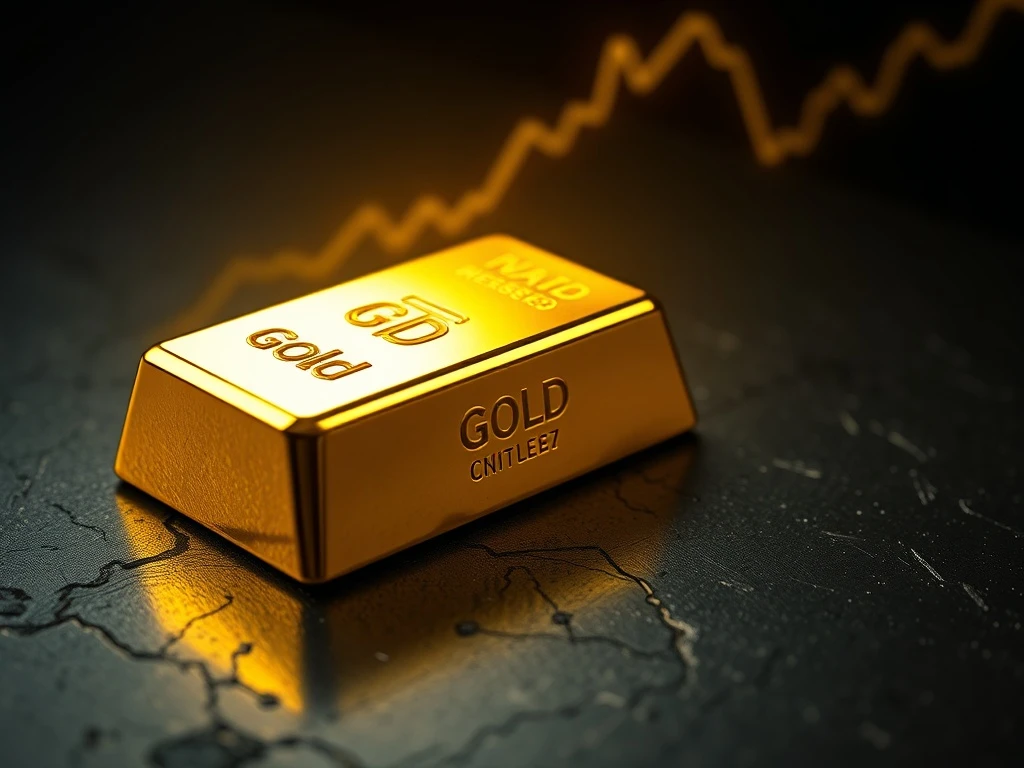
In a landmark move for global markets, the gold price has achieved a historic breakthrough, shattering previous records to trade above $4,800 per ounce for the first time. This stunning surge, recorded on April 10, 2025, represents a powerful rally of approximately $500 since the year began, firmly establishing the precious metal’s role as a premier safe-haven asset amidst ongoing economic crosscurrents.
Gold Price Reaches Historic Territory
Spot gold definitively breached the $4,800 barrier, setting a new all-time high. Market data confirms the metal traded at $4,799.25, marking a 0.77% gain from the prior session. Consequently, this rally extends a multi-week bullish trend that has captivated investors and analysts globally. Moreover, the scale of the year-to-date gain underscores a significant shift in capital allocation. For context, this move far outpaces the average annual performance of the last decade, highlighting exceptional market conditions.
Also read: Bitcoin Capital Rotation Triggers Critical Signal, Points to $41,400 Price Floor
Analyzing the Drivers Behind the Rally
Several interconnected factors are fueling this historic ascent. Primarily, persistent geopolitical tensions continue to drive demand for tangible assets. Simultaneously, market expectations for potential shifts in central bank monetary policy are influencing investor behavior. Furthermore, concerns about global currency debasement and inflation over the medium term are prompting institutional portfolios to increase their strategic allocations to precious metals.
Expert Perspective on Market Dynamics
Financial historians note that gold often performs well during periods of monetary uncertainty. The current environment, characterized by high sovereign debt levels in major economies, mirrors past cycles that preceded strong gold performance. Analysts point to consistent central bank purchasing, particularly from emerging market nations, as a structural support underpinning the market. This demand absorbs supply and reduces price volatility during pullbacks.
Comparative Performance and Market Impact
The rally in gold has notable implications for related assets. Mining equities, represented by indices like the NYSE Arca Gold BUGS Index, have shown correlated strength. Conversely, the U.S. dollar index (DXY) has exhibited an inverse relationship, though this correlation has weakened at times during the recent surge. The following table illustrates key performance metrics:
| Asset | YTD Performance | Key Level |
|---|---|---|
| Spot Gold | ~+11.6% | $4,799.25/oz |
| Silver (Spot) | ~+8.2% | $28.50/oz |
| Gold Miners ETF (GDX) | ~+15.3% | N/A |
Key technical indicators for gold now suggest:
- Momentum remains strongly positive across multiple timeframes.
- Trading volume has increased significantly on up-days, confirming institutional participation.
- Critical support has now risen to the $4,650 zone, a previous resistance level.
The Role of Macroeconomic Fundamentals
Beyond immediate headlines, deeper economic fundamentals provide context. Real interest rates, a traditional driver of gold price movements, remain a focal point for traders. Additionally, global supply chain dynamics for physical gold, including minting and refinery output, have struggled to keep pace with investment and central bank demand. This physical tightness in the market creates a foundation for higher prices, as futures contracts must converge with deliverable metal.
Historical Context and Future Trajectory
Examining past bull markets in gold reveals common phases: accumulation, public participation, and potential mania. Many analysts posit the current cycle is still in a strong public participation phase, driven by strategic rather than speculative flows. Future price action will likely depend on the trajectory of global inflation data, central bank balance sheet policies, and the resolution or escalation of key geopolitical flashpoints.
Conclusion
The breach of the $4,800 level for the gold price marks a definitive moment in financial markets. This record-setting move, driven by a confluence of geopolitical, monetary, and structural demand factors, reinforces gold’s enduring status as a cornerstone of wealth preservation. While volatility is inherent to all markets, the current fundamentals suggest this new price plateau may establish a fresh baseline for valuing the ultimate precious metal in the years ahead.
FAQs
Q1: What is the primary reason gold is hitting all-time highs?
The surge is driven by a combination of factors: strong central bank demand, geopolitical uncertainty, concerns about long-term inflation and currency values, and its traditional role as a safe-haven asset during periods of market stress.
Q2: How does the current gold rally compare to previous bull markets?
While each cycle is unique, the current rally is notable for its strong foundation in official sector (central bank) buying and its occurrence amidst a relatively strong U.S. dollar, breaking from some historical patterns.
Q3: Should investors consider buying gold at these record-high prices?
Investment decisions depend on individual goals and risk tolerance. Many financial advisors suggest gold serves as a portfolio diversifier and hedge, not a short-term trading vehicle. Consulting a qualified financial professional is always recommended.
Q4: What is the difference between ‘spot gold’ and gold futures?
Spot gold refers to the current market price for immediate delivery and settlement. Gold futures are exchange-traded contracts to buy or sell gold at a predetermined price on a future date. The spot price is the underlying benchmark.
Q5: Does a high gold price mean a recession is coming?
Not necessarily. While gold often performs well ahead of and during economic downturns, it can also rise due to factors like inflation or currency movements without an imminent recession. It is one indicator among many in a complex economic sector.

This article was produced with AI assistance and reviewed by our editorial team for accuracy and quality.