Gold Price Shatters Records, Soaring Past $5,400 in Stunning All-Time High
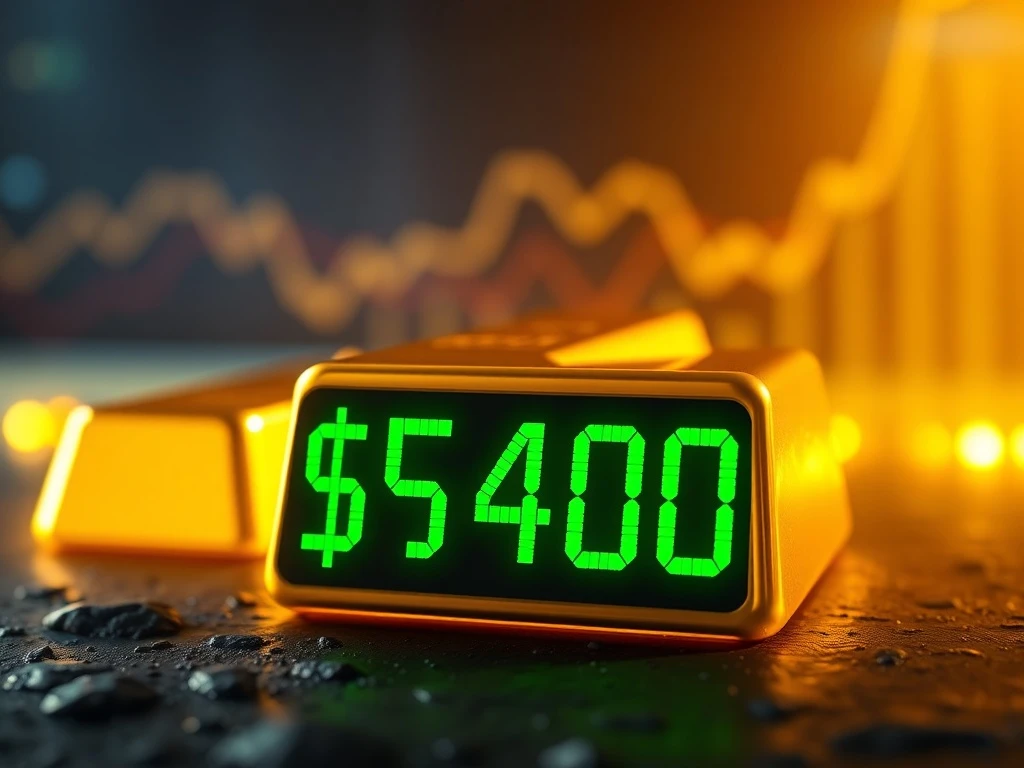
Global financial markets witnessed a historic moment this week as the spot gold price decisively broke through the $5,400 per ounce barrier, establishing a new and remarkable all-time high. This remarkable surge, confirmed by major trading hubs including London, New York, and Shanghai, represents a significant milestone for the precious metal and sends a powerful signal to investors worldwide. Consequently, analysts are now scrutinizing the complex confluence of macroeconomic forces that propelled gold to these uncharted levels.
Gold Price Reaches Unusual Territory
The London Bullion Market Association (LBMA) Gold Price fix settled at $5,412 per ounce on Wednesday, April 9, 2025, cementing the breakthrough. This price action marks a definitive departure from the previous record set in late 2023. Trading volumes spiked significantly across major exchanges, indicating strong institutional participation. Furthermore, the rally has been broad-based, with futures contracts on the COMEX and spot prices in Asia showing strong correlation.
Also read: Bitcoin Strategy Divide: GameStop's 4,710 BTC Hold Contrasts With Nation's Massive Sell-Off
Market data reveals consistent buying pressure throughout the trading session. The move above $5,400 was not a brief spike but a sustained advance. This resilience suggests underlying structural support rather than speculative frenzy. Physical gold holdings in major exchange-traded funds (ETFs), such as SPDR Gold Shares (GLD), also saw notable inflows in the preceding week, signaling preparatory investor positioning.
Analyzing the Drivers Behind the Rally
Several interconnected factors have converged to drive this historic gold price appreciation. Primarily, shifting central bank policies and persistent macroeconomic uncertainties have reignited gold’s traditional role as a safe-haven asset.
Also read: Bitcoin Volatility Dips Below Major Stocks as European Nation Sells Billions in Crypto Reserves
- Central Bank Demand: Official sector purchases have remained a bedrock of support. According to the World Gold Council, central banks added over 1,000 tonnes to reserves in 2024, a trend continuing into 2025. Diversification away from traditional reserve currencies is a key motive.
- Inflation and Real Yields: While headline inflation has moderated in some regions, long-term expectations remain elevated. Real yields—interest rates adjusted for inflation—have stayed in negative territory in several major economies, reducing the opportunity cost of holding non-yielding gold.
- Geopolitical Tensions: Ongoing regional conflicts and trade frictions have sustained a premium for assets perceived as geopolitical hedges. Gold’s historical neutrality and liquidity make it a preferred choice during periods of international stress.
- Currency Dynamics: Fluctuations in the U.S. dollar index (DXY) have provided tailwinds. A period of dollar weakness earlier in the quarter increased gold’s affordability for holders of other currencies, boosting international demand.
Expert Perspective on Market Structure
Dr. Anya Sharma, Head of Commodities Research at Global Markets Insight, provided context. “This isn’t a short-term technical move,” she stated. “We are observing a fundamental repricing of gold based on its dual role as a monetary asset and an inflation hedge. The market structure has changed, with increased allocation from both sovereign wealth funds and pension portfolios seeking long-term stability.” Sharma’s analysis points to deeper, more sustained demand drivers than typical cyclical rallies.
Historical Context and Price Trajectory
To appreciate the magnitude of this move, a historical comparison is essential. The following table outlines key gold price milestones over the past two decades:
| Year | Key Price Level (USD/oz) | Primary Market Catalyst |
|---|---|---|
| 2008 | ~$1,000 | Global Financial Crisis |
| 2011 | ~$1,900 | Eurozone Debt Crisis, QE |
| 2020 | ~$2,070 | COVID-19 Pandemic Stimulus |
| 2023 | ~$2,450 | Inflation Surge, Banking Stress |
| 2025 | >$5,400 | Monetary Diversification, Structural Demand |
The journey from $2,450 to over $5,400 in approximately two years underscores a dramatic acceleration. This trajectory contrasts with the more gradual climbs observed in previous decades. Technological advancements in trading and the globalization of finance have increased market sensitivity and speed.
Implications for Investors and the Global Economy
The record gold price carries significant implications across multiple domains. For retail and institutional investors, it validates strategies focused on tangible asset allocation. However, it also raises questions about portfolio rebalancing and profit-taking thresholds. Mining equities and royalty companies have experienced substantial reratings in tandem with the metal’s rise.
For the broader economy, a sustained high gold price can influence central bank balance sheets and national reserve valuations. It may also impact jewelry demand in key consumer markets like India and China, though investment demand currently appears to be the dominant price-setting factor. Moreover, it serves as a barometer of systemic confidence in traditional fiat currency systems.
The Role of Technical and On-Chain Analysis
Beyond fundamentals, technical analysis played a role in accelerating the breakout. The $5,300-$5,350 zone had acted as a multi-month resistance level. A decisive close above it triggered algorithmic buying and covered short positions, creating a classic bullish breakout pattern. Meanwhile, data from digital gold platforms shows a marked increase in smaller, retail-sized bar and coin purchases in the lead-up to the rally, demonstrating broadening participation.
Conclusion
The gold price achieving a new all-time high above $5,400 per ounce is a landmark event with deep roots in contemporary macroeconomic currents. This breakthrough reflects a powerful combination of sustained central bank buying, strategic investor hedging, and evolving monetary environment perceptions. While market volatility remains a constant, this price level establishes a new baseline for valuing the world’s premier precious metal. Moving forward, market participants will closely monitor macroeconomic data, central bank commentary, and physical demand trends to gauge the sustainability of this historic gold price plateau.
FAQs
Q1: What exactly does “spot gold price” mean?
The spot price is the current market price for immediate delivery and settlement of gold. It serves as the global benchmark price for physical gold transactions and is set by trading activity on major over-the-counter markets.
Q2: How does this price affect everyday consumers?
While direct effects may be limited, a high gold price can increase the cost of jewelry, electronics containing gold, and certain medical/dental components. It also influences the performance of retirement and investment funds that hold gold-related assets.
Q3: Is it too late to invest in gold after this record high?
Investment decisions depend on individual goals and market outlook. Some analysts view breaks to new highs as potentially bullish continuation signals, while others advise caution due to increased volatility. Diversification and consulting a financial advisor are always recommended.
Q4: What are the main risks to the gold price at these levels?
Key risks include a significant and sustained rise in real interest rates, a major strengthening of the U.S. dollar, a sharp reduction in central bank buying, or a return of strong risk appetite diverting funds to equities, which could pressure gold.
Q5: How can an average person track the gold price reliably?
Reputable financial news websites, the websites of major exchanges (like COMEX), and the LBMA provide official benchmark prices. Prices from established bullion dealers and major ETF net asset values (NAVs) also offer reliable tracking.

This article was produced with AI assistance and reviewed by our editorial team for accuracy and quality.