GameStop Bitcoin Sale: CryptoQuant Flags $422 Million BTC Treasury Exit to Coinbase Prime
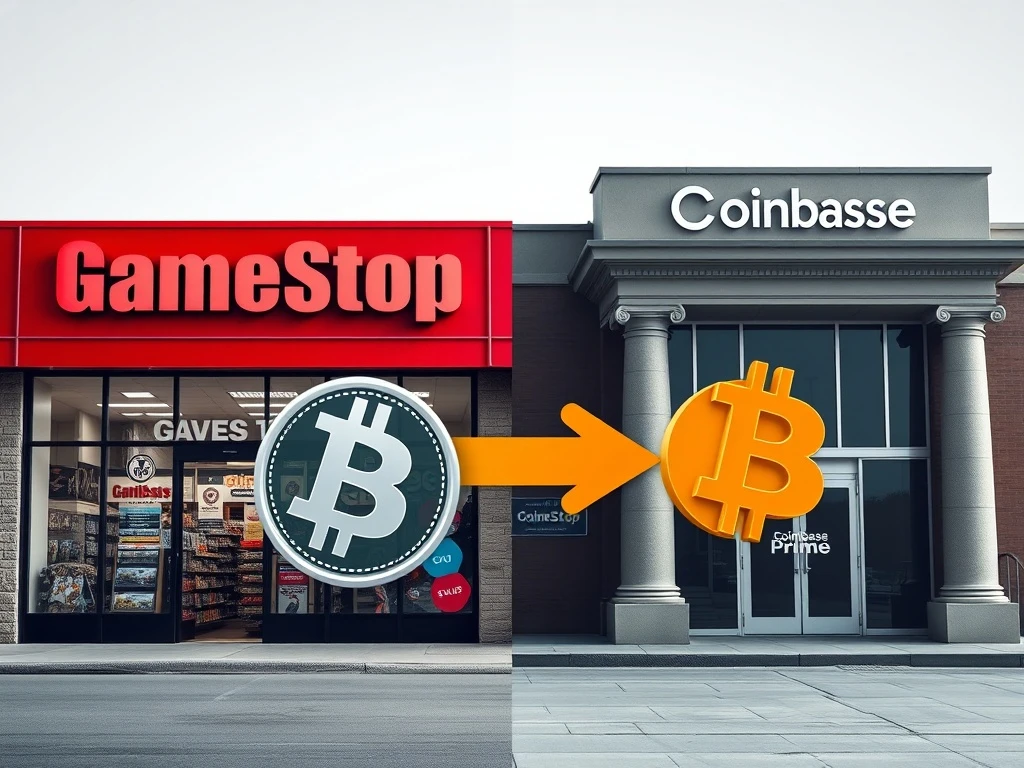
January 26, 2025: Blockchain analytics firm CryptoQuant has identified a significant on-chain movement that suggests video game retailer GameStop may be preparing to liquidate its entire Bitcoin treasury. The company transferred its holdings of 4,710 BTC, valued at over $422 million, to the institutional custody platform Coinbase Prime. This substantial transfer, detected in real-time, has ignited intense speculation within financial and cryptocurrency circles about a major strategic pivot for the meme-stock icon.
CryptoQuant Data Reveals GameStop’s Bitcoin Treasury Movement
On-chain analysis provides a transparent, verifiable record of cryptocurrency transactions. CryptoQuant, a leading provider of such analytics, publicly reported observing GameStop’s treasury wallet moving its entire Bitcoin balance in a single transaction to a deposit address associated with Coinbase Prime. This platform is specifically designed for institutional clients and large-scale transactions, making it a common gateway for corporations seeking to convert digital assets into fiat currency. The data presents a clear financial snapshot.
The transaction details, as corroborated by blockchain explorers, are significant. GameStop originally acquired the 4,710 BTC in May 2025 at an average price of approximately $107,900 per Bitcoin. At the time of the transfer to Coinbase Prime, Bitcoin’s market price hovered around $90,800. This price differential indicates a potential unrealized loss of roughly $76 million should the company proceed with a sale at current levels. The move represents a stark contrast to the company’s previous public stance, which embraced Bitcoin as a core treasury reserve asset following high-profile endorsements from industry figures like MicroStrategy’s Michael Saylor.
Strategic Repositioning or a Quiet Crypto Exit?
GameStop’s foray into cryptocurrency was a notable chapter in its evolution from a brick-and-mortar retailer to a company influenced by digital asset trends. The decision, championed by Chairman Ryan Cohen, mirrored a broader corporate trend in 2024-2025 where public companies added Bitcoin to their balance sheets as a hedge against inflation and a potential store of value. However, the appeal of this strategy has waned for some as cryptocurrency markets have exhibited sustained volatility and regulatory clarity remains a work in progress.
The timing of this Bitcoin transfer is particularly noteworthy. It occurred shortly after Ryan Cohen personally purchased an additional 500,000 shares of GameStop (GME) stock, an investment exceeding $10 million. This share buyback, disclosed in a regulatory filing, positively impacted GME’s stock price. Analysts interpret these concurrent actions as a potential strategic reallocation: redirecting capital from a volatile, non-core crypto asset back into the company’s own equity and, by extension, its fundamental retail and e-commerce operations. This could signal a refocusing on GameStop’s primary business model amid a challenging consumer landscape.
The Institutional Bitcoin Treasury Trend in Review
GameStop’s potential exit offers a moment to assess the corporate Bitcoin treasury trend. Following MicroStrategy’s aggressive and well-publicized accumulation, dozens of other firms allocated portions of their cash reserves to Bitcoin. The stated rationale often included protection against currency debasement and exposure to a new, digital asset class. While some companies remain committed, others have faced scrutiny from shareholders and auditors regarding mark-to-market accounting losses during downturns. GameStop’s move, if confirmed as a sale, would be one of the most high-profile corporate divestments, potentially influencing other firms reconsidering their crypto exposure.
The company has not issued an official statement regarding the transfer, which fuels market speculation. Standard corporate protocol for material financial decisions typically involves a press release or an SEC filing. The absence of such communication leaves observers to deduce intent from the blockchain data alone. Market participants are now monitoring for large sell orders on Coinbase institutional order books or future quarterly earnings reports where the disposition of the asset would need to be disclosed.
Market Implications and Broader Consequences
A sale of this magnitude, approximately $422 million worth of Bitcoin, carries tangible market implications. While the daily trading volume of Bitcoin is in the tens of billions, a single, large sell order can create localized selling pressure, especially if executed without careful liquidity management. The news itself, confirming a major holder’s loss of conviction, can also impact market sentiment negatively. Other companies holding Bitcoin on their balance sheets may see their stock prices face secondary pressure as investors reassess the viability of the treasury strategy.
For GameStop, the financial accounting is straightforward but impactful. Realizing a loss of $76 million would directly affect its quarterly earnings and balance sheet strength. Proponents of the move would argue it removes an unpredictable variable from the company’s finances and frees up capital, even at a loss, for more controllable business investments or stock buybacks. Critics would view it as a costly strategic misstep and a departure from a forward-looking digital asset vision.
Conclusion
The data from CryptoQuant paints a compelling picture of a significant strategic shift at GameStop. The transfer of its entire Bitcoin treasury to Coinbase Prime is a strong leading indicator of an impending sale, marking a potential reversal from its previous crypto-friendly posture. This decision, set against a backdrop of personal share purchases by Ryan Cohen, suggests a recalibration towards core business fundamentals. The move highlights the evolving and often challenging reality of corporate cryptocurrency adoption, where volatility and strategic priorities can lead to rapid changes in direction. The market now awaits official confirmation and watches closely to see if this signals a broader trend of corporate divestment from digital asset treasuries.
FAQs
Q1: What did CryptoQuant report about GameStop?
CryptoQuant’s on-chain analysts reported that GameStop transferred its entire Bitcoin holding of 4,710 BTC from its corporate treasury wallet to an institutional deposit address at Coinbase Prime, strongly suggesting preparation for a sale.
Q2: How much Bitcoin did GameStop transfer, and what is its value?
The transfer involved 4,710 BTC. At the time of the movement, this amount was valued at approximately $422 million, though the company’s acquisition cost was higher, implying a potential loss.
Q3: Why is transferring to Coinbase Prime a signal of a sale?
Coinbase Prime is an exchange platform built for institutional clients to execute large trades and convert crypto to fiat currency efficiently. Moving assets there is a standard step before liquidation, unlike moving them to long-term cold storage.
Q4: What was GameStop’s original strategy with Bitcoin?
In 2025, under Chairman Ryan Cohen’s influence, GameStop adopted a strategy similar to MicroStrategy, allocating a significant portion of its treasury to Bitcoin as a long-term store of value and hedge against traditional financial systems.
Q5: How does this relate to Ryan Cohen’s recent stock purchases?
Just prior to this transfer, Ryan Cohen spent over $10 million buying GameStop shares. The concurrent timing suggests a coordinated strategic shift: deploying capital away from Bitcoin and into the company’s own equity to signal confidence in its core business.