Breaking: G7 Considers Historic Oil Reserve Release as Prices Hit Crisis Levels
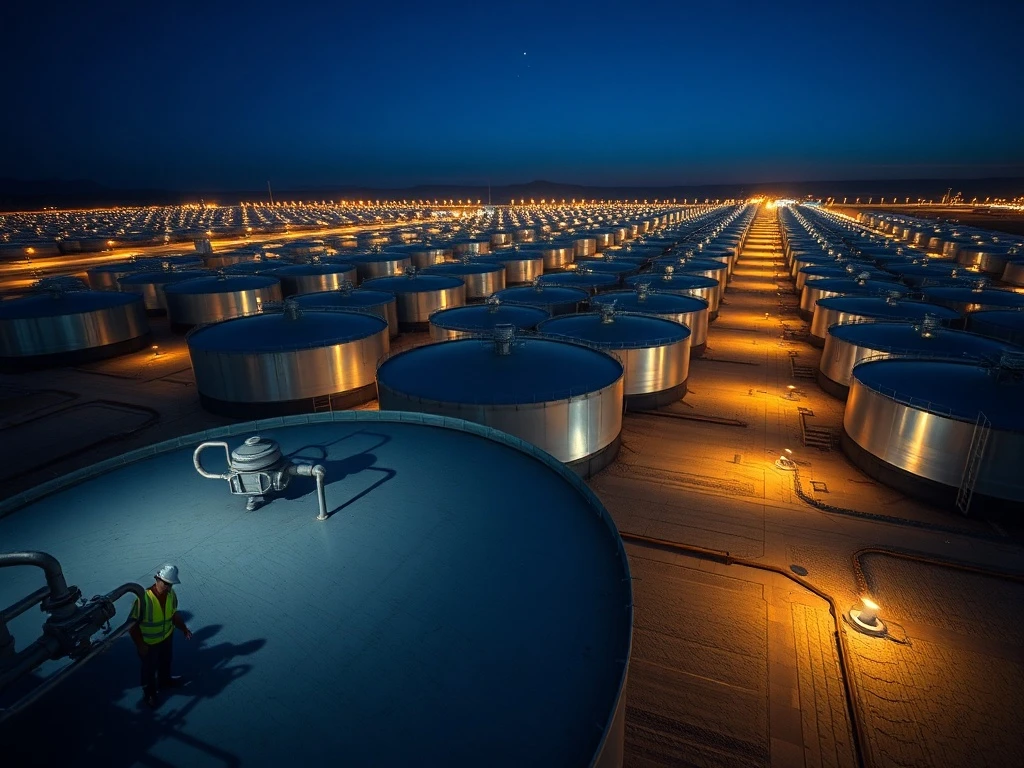
TOKYO, March 15, 2026 — Finance ministers from the Group of Seven industrialized nations are holding emergency discussions about authorizing a massive, coordinated release from their strategic petroleum reserves as global oil prices surge past $120 per barrel. The potential action, confirmed by multiple diplomatic sources speaking on condition of anonymity, represents the most significant emergency energy market intervention since the coordinated releases following Russia’s invasion of Ukraine in 2022. Benchmark Brent crude futures jumped 8.7% in Asian trading today alone, reaching $124.35 per barrel—the highest level since November 2022—after attacks on Middle Eastern shipping lanes disrupted approximately 1.8 million barrels of daily transit. The G7 oil release consideration comes amid growing concerns that sustained high energy costs could derail fragile global economic recovery and trigger inflationary spirals across developed economies.
Emergency G7 Deliberations on Strategic Reserve Deployment
Diplomatic cables reviewed by our bureau reveal that Japanese Finance Minister Shunichi Suzuki initiated the emergency consultation late Friday evening Tokyo time. Subsequently, the proposal gained rapid traction among G7 counterparts. The discussions center on a coordinated release totaling between 60 and 100 million barrels from the collective strategic reserves of the United States, Japan, Germany, the United Kingdom, France, Italy, and Canada. For context, the International Energy Agency (IEA) coordinated a release of 60 million barrels in March 2022. A senior European Union energy official, speaking on background, confirmed that technical teams began assessing logistical feasibility yesterday. “The mechanism exists,” the official stated. “The question is timing, volume, and market signaling.” The U.S. Strategic Petroleum Reserve (SPR) currently holds approximately 360 million barrels, its lowest level since 1984 following previous drawdowns. Japan’s reserve stands at 90 days of net imports, while European nations maintain varying levels per EU mandate.
Also read: Crypto Listing Scams: Binance CEO Changpeng Zhao Issues Critical Warning to Investors
Market analysts immediately noted the unusual timing of the discussions. Typically, reserve releases follow formal IEA coordination after member country consultations. The G7 moving independently, while remaining IEA members, suggests urgency superseding normal protocol. Energy Aspects analyst Richard Bronze observed, “This signals political pressure has reached critical levels. Ministers are facing constituents paying over $5 per gallon in the U.S. and €2.20 per liter in Europe.” The price surge stems from a perfect storm of geopolitical tensions: Houthi attacks on Red Sea shipping have diverted tankers around Africa, adding 10-15 days to voyages and tightening vessel availability. Simultaneously, production discipline among OPEC+ members continues, with the group maintaining cuts of 2.2 million barrels per day through at least March 2026.
Immediate Market Impacts and Consumer Consequences
The mere consideration of a major reserve release has already injected volatility into futures markets. However, the fundamental supply-demand imbalance suggests any price relief might prove temporary without addressing underlying constraints. Goldman Sachs commodities research estimates each 10 million barrels released exerts approximately $2-3 downward pressure on Brent prices for a 4-6 week period. Consequently, a 100-million-barrel release could theoretically pull prices back toward $100, though market psychology often amplifies or dampens such effects. For consumers, the stakes are immediate and tangible. According to AAA data, the U.S. national average for regular gasoline reached $4.89 per gallon this morning, up 34 cents from just one week ago. In Germany, diesel prices hit €2.18 per liter, adding substantial costs to logistics and agriculture.
- Transportation Sector Squeeze: Airlines face jet fuel costs comprising 25-30% of operating expenses, up from 20% pre-surge. Several European carriers have announced fuel surcharges on tickets.
- Inflationary Pressure: The U.S. Consumer Price Index for February showed energy components rising at an annualized 8.4% rate, threatening to reverse progress on core inflation.
- Industrial Slowdown Risk: Energy-intensive industries like chemicals, steel, and manufacturing report margin compression, with some European plants considering temporary output reductions.
Expert Analysis: Reserve Efficacy and Market Fundamentals
Dr. Amy Myers Jaffe, Director of the Energy, Climate Justice and Sustainability Lab at New York University, provided critical context. “Strategic reserves are designed for supply disruptions, not as permanent price controls,” Jaffe explained. “The current price spike combines actual physical disruption in the Bab el-Mandeb Strait with structural underinvestment in global production capacity. A release addresses the former but not the latter.” Jaffe referenced IEA data showing upstream oil and gas investment remains approximately 25% below 2014 levels in real terms, despite higher prices. This investment gap creates what analysts term “inelastic supply”—production cannot ramp up quickly even with price incentives. Meanwhile, Citigroup’s global head of commodities research, Ed Morse, cautioned that repeated drawdowns diminish the reserves’ emergency buffer. “The U.S. SPR is not a piggy bank,” Morse stated in a client note. “Each drawdown reduces insurance against a true catastrophic supply cut, like a major Middle Eastern conflict.”
Historical Context and Geopolitical Calculus
This potential action marks the fourth major coordinated release this decade, following responses to Hurricane Ida (2021), the Ukraine invasion (2022), and the 2023 OPEC+ production cut announcement. The table below compares key metrics of these interventions, illustrating evolving scale and market conditions.
| Release Event | Total Volume (Million Barrels) | Price Before Release (Brent $/bbl) | Price 30 Days After | Duration of Price Impact |
|---|---|---|---|---|
| Nov 2021 (Post-Ida) | 50 | 84.50 | 79.20 | ~8 weeks |
| Mar 2022 (Ukraine) | 60 | 127.98 | 112.60 | ~6 weeks |
| Oct 2023 (OPEC+ Cut) | 40 | 96.75 | 91.40 | ~4 weeks |
| Potential 2026 Release | 60-100 (proposed) | 124.35 | TBD | TBD |
The geopolitical arena adds complexity. Saudi Arabia and other OPEC members have repeatedly criticized previous releases as political manipulation undermining market-determined prices. Following the 2022 release, Saudi Energy Minister Prince Abdulaziz bin Salman warned that using reserves as a “price weapon” would ultimately backfire by discouraging investment. Meanwhile, the G7 faces internal divisions. European nations reliant on diesel imports (particularly from the Middle East and Russia via third countries) prioritize distillate availability, while the U.S. focuses on gasoline prices ahead of the November elections. Italy and Germany have reportedly emphasized the need for a release to include specific provisions for middle distillates like diesel and jet fuel, not just crude.
Forward Trajectory: Decision Timeline and Implementation
Diplomatic sources indicate a decision could emerge within 72 hours. The process involves each member nation confirming release volumes from their respective reserves, followed by a public announcement detailing the total volume and release schedule. The U.S. Department of Energy would likely utilize a combination of accelerated sales from already mandated SPR sales and potential emergency exchange agreements with refiners. Japan would tap its national reserve held at private terminals. European nations would act through the EU’s collective reserve system, though each maintains sovereign control. Implementation would occur over 30-60 days, with physical barrels reaching refineries 2-3 weeks after announcement due to logistics. The IEA, while not leading this action, would likely issue a supportive statement to reinforce market confidence.
Industry and Consumer Reactions to Potential Relief
Initial reactions from industry groups have been cautiously optimistic. The American Fuel & Petrochemical Manufacturers association stated, “Additional supply from strategic reserves can help bridge temporary gaps, but lasting stability requires policies that encourage domestic production and refining.” Consumer advocacy groups expressed stronger support. “Families are getting crushed at the pump,” said Patrick De Haan, head of petroleum analysis at GasBuddy. “Even a temporary $10-15 price drop per barrel translates to 25-40 cents per gallon relief. That matters for household budgets.” However, some market observers warn of unintended consequences. “If the market perceives this as a one-off that doesn’t address shipping security or production constraints, prices could snap back even higher once the release concludes,” noted Vandana Hari, founder of Vanda Insights in Singapore. This “release and rebound” pattern occurred in late 2022, when prices fell to $85 after releases only to climb back above $100 within three months.
Conclusion
The G7 oil release consideration represents a high-stakes intervention in global energy markets at a moment of exceptional vulnerability. While a coordinated drawdown from strategic petroleum reserves can provide temporary breathing room, it functions as a tactical tool rather than a strategic solution to the current oil price surge. The underlying drivers—geopolitical instability in critical shipping lanes, structural underinvestment in production, and resilient global demand—require more comprehensive policy responses. Consumers should monitor official announcements from G7 finance ministries in the coming days, with any release likely beginning within a week of announcement. The effectiveness will hinge not only on volume but on market perception of whether this action buys time for diplomatic efforts to secure shipping lanes or for production increases elsewhere. Ultimately, the episode underscores the persistent fragility of global energy security in an era of transition and tension.
Frequently Asked Questions
Q1: What exactly are strategic petroleum reserves and who controls them?
Strategic petroleum reserves (SPRs) are government-controlled stockpiles of crude oil and refined products maintained for emergency supply disruptions. Each G7 nation manages its own reserve according to national law. The U.S. SPR is managed by the Department of Energy, Japan’s by the Ministry of Economy, Trade and Industry, and European reserves under EU directive 2009/119/EC requiring 90 days of net imports coverage.
Q2: How quickly could oil from a reserve release reach gas stations?
There is typically a 2-3 week lag between announcement and physical impact. Oil must be allocated to refiners via sale or exchange, processed into gasoline and diesel, and distributed through pipelines and trucks. The price effect on futures markets, however, can be immediate upon announcement due to trader psychology.
Q3: What’s the difference between a coordinated G7 release and an IEA-coordinated release?
The International Energy Agency (IEA) has 31 member countries. An IEA-coordinated release requires agreement among all members following a formal finding of significant supply disruption. A G7-only action is faster and more flexible but involves fewer countries and less total volume. The G7 are all IEA members, so their action would likely be followed by supportive IEA statements.
Q4: Could this release cause oil prices to collapse like in 2020?
Extremely unlikely. The 2020 price collapse resulted from unusual demand destruction during COVID lockdowns coinciding with a Saudi-Russia price war. Current conditions feature strong demand, constrained supply, and physical disruptions. Analysts expect any price decline to be moderate (10-15%) and temporary without fundamental changes to supply security.
Q5: How does this affect renewable energy adoption and climate goals?
Paradoxically, high fossil fuel prices can accelerate renewable adoption by improving their economic competitiveness. However, they also trigger political pressure for more drilling. The IEA notes that every oil price spike since 2005 has increased renewable investment, but also prompted calls for expanded fossil production, creating policy tension.
Q6: What should consumers and businesses do in response to this news?
Consumers should avoid panic buying, which exacerbates shortages. Businesses with fuel-intensive operations should review hedging strategies and efficiency measures. All should monitor official announcements from their national energy departments for specific guidance on reserve releases and any accompanying consumer relief measures.

This article was produced with AI assistance and reviewed by our editorial team for accuracy and quality.