Federal Reserve Holds Rates Steady as Dollar’s Alarming Slide Intensifies Bitcoin and Crypto Debate
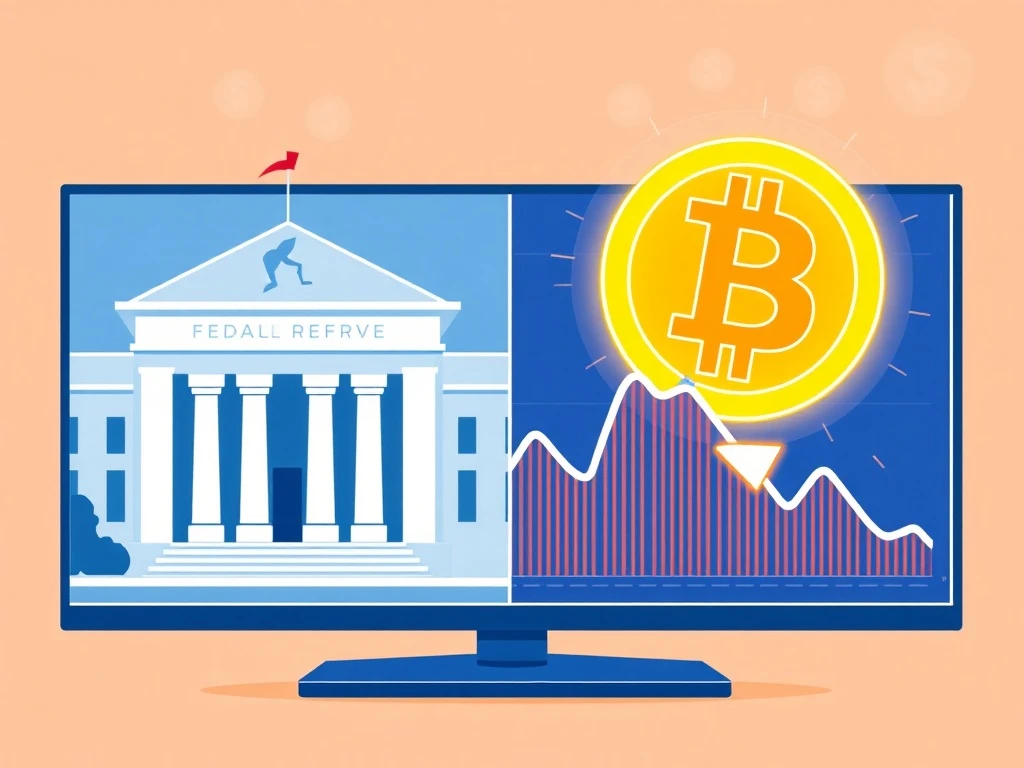
WASHINGTON, D.C. — December 11, 2024 — The Federal Reserve’s decision to maintain its benchmark interest rate sparks a complex debate about monetary policy, a weakening US dollar, and the future trajectory of Bitcoin and cryptocurrency markets. This central moment forces investors to reconsider traditional financial relationships.
Federal Reserve Holds Rates Steady Amid Inflation Concerns
The Federal Open Market Committee (FOMC) voted unanimously to pause its rate-cutting cycle. Consequently, the federal funds rate remains within a range of 3.5% to 3.75%. This decision marks the first pause since July. However, the committee’s statement noted that inflation readings remain “somewhat elevated,” signaling ongoing vigilance. Notably, two dissenting members favored an additional 25-basis-point cut, highlighting internal policy debates.
Also read: Bittensor TAO Sell Signal: TD Sequential Flashes Warning After Stunning 160% Surge
This cautious stance creates a clear divergence from political pressures. President Donald Trump has publicly advocated for aggressive rate reductions to stimulate economic growth. The Fed’s independence now faces a significant test. Market analysts immediately began parsing the statement for clues about future policy direction.
The US Dollar’s Persistent Decline Reshapes Financial Conditions
Simultaneously, the US dollar continues a pronounced slide on global markets. The Bloomberg Dollar Spot Index recently touched a four-year low. This trend extends the currency’s worst annual performance since 2017. A weaker dollar has immediate, far-reaching consequences for global trade and capital flows.
Also read: XRP Whale's $35 Million Gamble Exposes Deep Market Rift
President Trump publicly downplayed the currency’s decline. He stated, “The value of the dollar is great.” Market commentators interpreted this rhetoric as tacit acceptance. The Kobeissi Letter, a widely-followed markets commentary, called it “a clear signal that President Trump is willing to tolerate a weaker Dollar to push rates lower and boost US exports.” This scenario suggests monetary easing may occur through currency markets instead of official Fed action.
David Ingles, Chief Markets Editor at Bloomberg TV APAC, reinforced this view. He argued, “President Trump may effectively be cutting rates on the Fed’s behalf by letting the dollar slide.” This unconventional dynamic places historic focus on forex markets as a policy tool.
Expert Analysis: The Dollar as a Global Risk Barometer
Macro analysts emphasize the dollar’s role beyond trade. Julien Bittel, Head of Macro Research at Global Macro Investor, has previously described a strong US dollar as a “wrecking ball” for risk assets. His research indicates dollar strength tightens global financial conditions dramatically. It increases debt servicing costs for emerging markets and reduces liquidity.
Conversely, a weaker dollar typically loosens these conditions. It can boost commodity prices and improve sentiment toward speculative investments. This relationship forms a critical backdrop for understanding cryptocurrency volatility. The following table summarizes key historical correlations:
| Market Condition | US Dollar Trend | Typical Impact on Bitcoin/Crypto |
|---|---|---|
| Risk-Off Environment | Strengthening | Negative Pressure |
| Risk-On Environment | Weakening | Positive Pressure |
| Global Liquidity Expansion | Weakening or Neutral | Generally Supportive |
| Fed Rate Hike Cycle | Often Strengthening | Historically Challenging |
What It Means for Bitcoin and Cryptocurrency Markets
Bitcoin and the broader digital asset market exhibit heightened volatility following these developments. Investors actively debate whether indirect monetary easing via a weaker dollar can offset the pause in official rate cuts. Historically, cryptocurrencies have performed well during periods of expansive monetary policy and dollar weakness.
Analysts at OSL, a Hong Kong digital asset platform, identify a clear inverse correlation. They note that Bitcoin often moves opposite the US Dollar Index (DXY). A strengthening dollar frequently signals declining risk appetite, which weighs on crypto assets. Therefore, the current dollar weakness could provide a fundamental tailwind.
However, the situation remains nuanced. Expectations for future Fed rate cuts have diminished recently. Stronger-than-expected GDP growth and persistent inflation concerns have altered the timeline. According to the CME Group’s FedWatch Tool, markets now price the probability of a rate cut below 50% for the next two FOMC meetings. This shift tempers some bullish enthusiasm for immediate crypto rallies.
The Liquidity and Macro Perspective
The core debate centers on global liquidity. Cryptocurrencies, as a nascent asset class, are highly sensitive to changes in the availability of cheap capital. The Fed’s rate pause restricts one channel of liquidity. Yet, a falling dollar can increase liquidity by boosting the relative value of other currencies and assets globally.
Key factors for crypto investors to monitor now include:
- DXY Trajectory: Sustained dollar weakness is essential for a bullish macro setup.
- Real Yields: Inflation-adjusted Treasury yields impact capital allocation decisions.
- Global Risk Sentiment: Crypto often acts as a barometer for speculative appetite.
- On-Chain Metrics: Bitcoin network activity provides internal health indicators.
This complex interplay explains the current market debate. Investors must weigh direct Fed policy against indirect currency effects.
Broader Implications for US Monetary Policy and Politics
The Fed’s decision carries significant political and economic weight. It demonstrates the institution’s commitment to its dual mandate of price stability and maximum employment, despite external pressure. The two dissenting votes reveal an active discussion about the appropriate pace of easing.
Furthermore, the weakening dollar introduces a new variable. If market-driven easing through currency depreciation continues, it could achieve similar economic effects as rate cuts. This includes potentially boosting exports and corporate earnings for multinational companies. However, it also risks importing inflation through higher costs for goods and services priced in other currencies.
This scenario creates a delicate balancing act for policymakers. They must monitor inflation, growth, currency markets, and asset prices simultaneously. The outcome will influence not just cryptocurrencies but all risk assets and the global economic order.
Conclusion
The Federal Reserve’s decision to hold interest rates steady occurs alongside a significant slide in the US dollar, creating a multifaceted debate for Bitcoin and cryptocurrency investors. While direct monetary easing is paused, currency market dynamics may be applying indirect stimulus. The historical inverse relationship between the dollar and risk assets like crypto suggests this dollar weakness could provide underlying support. Ultimately, the trajectory of both official Fed policy and the US dollar will dictate market direction, highlighting the need for investors to monitor macro indicators alongside blockchain fundamentals. The coming months will test whether cryptocurrency markets respond more to official interest rates or to the global liquidity conditions shaped by the world’s reserve currency.
FAQs
Q1: Why did the Federal Reserve decide to pause rate cuts?
The FOMC paused because inflation remains “somewhat elevated” and the committee wants more data to confirm the disinflationary trend is sustainable before continuing to ease policy. Strong GDP growth also contributed to the wait-and-see approach.
Q2: How does a weaker US dollar affect Bitcoin?
Historically, a weaker dollar has been correlated with stronger Bitcoin prices. This is because dollar weakness often reflects expanding global liquidity and a “risk-on” investment environment, which benefits speculative assets like cryptocurrencies.
Q3: What is the dissenting view within the Fed?
Two FOMC members voted for an additional 25-basis-point rate cut, indicating a faction within the Fed believes more aggressive easing is warranted to support the economy, despite elevated inflation readings.
Q4: Can a falling dollar substitute for Fed rate cuts?
Some analysts, like David Ingles of Bloomberg, argue that a falling dollar can have a similar effect to rate cuts by making US exports cheaper and easing financial conditions globally, effectively doing easing “on the Fed’s behalf.”
Q5: What should cryptocurrency investors watch now?
Investors should monitor the US Dollar Index (DXY) for sustained weakness, the CME FedWatch Tool for rate expectations, and key inflation reports (CPI/PCE). On-chain Bitcoin metrics like exchange flows and holder behavior are also essential for timing.

This article was produced with AI assistance and reviewed by our editorial team for accuracy and quality.